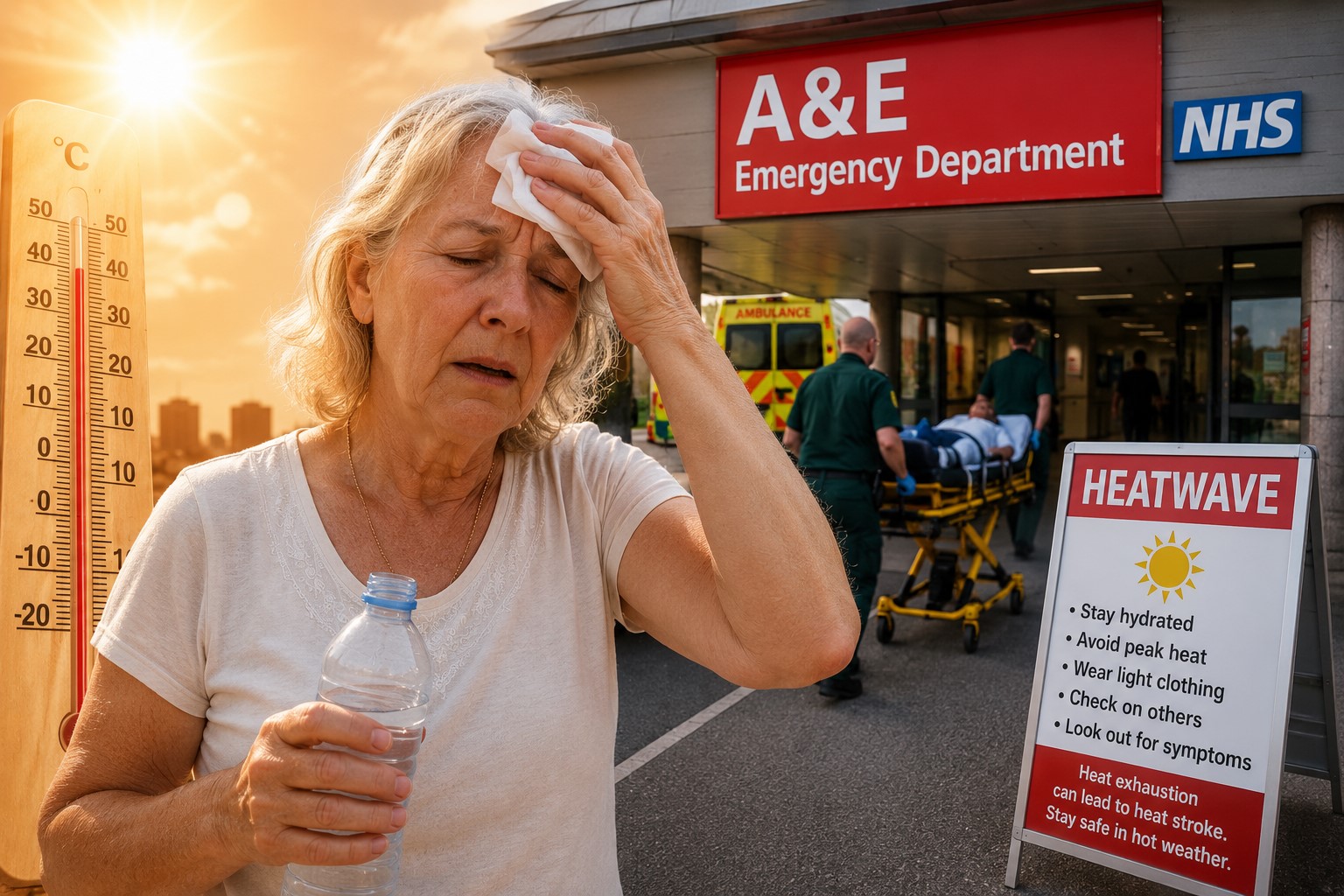
A&E Doctor Warns of Common Heatwave Mistakes That Can Lead to Emergency Hospital Visits
As temperatures climb during summer heatwaves, emergency departments often see a sharp increase in patients suffering from heat-related illnesses. According to an experienced A&E doctor, many of these hospital visits could be prevented by making simple adjustments to daily routines during periods of extreme heat.
The doctor notes that many NHS hospitals, particularly older buildings without air conditioning, become uncomfortably hot during heatwaves. High indoor temperatures can place additional strain on patients recovering from illness, potentially slowing recovery and increasing the length of hospital stays.
One of the most common mistakes people make is continuing their normal daily activities despite the soaring temperatures. The doctor says many patients underestimate the impact of extreme heat, treating it like any other summer day.
In one recent case, an elderly woman spent several hours walking around shops during a day when temperatures reached 35°C. She later developed heat exhaustion, fainted, and suffered a head injury after falling.
Heat exhaustion is an early warning sign that the body is struggling to regulate its temperature. Symptoms commonly include dizziness, fatigue, headaches, heavy sweating, nausea, and weakness. In most cases, moving to a cool place, resting, and drinking plenty of fluids will help the body recover.
However, if left untreated, heat exhaustion can develop into heat stroke—a life-threatening medical emergency. People experiencing heat stroke may have a very high body temperature, hot skin with little or no sweating, confusion, seizures, or even collapse. Immediate medical attention is essential, as the condition can quickly become fatal.
The doctor advises people to adapt their routines during heatwaves by avoiding strenuous outdoor activities during the hottest parts of the day, staying hydrated, wearing lightweight clothing, and checking regularly on older adults and other vulnerable individuals.
With extreme heat becoming more frequent, health experts stress that recognizing the early signs of heat-related illness and taking preventive measures can significantly reduce the risk of emergency hospital admissions.
UKEcho News brings you accurate, independent reporting from across the UK and beyond.
Comments (0)
Sign in to join the discussion.
Be the first to comment.