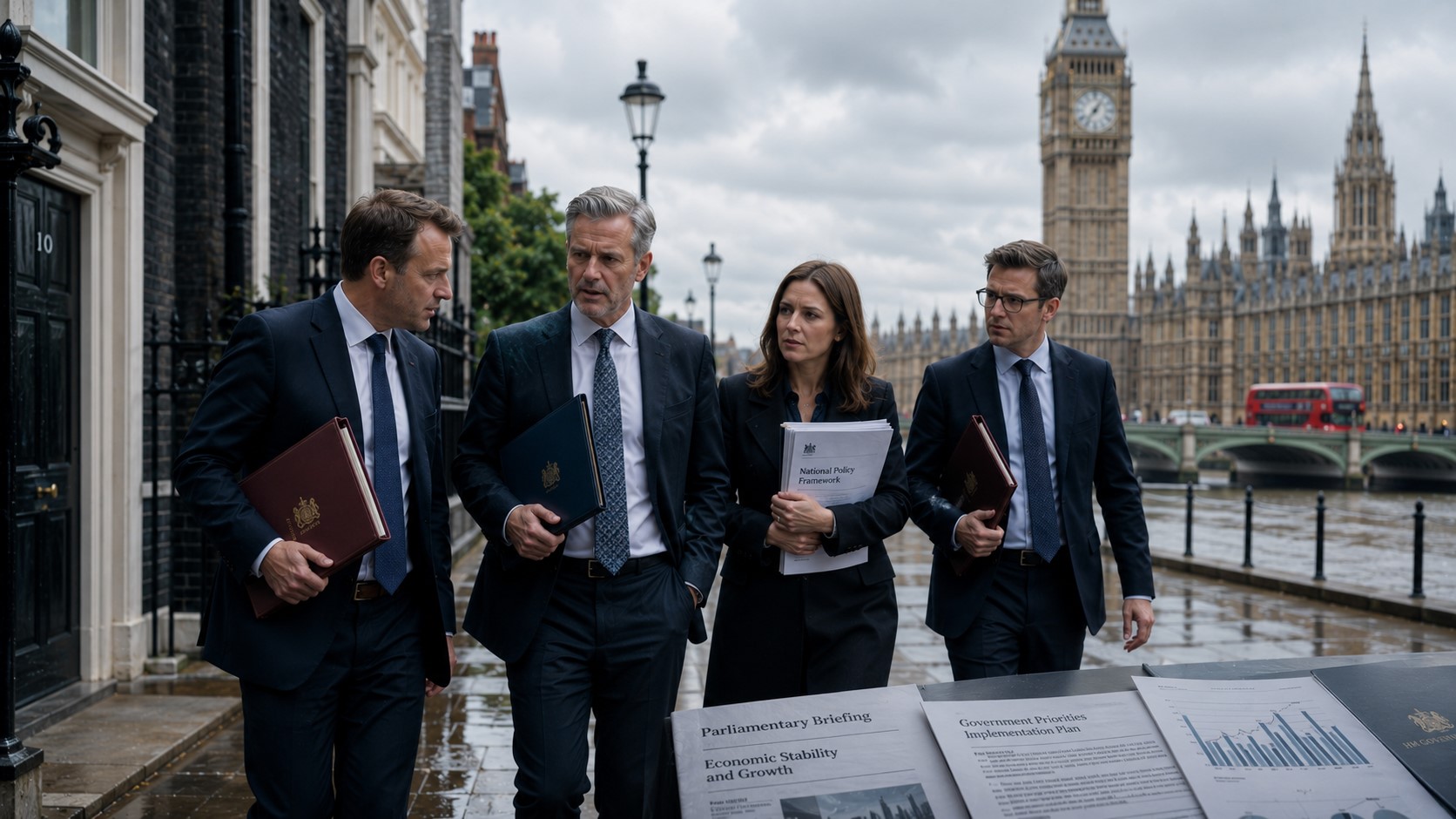
LONDON — Prime Minister Keir Starmer is facing one of the most challenging moments of his premiership after a series of political setbacks, high-profile resignations and growing questions over the government's future direction.
The latest developments have intensified scrutiny on Downing Street, with political observers describing the current situation as a critical test of leadership for the government. Despite mounting pressure, Starmer has publicly insisted that he will remain in office and continue leading the country through a period of significant political and economic uncertainty.
Speaking after fresh criticism from within government circles, the Prime Minister dismissed suggestions that he had lost authority. He argued that the challenges facing Britain require stability and long-term decision-making rather than leadership upheaval.
The political tensions escalated following the resignation of senior figures who raised concerns about government priorities, particularly in relation to defence spending and national security. The departures have triggered renewed debate over whether current investment plans are sufficient to address emerging global threats and Britain's long-term strategic commitments.
Westminster insiders report growing speculation regarding potential leadership challengers, although no formal contest has yet been announced. Analysts suggest that uncertainty surrounding the government's future could become a defining political story in the months ahead.
At the centre of the debate is the difficult balance between public spending, economic pressures and national security commitments. Britain continues to face inflation concerns, geopolitical instability and demands for increased investment across multiple sectors, creating difficult choices for policymakers.
Financial markets are also monitoring developments closely. Political uncertainty often raises questions about future economic policy, government spending plans and investor confidence. Business leaders have urged ministers to provide clarity and stability as the country navigates an increasingly complex economic environment.
Supporters of the Prime Minister argue that leadership changes would do little to solve the structural challenges confronting the government. Critics, however, maintain that a fresh approach may be necessary to restore confidence and address growing public concerns.
The coming weeks are expected to be crucial. With Parliament, financial markets and political parties all watching closely, any further ministerial changes or policy disputes could significantly influence the direction of the government.
For now, Starmer remains defiant. But as pressure continues to build across Westminster, the political battle surrounding his leadership shows little sign of fading.
This remains a developing story, with further political announcements expected in the days ahead.
UKEcho News brings you accurate, independent reporting from across the UK and beyond.
Comments (0)
Sign in to join the discussion.
Be the first to comment.