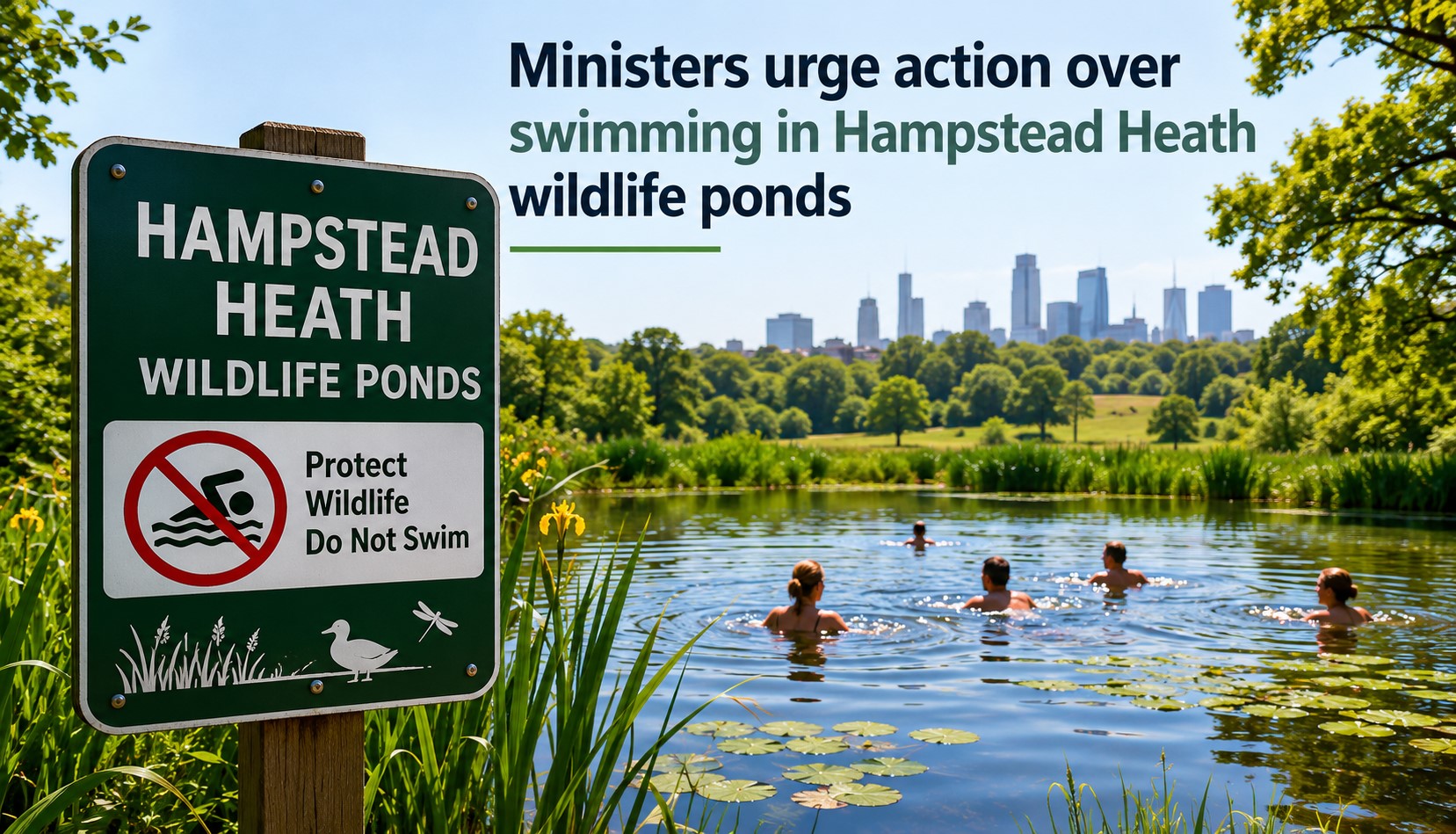
A dispute over public access and environmental protection has intensified after government ministers urged authorities to take action regarding swimmers entering wildlife ponds at Hampstead Heath.
The issue centers on a number of ponds designated primarily for wildlife conservation rather than recreation. Officials and environmental groups have raised concerns that increased swimming activity could disturb sensitive habitats, affect water quality, and place pressure on local ecosystems.
Ministers have reportedly called on the City of London Corporation to review enforcement measures and ensure that protected areas are managed appropriately. Supporters of stricter controls argue that conservation efforts should take priority in ecologically sensitive locations where wildlife depends on minimal human disruption.
However, some outdoor swimming advocates believe access to natural spaces should be balanced with environmental protection. They argue that responsible use and better public awareness could help reduce conflicts between recreation and conservation.
The debate reflects a wider challenge facing urban green spaces across the UK. As more people seek outdoor activities and nature-based recreation, authorities are increasingly being asked to balance public access with the protection of fragile ecosystems.
Environmental campaigners say the outcome could influence how other cities manage protected ponds, lakes, and natural habitats in the future. With public interest growing, the issue has become a focal point in discussions about conservation, biodiversity, and sustainable use of public spaces.
As authorities consider their next steps, Hampstead Heath remains at the center of a national conversation about how best to protect wildlife while maintaining access to one of London's most treasured natural areas.
UKEcho News brings you accurate, independent reporting from across the UK and beyond.
Comments (0)
Sign in to join the discussion.
Be the first to comment.