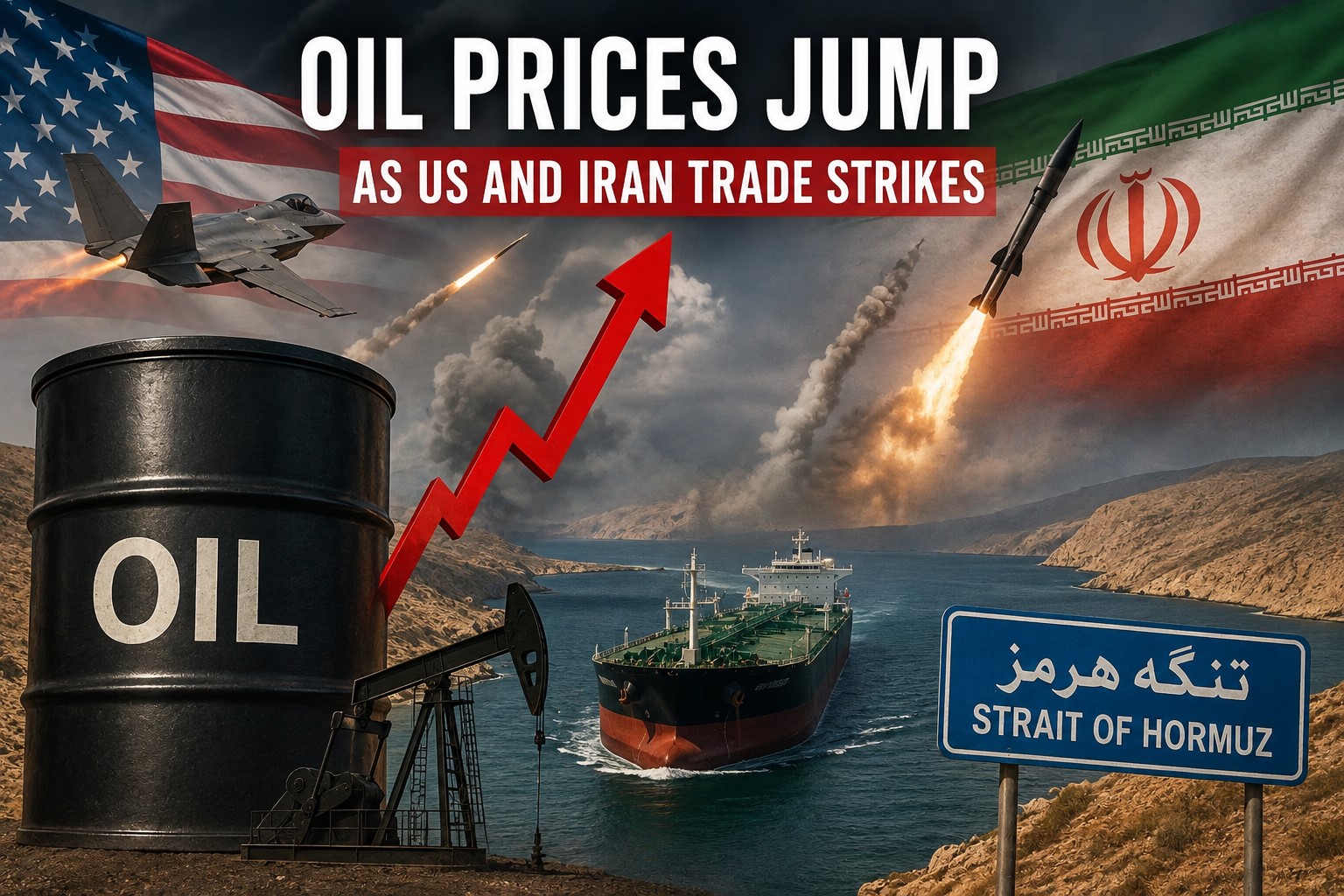
Global oil prices rose sharply after renewed military exchanges between the United States and Iran heightened fears of potential disruptions to energy supplies passing through the Strait of Hormuz, one of the world's most important oil shipping routes. Brent crude, the international benchmark, climbed more than 3% to trade above $76 per barrel as investors reacted to growing geopolitical tensions in the Middle East.
According to reports, the United States carried out strikes targeting Iranian air defence systems, radar installations and dozens of small boats operated by Iran's Revolutionary Guard after Iranian forces reportedly attacked three vessels in the Strait of Hormuz. Iran later responded by launching strikes against US military facilities in Bahrain and Kuwait, raising concerns about a wider regional conflict.
The latest escalation comes after oil prices had previously retreated to pre-conflict levels following a preliminary agreement between Washington and Tehran outlining a 60-day framework for peace negotiations. However, the renewed exchange of military action has revived uncertainty over the security of energy supplies moving through the strategically vital waterway, which normally handles around 20% of global oil and liquefied natural gas exports.
Shipping activity has already shown signs of disruption. At least four oil and gas tankers reportedly altered their routes or turned back rather than transit the Strait of Hormuz. Tracking data indicated that three empty tankers operated by QatarEnergy reversed course after attempting to enter the strait, while an Indian-flagged tanker carrying approximately two million barrels of Kuwaiti crude oil also changed direction near the coast of Oman.
Market analysts said investors are closely monitoring developments, noting that while oil prices have reacted positively to the increased geopolitical risk, markets have not yet entered panic mode. Traders remain focused on whether tensions continue to escalate or diplomatic efforts can prevent further disruption to one of the world's most critical energy corridors.
UKEcho News brings you accurate, independent reporting from across the UK and beyond.
Comments (0)
Sign in to join the discussion.
Be the first to comment.