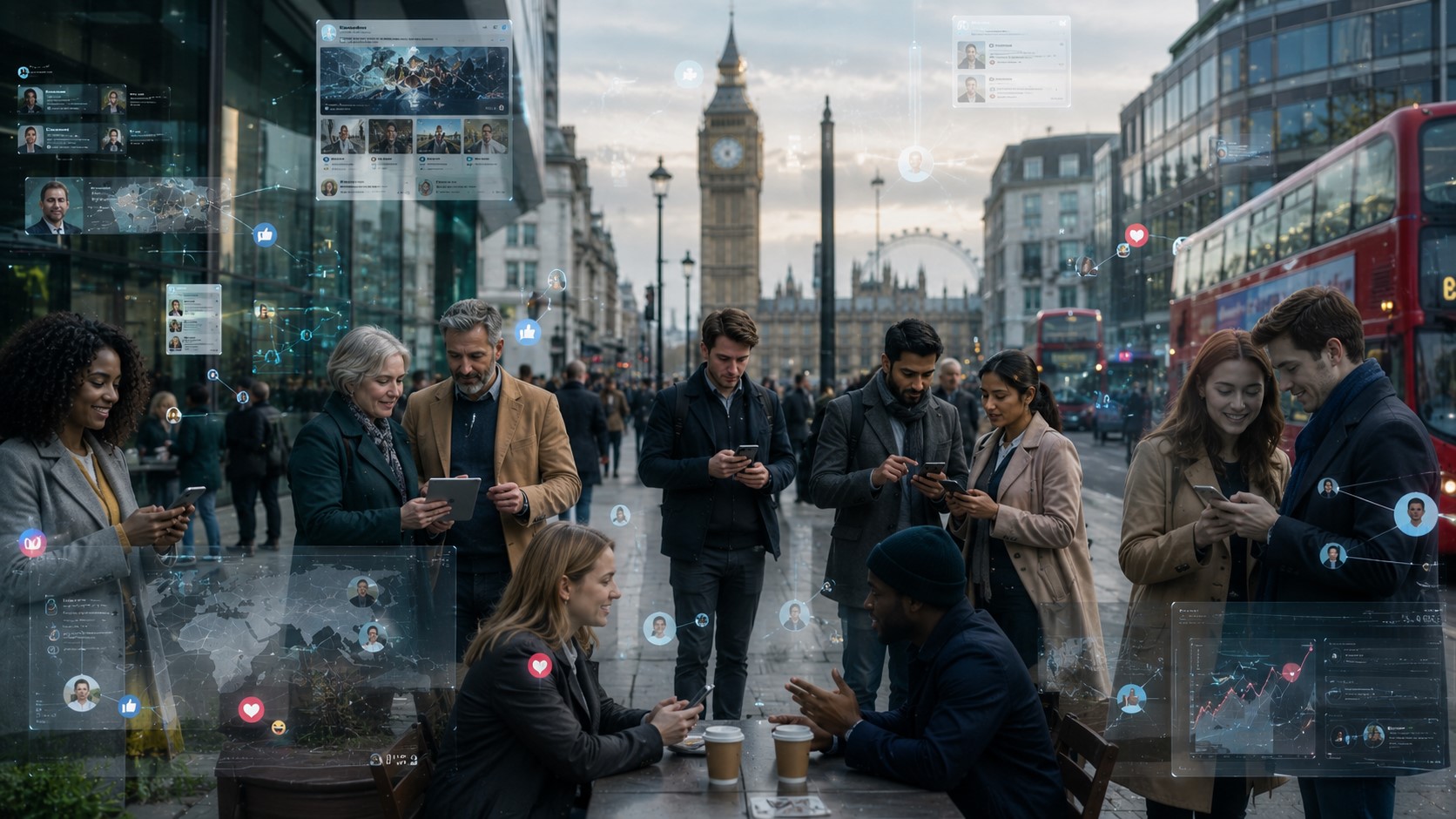
The modern political landscape is increasingly shaped not by lengthy speeches, policy documents or economic statistics, but by images shared instantly across social media platforms.
A single photograph, video clip or viral post can now influence public opinion on a scale that would have been unimaginable only a decade ago. Within minutes, content can be viewed by millions, generating emotional reactions long before official information or detailed reporting becomes available.
The speed at which digital content travels has fundamentally changed the relationship between politics, media and public perception.
Supporters of social media argue that technology has democratised information, allowing citizens to witness events directly and participate more actively in public debate. Critics, however, warn that emotionally charged content can sometimes overwhelm context, nuance and factual analysis.
Political campaigns increasingly operate within this environment, where visual content often receives more attention than detailed policy discussions. Images that provoke fear, anger or outrage can spread rapidly, influencing conversations far beyond their original source.
The challenge for governments, journalists and public institutions is that emotional reactions often occur before complete information becomes available. Once a narrative becomes established online, correcting misconceptions can prove difficult.
Technology has amplified the power of visual storytelling, but it has also increased the responsibility placed on those who create, share and interpret digital content.
The debate extends beyond politics alone. Social media platforms now play a central role in shaping public understanding of crime, immigration, community relations and national identity. As a result, questions about media literacy and responsible communication have become increasingly important.
Many experts argue that societies must learn how to balance immediate emotional responses with critical thinking and evidence-based discussion. The challenge is not simply about technology itself but about how citizens engage with information in an increasingly digital world.
As political campaigns continue to evolve, the influence of viral content is likely to remain a defining feature of public life.
The future of democratic debate may depend not only on what people see online, but on how they choose to interpret it.
UKEcho News brings you accurate, independent reporting from across the UK and beyond.
Comments (0)
Sign in to join the discussion.
Be the first to comment.