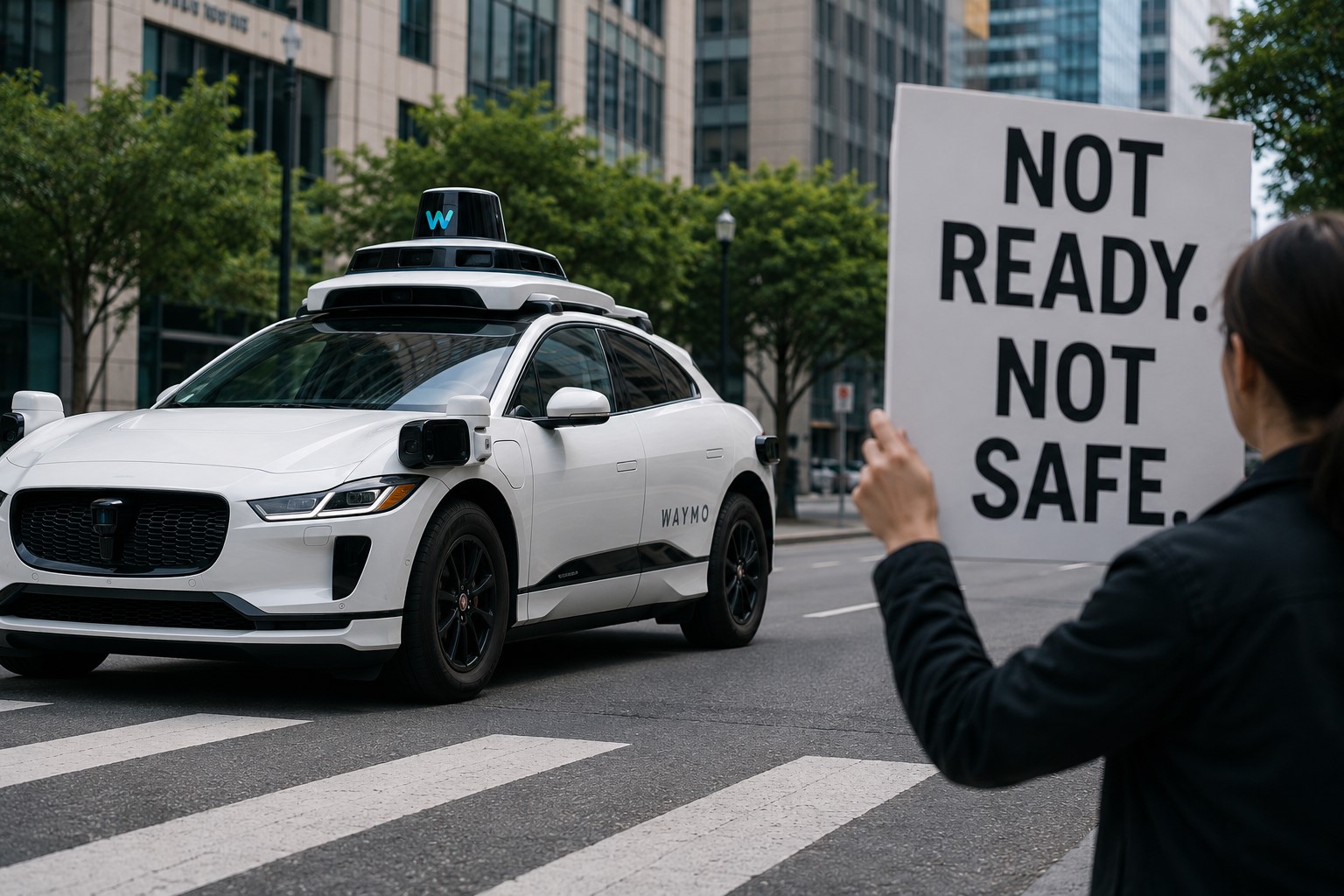
Robotaxis Expand Across the U.S. as Public Resistance Continues to Grow
Autonomous vehicles were expected to make major progress across American cities this year as companies accelerated plans to expand driverless transportation services. Major technology and automotive firms have increasingly rolled out robotaxi programs, promising a future built around artificial intelligence-powered mobility.
Companies including Alphabet-owned Waymo, Tesla, and Amazon-backed Zoox have been pushing to introduce autonomous ride services in more cities, positioning robotaxis as the next major shift in transportation technology.
However, the rapid expansion has also triggered growing public concerns. As more autonomous vehicles appear on city streets, reports involving unexpected vehicle behavior, traffic disruptions, and collisions have fueled skepticism among residents and officials.
Incidents involving robotaxis have become increasingly visible through police reports and viral social media videos, where unusual driving decisions and technical errors have raised fresh questions about safety and reliability. While some encounters have generated humor online, others have intensified concerns about how quickly autonomous systems should be integrated into everyday transportation.
Supporters argue that robotaxis could improve road safety, reduce transportation costs, and reshape urban mobility. Critics, meanwhile, warn that regulatory frameworks, emergency response coordination, and public trust may not be keeping pace with the technology’s rapid deployment.
As companies continue expanding services into additional markets, the debate surrounding robotaxis is shifting beyond innovation alone and increasingly focusing on whether communities are ready for widespread adoption.
UKEcho News brings you accurate, independent reporting from across the UK and beyond.
Comments (0)
Sign in to join the discussion.
Be the first to comment.