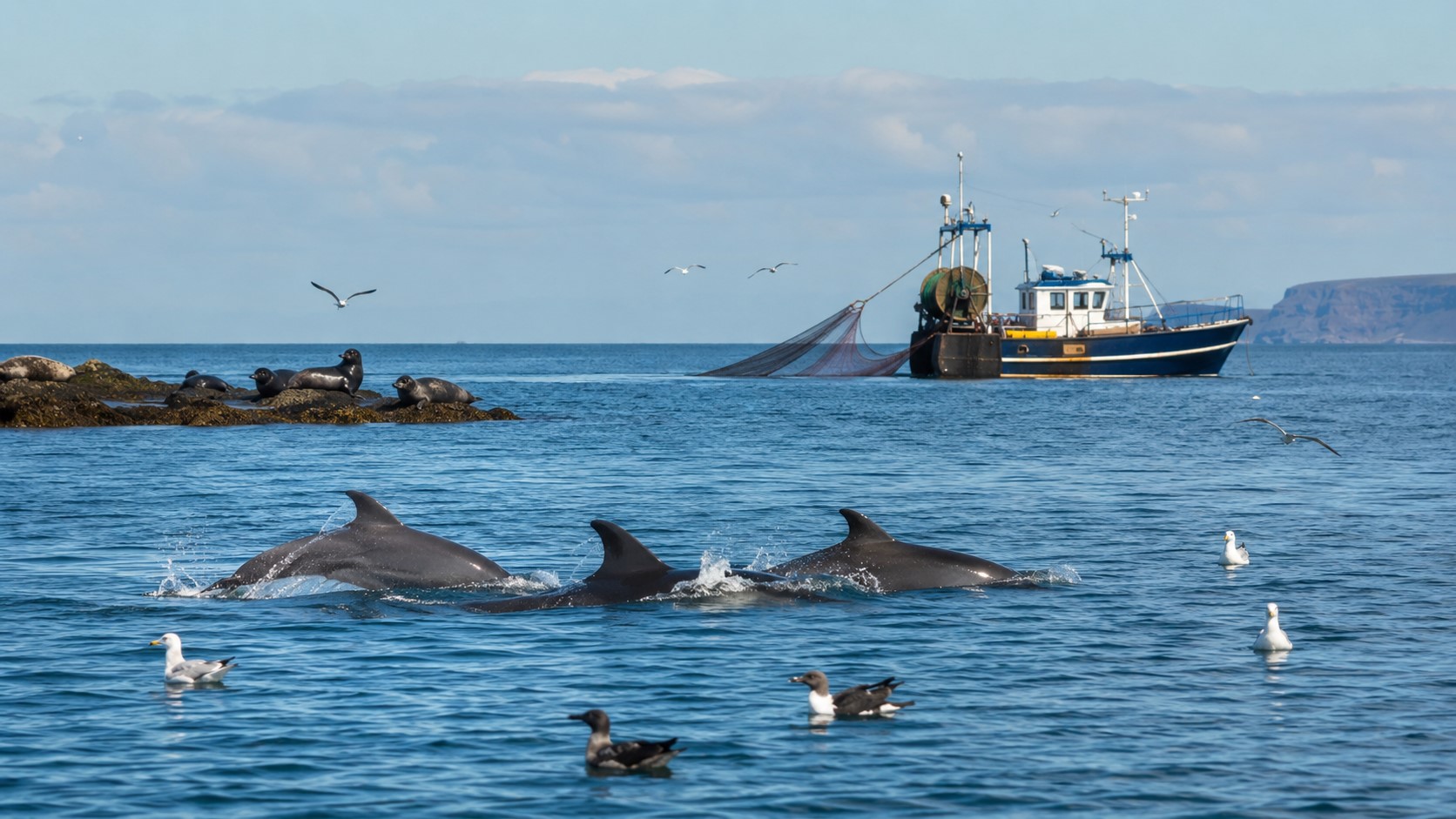
Thousands of protected marine animals are being killed in British waters every year as an unintended consequence of commercial fishing, according to a landmark new analysis that conservation groups describe as deeply alarming.
The report, produced by a coalition of environmental organisations, has revealed the scale of so-called "bycatch" the accidental capture and death of non-target wildlife in fishing operations.
Researchers estimate that more than 1,000 harbour porpoises and common dolphins, around 10,000 seabirds, and approximately 500 seals are dying annually after becoming trapped in fishing equipment. The findings also point to losses among vulnerable species including Atlantic salmon, sharks, skates and rays.
Conservation experts say the true scale may be significantly higher because only a small proportion of fishing vessels currently monitor and report bycatch incidents. Large sections of the fishing fleet remain outside comprehensive monitoring programmes.
Environmental groups argue that many of these deaths could be prevented through the wider use of modern fishing methods, improved gear technology and mandatory electronic monitoring systems onboard vessels.
Particular concern has been raised over the use of gillnets, which can unintentionally trap diving seabirds such as puffins, razorbills and gannets. Once caught underwater, many birds are unable to escape.
Marine conservation organisations warn that ongoing bycatch is contributing to population pressures on already protected and threatened species. They say the issue could undermine Britain's efforts to improve the health of its marine ecosystems and meet environmental targets.
Campaigners are urging ministers to introduce stronger enforcement measures, expand monitoring requirements and accelerate the rollout of bycatch reduction programmes across UK waters.
Despite the concerns, experts point to successful local initiatives that have dramatically reduced wildlife deaths. Trials involving modified fishing gear and alternative rope systems have shown promising results in reducing risks to seabirds and whales.
Government officials say efforts are already underway to improve data collection and reduce accidental wildlife deaths through dedicated marine conservation programmes.
The report is expected to add pressure on policymakers as environmental groups call for urgent action to better protect Britain's marine life and safeguard biodiversity in coastal waters.
UKEcho News brings you accurate, independent reporting from across the UK and beyond.
Comments (0)
Sign in to join the discussion.
Be the first to comment.