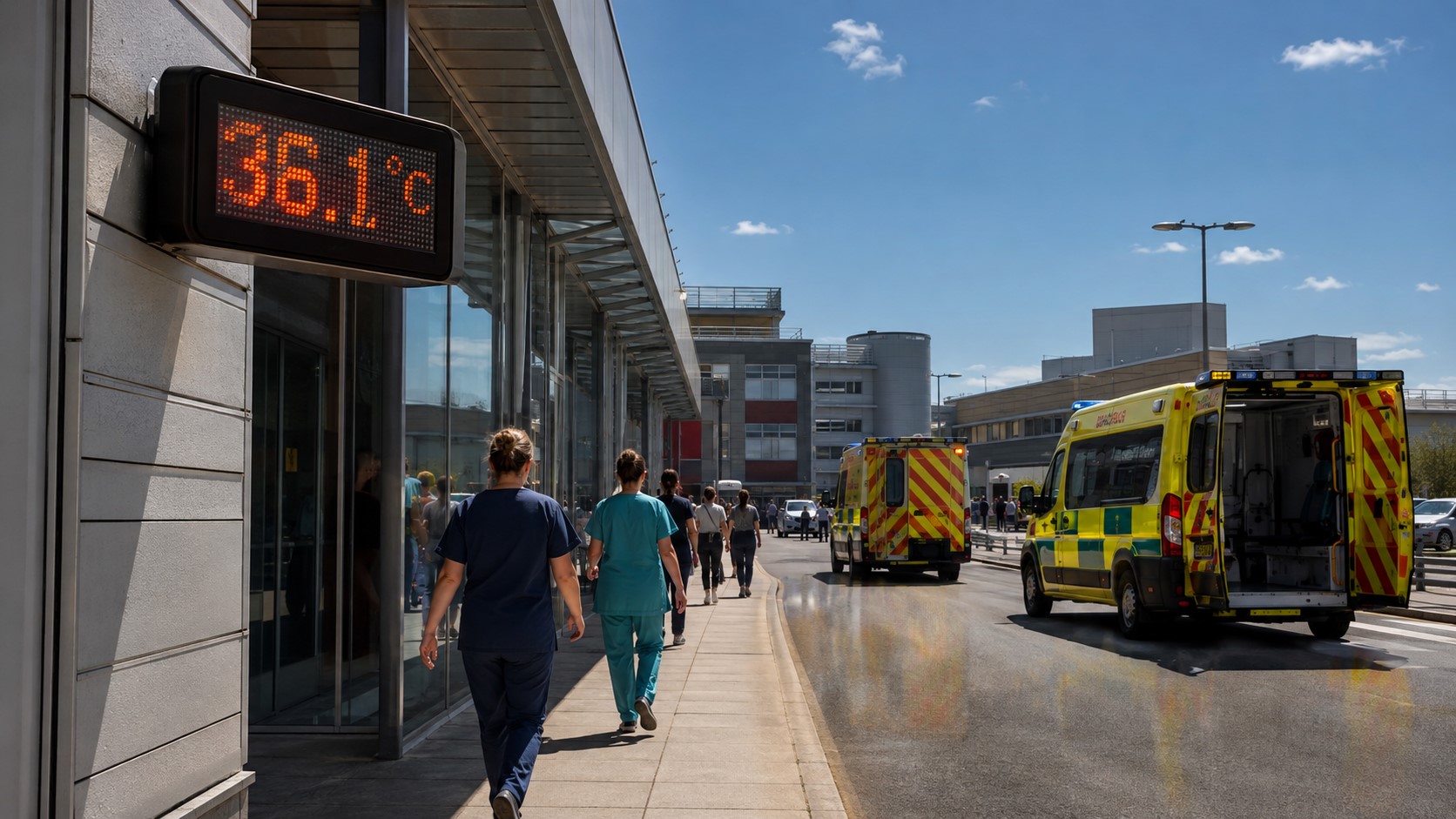
The United Kingdom is facing mounting pressure on its healthcare system as an extended period of exceptionally hot weather continues to impact hospitals and emergency services across England. Health officials and government ministers are warning that summer heatwaves are becoming an annual challenge requiring the same level of preparation traditionally reserved for winter illnesses.
Recent weeks have seen temperatures remain well above seasonal averages, increasing the number of patients suffering from dehydration, heat exhaustion, respiratory complications, and other heat-related illnesses. Older adults, young children, and people with underlying medical conditions remain the most vulnerable during prolonged periods of extreme heat.
Health Secretary Yvette Cooper has urged NHS organisations to strengthen their summer resilience strategies, arguing that rising temperatures linked to climate change mean healthcare providers must adapt to recurring seasonal pressures. The government has highlighted the importance of upgrading hospital cooling systems, improving emergency planning, and raising public awareness about heat-related health risks.
Medical professionals have also expressed concern about ageing hospital infrastructure, with reports that high indoor temperatures can affect both patient care and staff wellbeing. Some healthcare facilities have experienced operational difficulties during recent heatwaves, reinforcing calls for long-term investment in climate-resilient healthcare infrastructure.
Beyond healthcare, the prolonged hot and dry conditions have placed additional strain on transport networks, agriculture, and public services. Experts warn that repeated heatwaves are increasing the urgency for broader climate adaptation measures across the UK as extreme weather events become more frequent.
Authorities continue to advise residents to stay hydrated, avoid prolonged exposure to direct sunlight during peak afternoon hours, and regularly check on elderly relatives and vulnerable neighbours. Public health officials stress that early precautions can significantly reduce the risk of serious heat-related illness while helping to ease pressure on emergency healthcare services.
UKEcho News brings you accurate, independent reporting from across the UK and beyond.
Comments (0)
Sign in to join the discussion.
Be the first to comment.