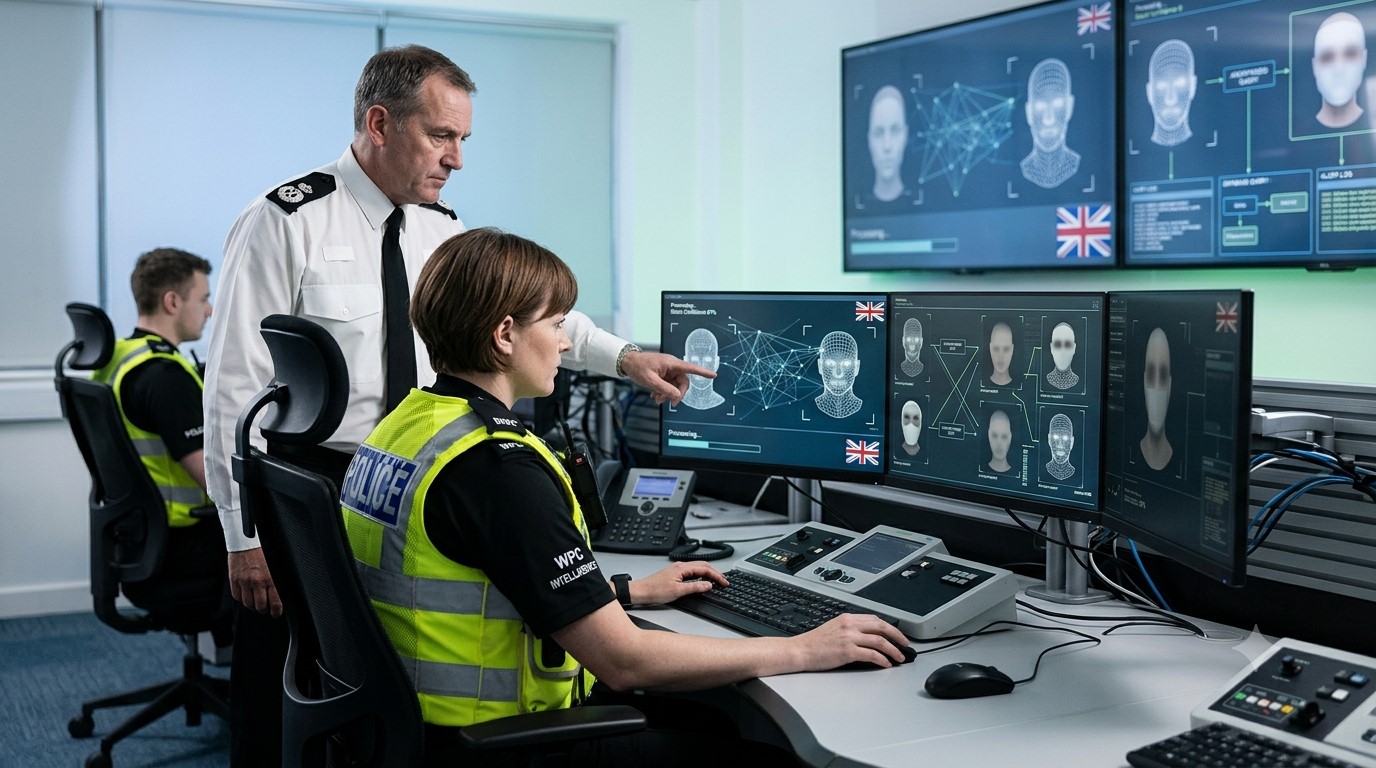
UK Watchdog Demands Stronger Oversight of Police Facial Recognition Technology
LONDON — Britain's data protection regulator has called for stronger senior oversight of facial recognition technology used by police forces, highlighting the need for lawful, proportionate and accountable deployment.
The Information Commissioner's Office (ICO) has published updated expectations covering the responsible use of facial recognition technology by law enforcement. The regulator says police forces need effective governance and safeguards when processing sensitive biometric information.
The intervention comes as facial recognition becomes an increasingly important technology in modern policing.
Live facial recognition systems can compare images captured by cameras with police watchlists, potentially helping officers identify people wanted in connection with criminal investigations.
However, the technology also raises concerns about privacy, accuracy, discrimination and the handling of sensitive personal data.
The ICO says senior officers should have clear responsibility for how facial recognition systems are deployed and monitored. Police forces also need appropriate policies, staff training and technical controls.
The regulator has previously audited police forces using facial recognition and identified both examples of good practice and areas requiring improvement. Its work includes examining governance, data protection processes and safeguards against discriminatory outcomes.
Accuracy and bias remain central concerns surrounding biometric policing technology.
The ICO has stressed that routine testing is important because risks can arise from technology design, training data or the composition of police watchlists.
The development comes as the UK considers a new legal framework for law-enforcement use of biometrics and facial recognition. The ICO has previously argued that any new framework should build on existing data-protection protections rather than replace them.
For police forces, the latest expectations mean that technological capability alone will not be enough. Governance, accountability and public confidence are becoming equally important parts of Britain's facial-recognition debate.
As facial recognition expands across UK policing, regulators will continue to scrutinise whether forces can demonstrate that the technology is being used fairly, securely and proportionately.
The latest ICO intervention could therefore become an important milestone in Britain's debate over how artificial intelligence and biometric technology should be used by law enforcement.
UKEcho News brings you accurate, independent reporting from across the UK and beyond.
Comments (0)
Sign in to join the discussion.
Be the first to comment.