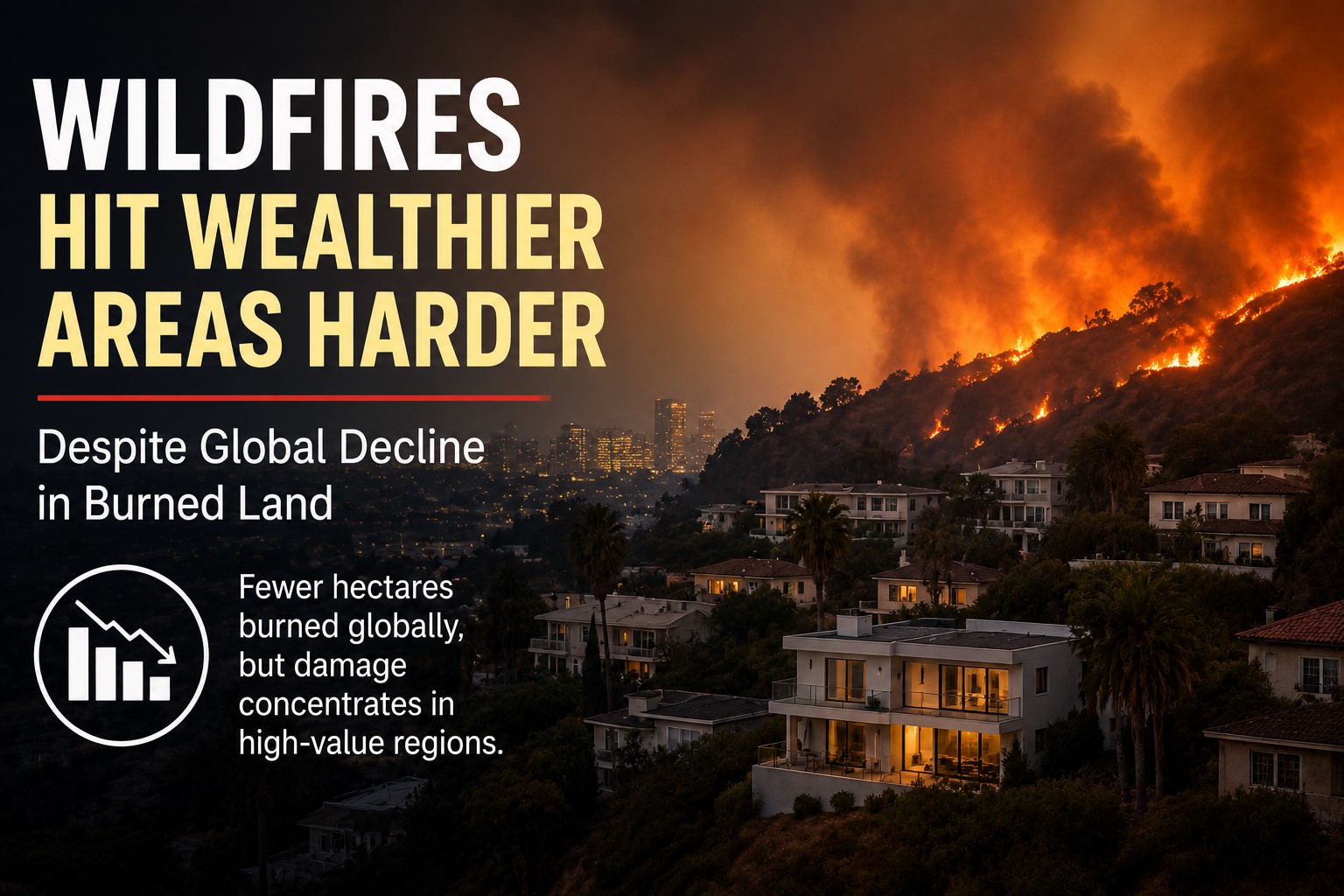
A new study has revealed a surprising shift in global wildfire patterns, showing that while the total area burned worldwide has declined in recent years, fires are increasingly causing damage in wealthier and more densely populated regions.
Researchers found that advances in land management and changes in agricultural practices have contributed to a reduction in the number of hectares burned globally. However, at the same time, devastating wildfires are becoming more common in areas with higher property values, critical infrastructure, and larger populations.
The findings highlight how the economic and social impact of wildfires can continue to grow even when the overall amount of land affected decreases. Experts say rising temperatures, prolonged droughts, and expanding development near forests and natural landscapes are increasing the vulnerability of communities in many parts of the world.
Recent years have seen destructive wildfires affect regions across Europe, North America, and other developed areas, resulting in significant financial losses, environmental damage, and public safety concerns.
Scientists warn that climate-related risks remain a major challenge despite progress in reducing burned land globally. They argue that governments and local authorities must continue investing in fire prevention, resilience planning, and climate adaptation measures to protect communities from increasingly severe wildfire events.
The study adds to growing evidence that the consequences of climate change cannot be measured solely by the size of affected areas. Instead, the location and intensity of disasters are becoming increasingly important factors in assessing global environmental risk.
UKEcho News brings you accurate, independent reporting from across the UK and beyond.
Comments (0)
Sign in to join the discussion.
Be the first to comment.