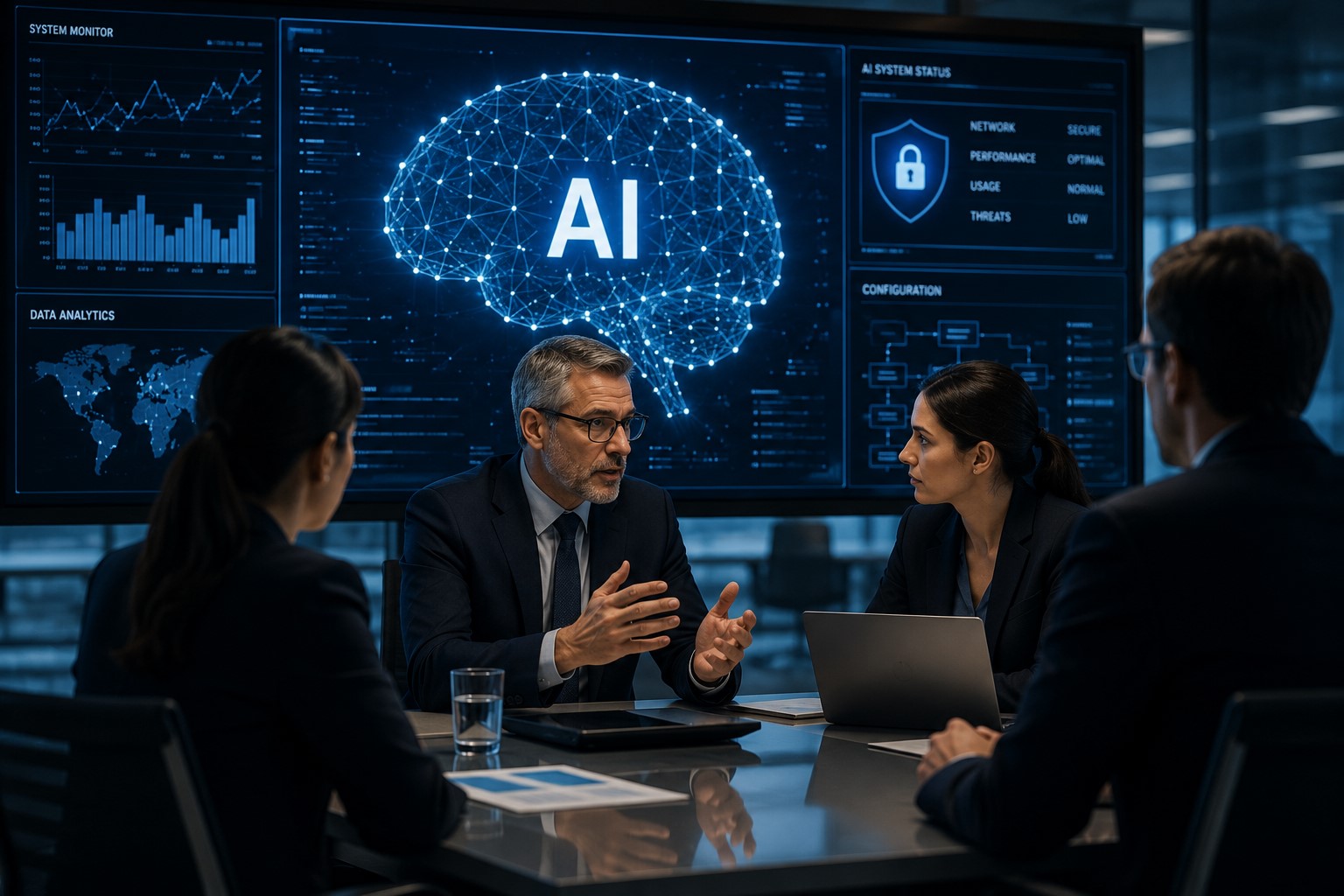
The future of artificial intelligence regulation is under renewed scrutiny as discussions continue over whether governments should have the power to intervene in the operation of highly advanced AI systems during exceptional circumstances.
The debate comes amid growing concerns about the rapid capabilities of frontier AI models and the potential risks associated with powerful systems that are increasingly being deployed across business, research, defence and public services.
Technology companies, regulators and security experts are now grappling with one of the most important questions facing the AI industry: who should have ultimate authority over advanced artificial intelligence when national security concerns arise?
Supporters of stronger regulatory oversight argue that governments require emergency mechanisms to address situations where sophisticated AI systems could pose risks to critical infrastructure, cybersecurity or public safety.
Advocates say that as AI capabilities continue to expand, policymakers must be prepared for scenarios involving misuse, cyber threats or unexpected system behaviour. They argue that safeguards should exist before risks emerge rather than after incidents occur.
However, critics warn that granting governments broad intervention powers could raise concerns about innovation, transparency and the independence of technology companies developing advanced AI systems.
The discussion highlights a growing tension between technological progress and regulatory responsibility.
The issue has become increasingly relevant as major AI developers race to build more capable models that can perform complex reasoning, generate content, analyse large datasets and assist with decision-making across multiple industries.
Experts note that many countries are now exploring regulatory frameworks designed to balance innovation with accountability. These frameworks often focus on risk assessments, safety testing, transparency requirements and emergency response procedures.
The broader debate also reflects concerns about international competition in artificial intelligence. Governments around the world view AI as a strategic technology with significant economic, scientific and geopolitical importance.
As AI systems become more powerful, the question is no longer whether regulation will increase, but how governments and technology companies will cooperate to manage future risks.
For policymakers, the challenge will be creating safeguards that protect society without slowing innovation. For technology companies, the challenge lies in maintaining public trust while developing increasingly sophisticated systems.
The outcome of these discussions could help define the next chapter of artificial intelligence development and shape how advanced AI technologies are governed for years to come.
UKEcho News brings you accurate, independent reporting from across the UK and beyond.
Comments (0)
Sign in to join the discussion.
Be the first to comment.