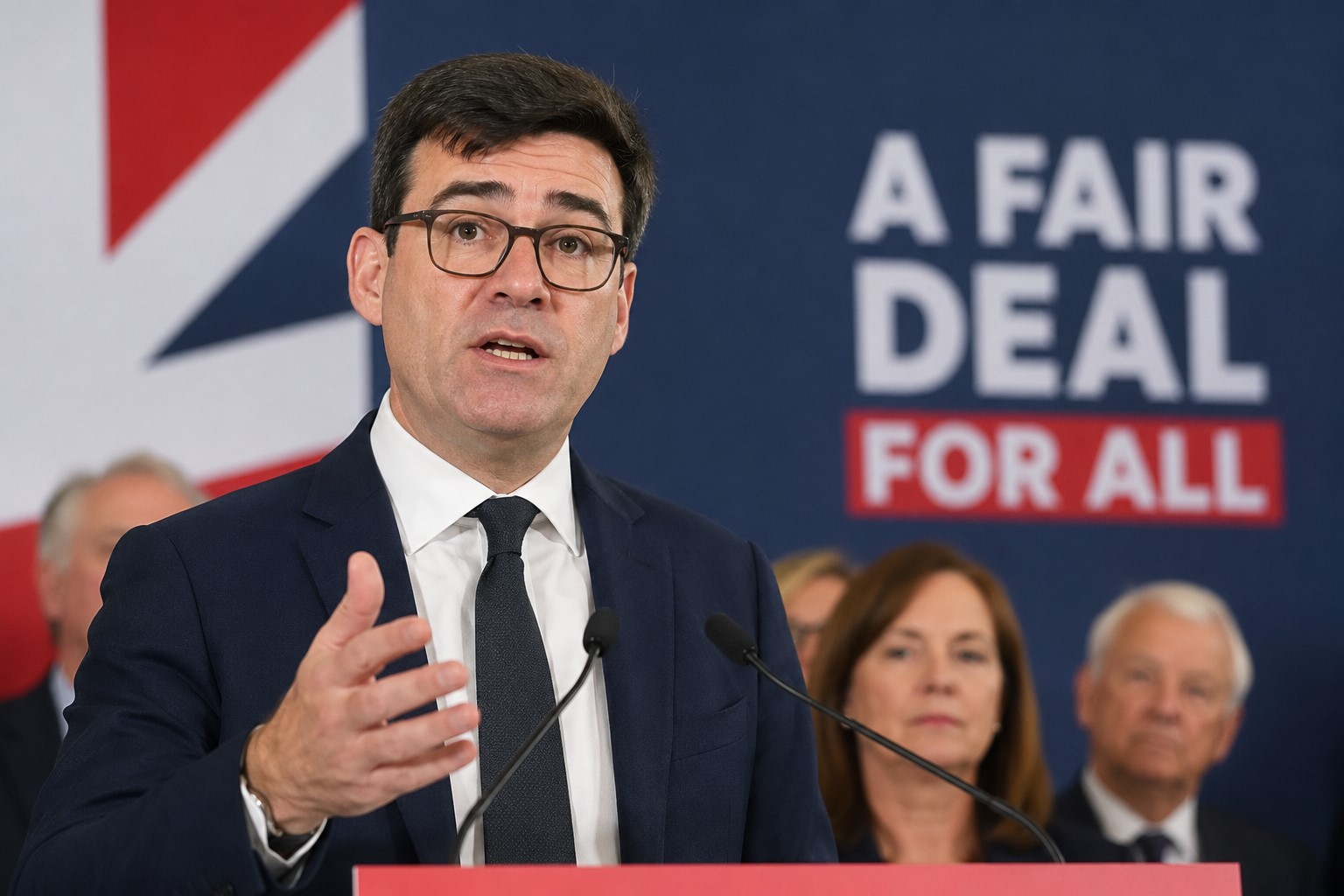
Burnham’s First 100 Days: Emergency Budget and Energy Bill Support Take Center Stage
The first 100 days of Burnham’s administration have been defined by swift action to address economic pressures, restore public confidence, and provide support to households struggling with rising living costs.
Soon after taking office, the government introduced an emergency Budget aimed at stabilizing public finances and tackling growing fiscal challenges. The package included measures to balance spending priorities while maintaining investment in key public services and infrastructure.
A major focus of the administration has been easing the burden of high energy costs. New support initiatives were announced to help eligible households manage rising utility bills, with additional assistance targeted at low-income families, pensioners, and vulnerable residents facing financial hardship.
Alongside economic measures, Burnham has pledged to improve public services, strengthen local investment, and accelerate long-term growth. Ministers say the government remains committed to creating jobs, boosting business confidence, and delivering reforms that support communities across the country.
Opposition parties have welcomed some of the immediate relief measures but argue that more comprehensive action is needed to address inflation, housing affordability, and the overall cost-of-living crisis. Critics have also called for greater transparency over the long-term impact of the emergency Budget.
As the administration moves beyond its first 100 days, attention will turn to whether these early policies can deliver lasting economic stability while meeting expectations on public services, investment, and household finances.
UKEcho News brings you accurate, independent reporting from across the UK and beyond.
Comments (0)
Sign in to join the discussion.
Be the first to comment.