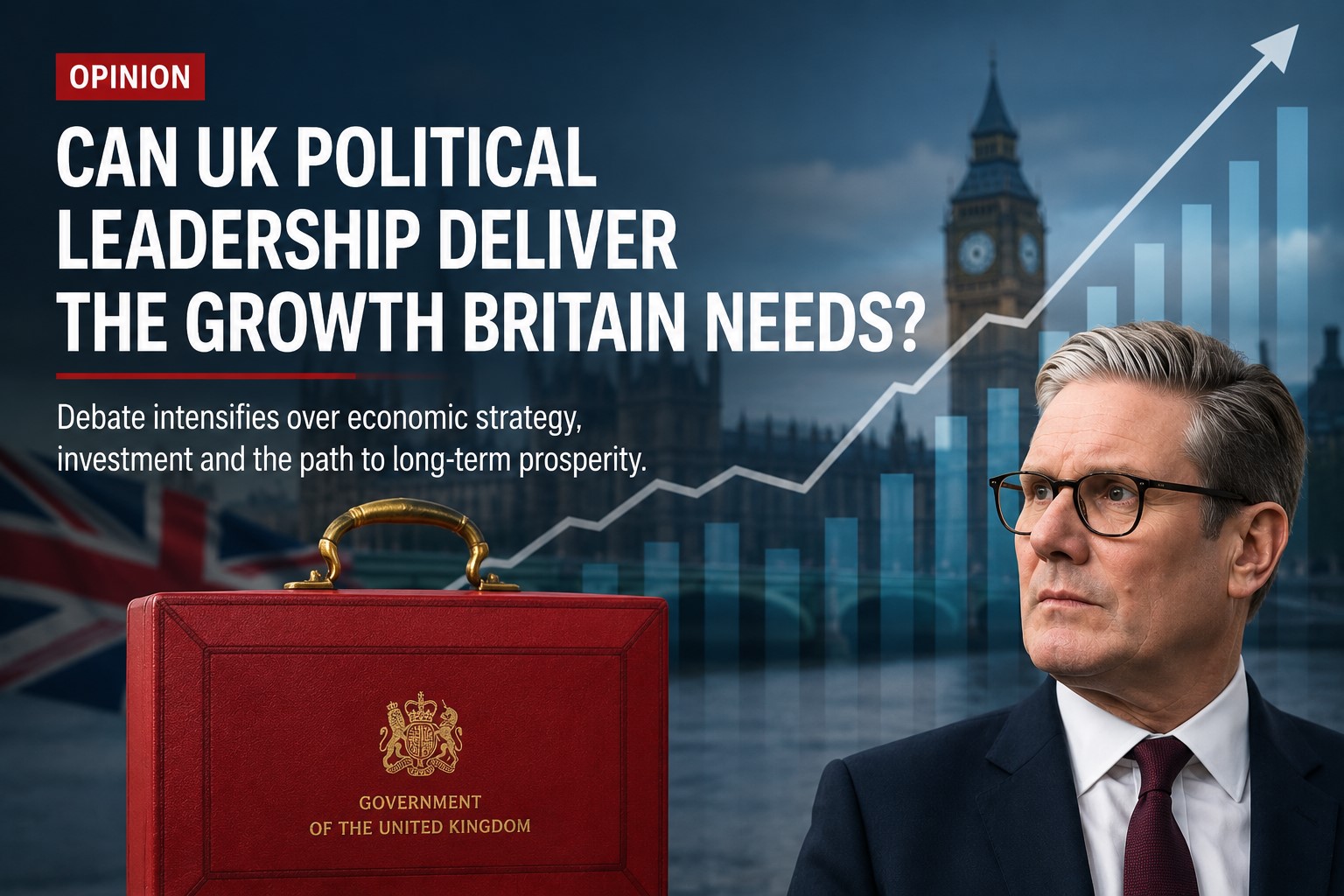
Economic growth remains one of the biggest challenges facing the UK government, with political leaders facing increasing pressure to deliver tangible improvements in living standards, investment, and business confidence.
Recent political debate has focused on whether current leadership strategies can generate the momentum needed to boost economic performance while maintaining public trust. As global competition intensifies, policymakers are being urged to develop a clear vision for growth that balances fiscal responsibility with long-term investment.
Supporters argue that strong leadership, international partnerships, and business-friendly policies are essential to unlocking economic opportunities. Critics, however, question whether existing approaches are ambitious enough to address the UK's structural economic challenges.
The discussion comes at a time when governments around the world are grappling with slower growth, geopolitical uncertainty, and changing trade dynamics. Economic success increasingly depends on attracting investment, supporting innovation, and creating conditions that encourage private sector expansion.
Political analysts suggest that leadership credibility and policy consistency will play a crucial role in determining whether growth targets can be achieved. Businesses and investors often look for stability and long-term planning before committing significant resources.
The debate also highlights the growing relationship between domestic economic policy and international diplomacy. Strong global partnerships can create opportunities for trade, investment, and technological collaboration that contribute to national prosperity.
As Britain seeks to strengthen its economic position, questions remain over how political leaders can turn ambition into measurable results. The challenge is not simply setting growth targets but delivering policies capable of producing sustainable economic progress.
The coming years are likely to test whether political strategy and economic policy can work together to meet the expectations of businesses, investors, and voters alike.
UKEcho News brings you accurate, independent reporting from across the UK and beyond.
Comments (0)
Sign in to join the discussion.
Be the first to comment.