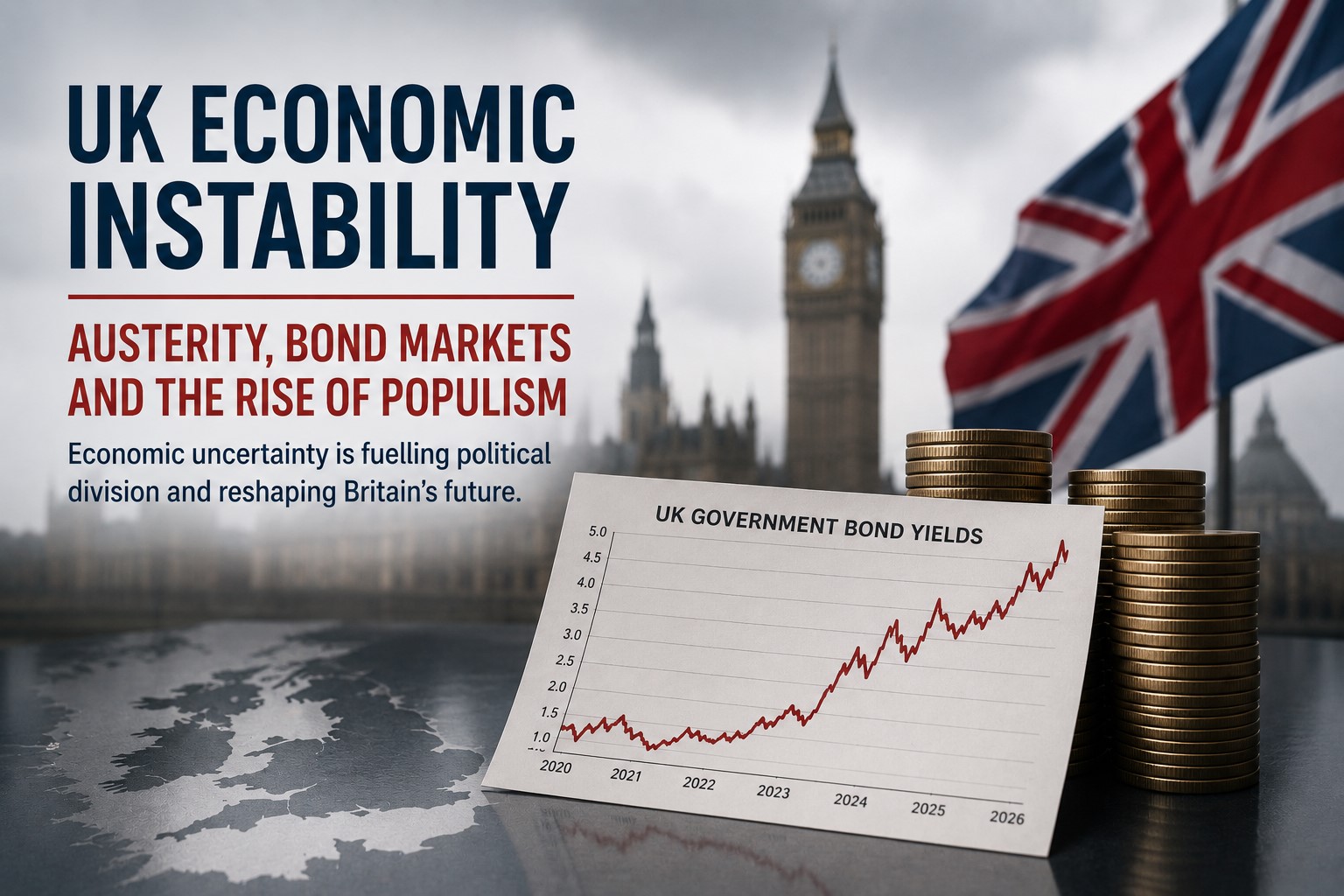
Britain's economic future is becoming an increasingly important battleground as concerns over public finances, government borrowing, and long-term growth continue to influence political discussions.
Recent market volatility has renewed debate about how governments should balance spending commitments with fiscal responsibility. Rising pressure on public services, infrastructure investment, and economic competitiveness has intensified questions about the sustainability of current policy approaches.
Supporters of tighter fiscal discipline argue that stable public finances are essential for maintaining investor confidence and economic resilience. Others contend that excessive spending cuts risk undermining growth, worsening inequality, and weakening public services that millions rely upon.
The discussion comes as policymakers across Europe and beyond face similar challenges, including slower economic growth, higher borrowing costs, and increasing demands on government budgets. Financial markets continue to play a critical role in shaping how governments approach economic decision-making.
Political analysts suggest that economic uncertainty can create opportunities for alternative political movements to gain support, particularly when voters feel traditional parties are struggling to address concerns about living standards, public services, and economic security.
The debate highlights the difficult choices facing policymakers as they seek to promote growth while maintaining financial credibility. Balancing investment, taxation, and fiscal responsibility remains one of the defining economic challenges of the decade.
As Britain prepares for future political and economic tests, discussions around public spending, market confidence, and economic reform are likely to remain at the centre of national debate.
UKEcho News brings you accurate, independent reporting from across the UK and beyond.
Comments (0)
Sign in to join the discussion.
Be the first to comment.