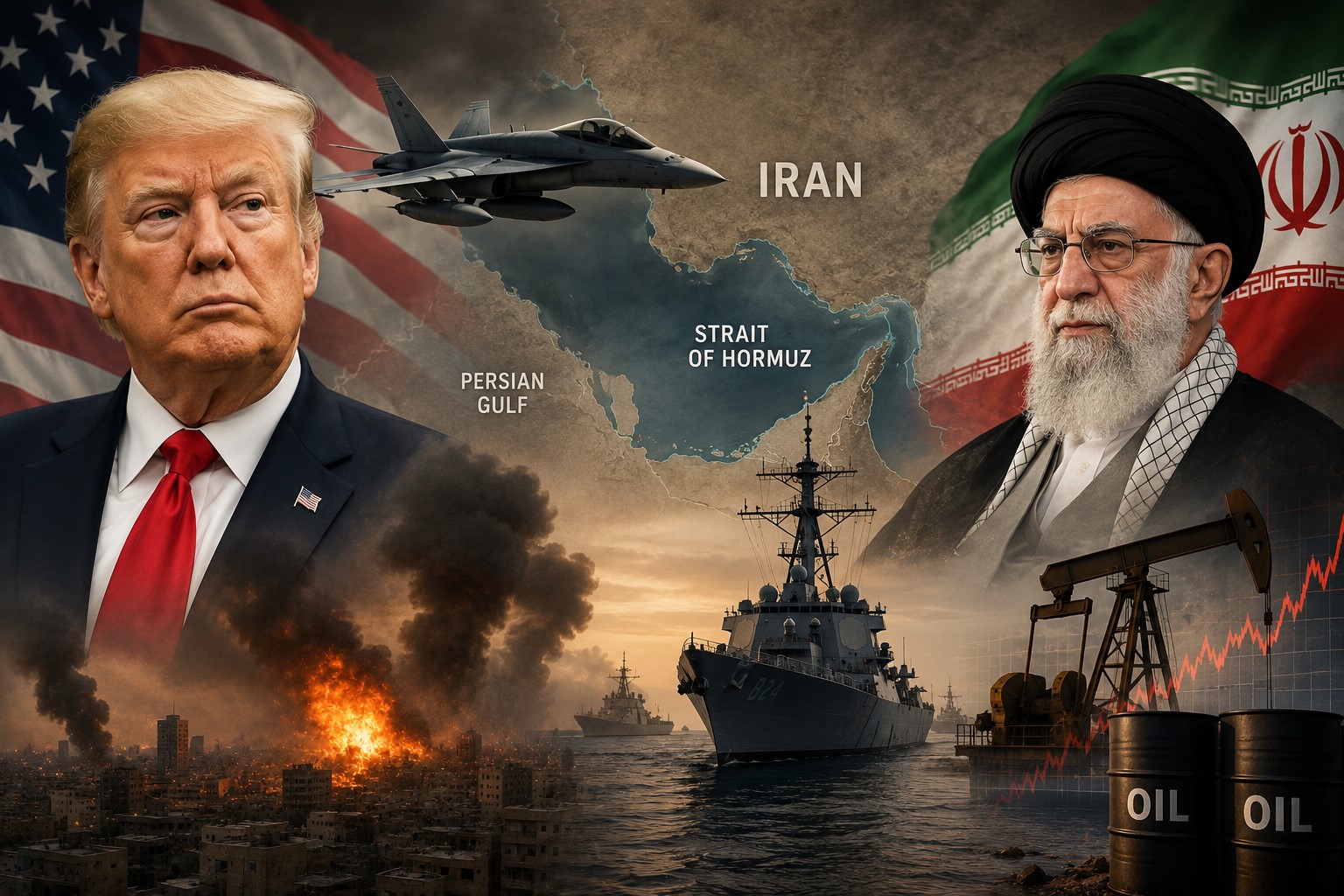
WASHINGTON — A new wave of U.S. military strikes against Iran has intensified tensions in the Middle East, prompting renewed concerns over regional stability and the collapse of diplomatic efforts aimed at easing hostilities between the two countries.
According to U.S. military officials, American forces have targeted numerous Iranian military sites over the past two days following attacks on commercial vessels near the Strait of Hormuz. The strikes mark a significant escalation after an earlier ceasefire and have fueled fears that the conflict could expand further.
President Donald Trump defended the military action, describing it as a response to Iranian attacks on international shipping. He warned that additional military measures would follow if Tehran continued targeting vessels in the strategically important waterway.
The renewed confrontation comes after a memorandum of understanding between Washington and Tehran effectively broke down. The agreement had been intended to reduce tensions by restoring shipping through the Strait of Hormuz, easing selected sanctions on Iran, and creating conditions for renewed negotiations over Tehran's nuclear program.
However, both governments increasingly accused each other of failing to honor key commitments. Iranian officials argued that promised sanctions relief and access to frozen financial assets never fully materialized, while the United States maintained concerns over Iran's regional activities and maritime operations.
Analysts say decades of mistrust have continued to undermine negotiations. Successive U.S. administrations have imposed, eased, and reinstated sanctions, leaving Iranian leaders skeptical that any future economic relief would remain in place long enough to justify major concessions.
The Strait of Hormuz has become a central point of the dispute. As one of the world's most important energy shipping routes, any disruption to traffic through the narrow waterway has immediate implications for global oil supplies and international markets. Recent attacks on commercial shipping have heightened concerns about potential supply disruptions and rising energy prices.
Security experts also note that Iran continues to retain several strategic tools, including its missile capabilities, regional allies, nuclear program, and influence over key maritime routes. These factors remain central to Tehran's negotiating position and complicate efforts to reach a lasting agreement.
Observers warn that without stronger guarantees capable of building long-term trust, future diplomatic initiatives may struggle to gain traction. As military operations continue, the risk of broader regional instability and economic consequences for global energy markets remains a significant concern.
UKEcho News brings you accurate, independent reporting from across the UK and beyond.
Comments (0)
Sign in to join the discussion.
Be the first to comment.