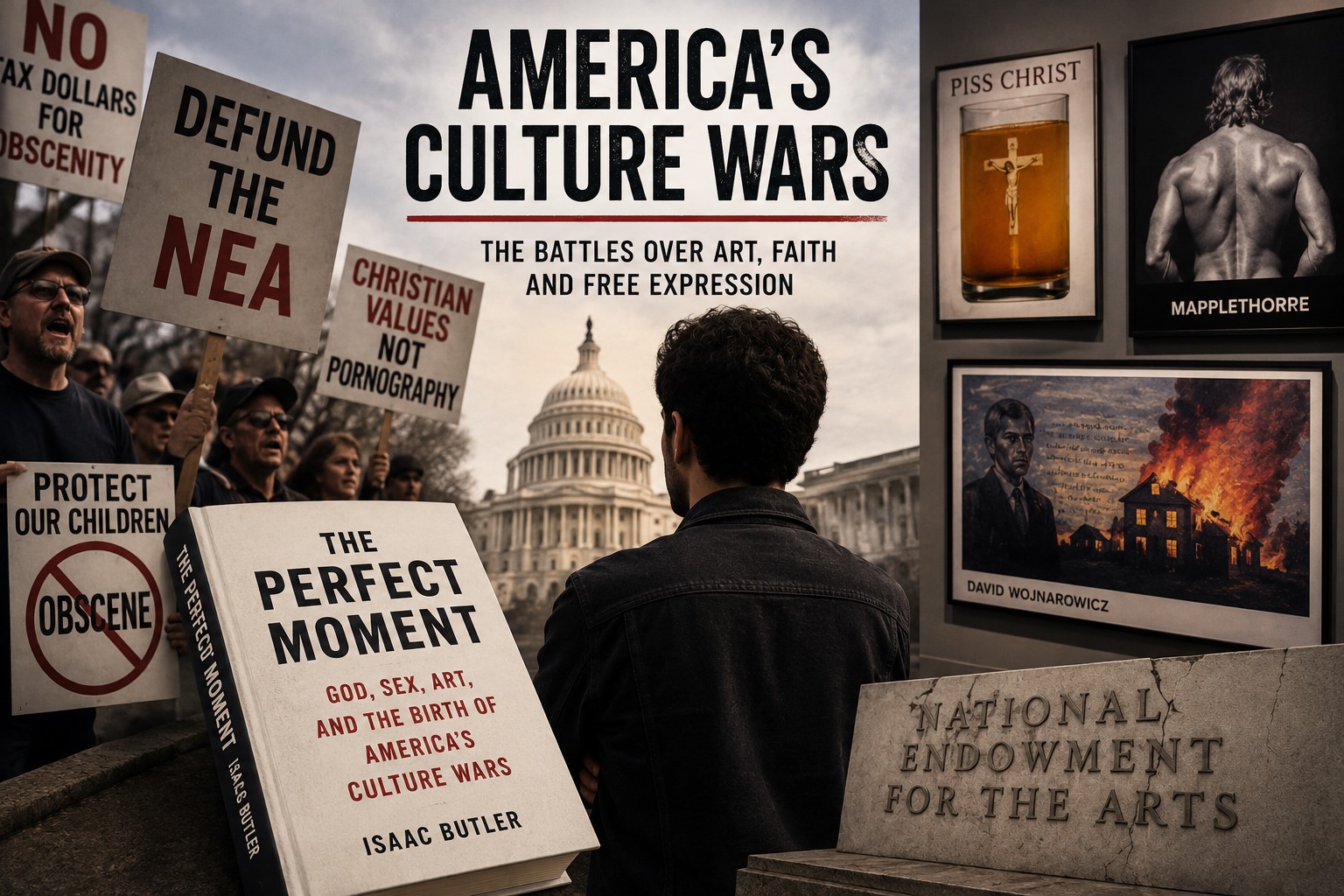
A new book by American writer and theater historian Isaac Butler revisits the late 1980s to examine how conflicts over art, free expression, and politics helped shape the culture wars that continue to influence American society today.
In The Perfect Moment: God, Sex, Art, and the Birth of America’s Culture Wars, Butler argues that many of the political and cultural battles seen across the United States today have their roots in controversies surrounding publicly funded art during the final years of the Cold War. The book traces how debates over artistic freedom evolved into broader conflicts involving identity, religion, education, and free speech.
Butler highlights several landmark controversies involving artists such as Robert Mapplethorpe, Andres Serrano, and David Wojnarowicz, whose works became the focus of intense public debate. Conservative political and religious groups questioned whether federal funding should support artwork they considered controversial, leading to nationwide discussions about censorship, artistic expression, and the role of government in supporting the arts.
According to Butler, these disputes marked a turning point in American politics by transforming cultural issues into major political campaigns. He argues that strategies developed during that period continue to influence modern debates surrounding education, LGBTQ+ rights, public institutions, and freedom of expression.
The author also reflects on more recent cultural controversies, suggesting that many public disputes today are amplified through political messaging and social media. While some debates focus on significant policy issues, Butler believes others have become symbolic conflicts that deepen political polarization without addressing broader national challenges.
The book further explores how reduced public investment in arts and cultural institutions has increased reliance on private funding, potentially limiting access to creative expression and cultural programs. Butler emphasizes that public support for museums, galleries, theaters, and artists plays an important role in preserving cultural diversity and encouraging open dialogue.
Rather than offering political solutions, The Perfect Moment encourages readers to consider the value of artistic freedom and the importance of protecting cultural institutions from political pressure. Butler argues that art remains an essential part of democratic society, helping communities reflect on history, challenge ideas, and engage in meaningful public discussion.
UKEcho News brings you accurate, independent reporting from across the UK and beyond.
Comments (0)
Sign in to join the discussion.
Be the first to comment.