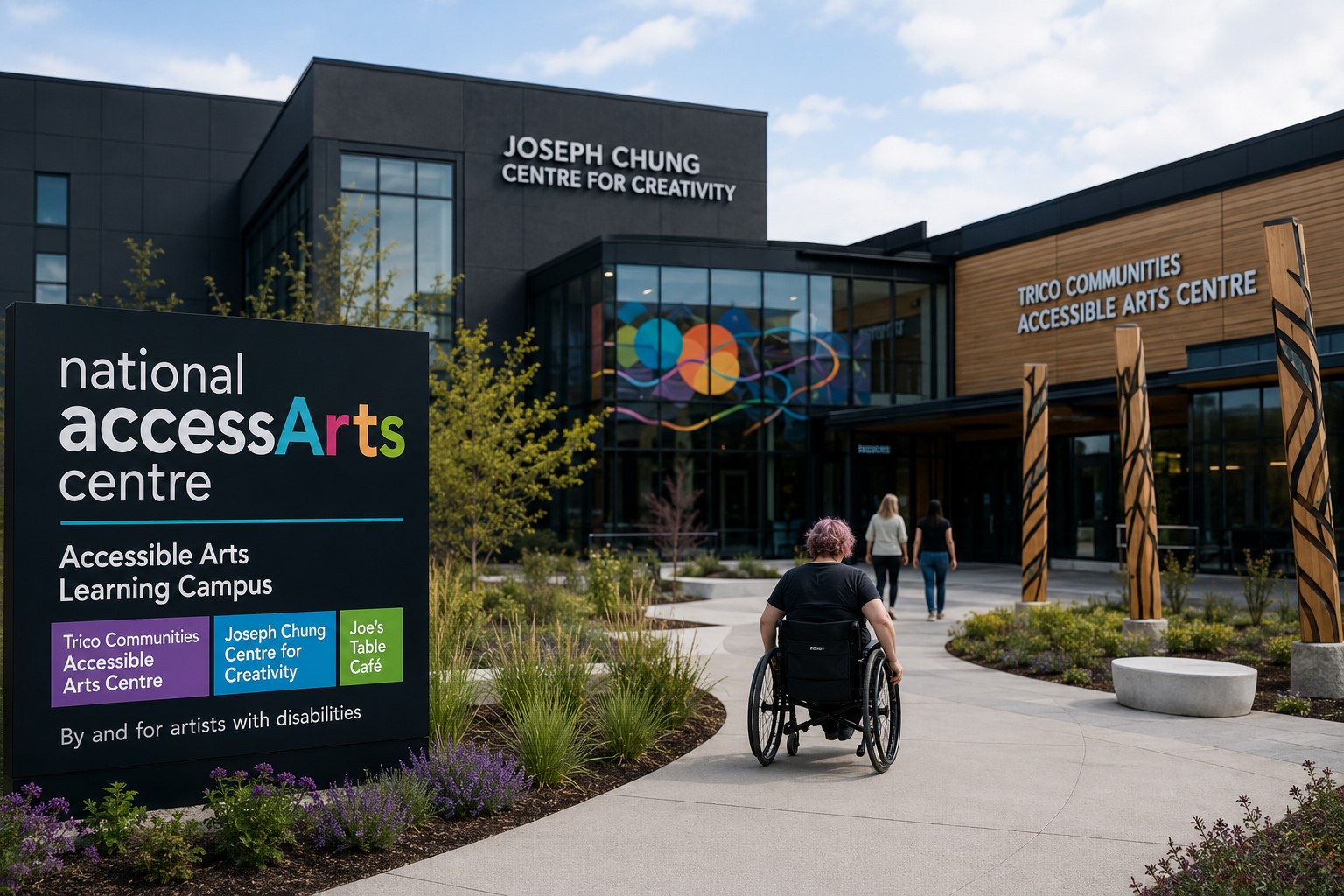
The National accessArts Centre (NaAC) is expanding its commitment to inclusive arts by developing a new Accessible Arts Learning Campus in Calgary, a project designed to provide disabled artists with purpose-built creative spaces and greater opportunities to grow their careers.
The organization, headquartered in Calgary, has consistently invested in supporting artists with disabilities. Last year alone, NaAC awarded approximately $270,000 in artist fees to creators working across visual arts, music, and dance. According to the organization, direct financial support helps artists gain greater independence and control over their professional careers, while dedicated creative spaces provide an equally important foundation for long-term artistic development.
Construction on the new campus began in June and will include the Trico Communities Accessible Arts Centre, which will focus on visual arts education and training, and the Joseph Chung Centre for Creativity, a multidisciplinary venue designed for performances, exhibitions, music production, and community events.
The campus has been designed with accessibility at its core. Planned features include barrier-free architecture, sensory-friendly environments, accessible outdoor pathways, adaptable performance spaces with vertically accessible lighting systems, and flexible studios that accommodate artists with a wide range of physical and cognitive needs. The development will also feature Joe's Table Café, operated in partnership with Lil E Coffee, creating employment opportunities for individuals with intellectual and developmental disabilities.
NaAC leaders say every aspect of the project has been shaped by consultation with the disability community to ensure the facilities meet the real needs of artists who will use them. The goal is to create an environment where accessibility is built into the design rather than added later.
The project comes at a time when many Canadian arts organizations continue to face financial pressures, leading to reduced programming and limited services. Against that backdrop, the new campus represents a significant investment in inclusive arts and cultural participation.
Statistics Canada estimates that more than one in four Canadians aged 15 and older live with at least one disability, highlighting the importance of creating spaces that remove barriers to artistic expression and professional development.
NaAC describes the Accessible Arts Learning Campus as a pioneering initiative that aims to become a global model for accessible arts education and creative collaboration. Community members involved in the project say the campus represents not only a new cultural space but also a place where disabled artists can create, perform, and connect without facing unnecessary barriers.
UKEcho News brings you accurate, independent reporting from across the UK and beyond.
Comments (0)
Sign in to join the discussion.
Be the first to comment.