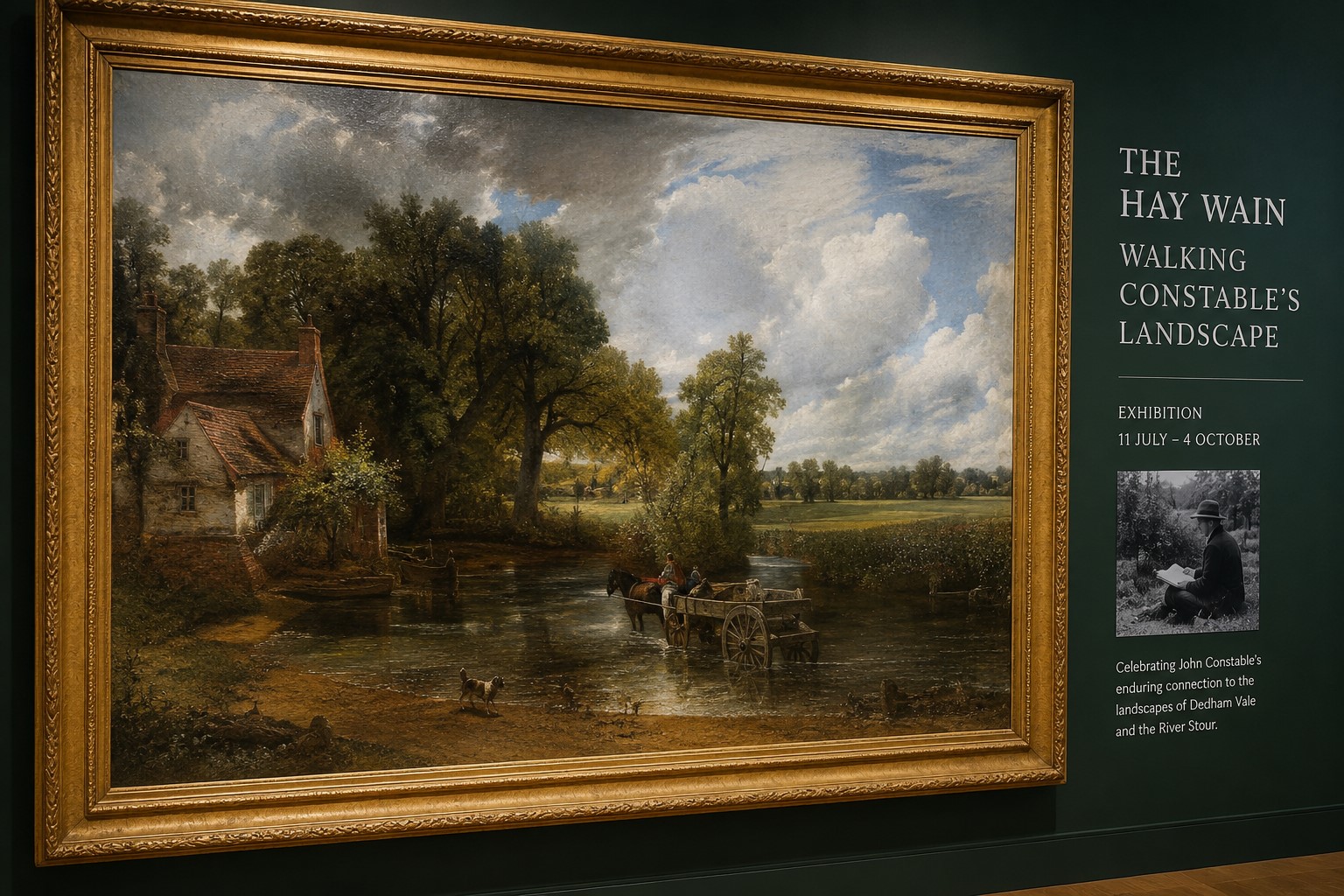
Ipswich, England: A new exhibition, The Hay Wain: Walking Constable’s Landscape, offers visitors a fresh perspective on John Constable’s celebrated 1821 masterpiece, revealing how the iconic painting resonates in today's world of rising temperatures and environmental change.
Hosted at Christchurch Mansion in Ipswich, the exhibition brings The Hay Wain closer to the Suffolk countryside that inspired it. Surrounded by Constable’s sketches, watercolours, and oil studies, the display traces the artist’s lifelong connection to the landscapes of Dedham Vale and the River Stour.
The exhibition arrives during a period of unusually hot weather, creating a striking contrast between Constable’s lush green countryside and the dry, heat-affected landscapes seen across parts of England today. The comparison encourages visitors to reflect on how dramatically the natural environment has changed over the past two centuries.
Rather than presenting Constable as simply a nostalgic painter of rural England, the exhibition argues that he was deeply committed to preserving the landscapes he loved. His works capture the harmony between nature, farming communities, rivers, forests, and villages at a time when industrialisation was beginning to reshape Britain.
The Hay Wain remains the centrepiece of the exhibition, depicting everyday rural life with remarkable detail. Farmers harvest crops, a horse-drawn cart pauses in a shallow river, and villagers continue their daily routines beneath expansive skies. The painting's calm atmosphere and sweeping perspective continue to captivate audiences while offering a reminder of the importance of protecting natural landscapes.
The exhibition also showcases Constable’s early drawings and studies, highlighting how closely he observed the countryside throughout his life. These works reveal his dedication to recording the changing seasons, weather, and rural scenery that became the foundation of his artistic legacy.
Running from 11 July to 4 October at Christchurch Mansion in Ipswich, the exhibition invites art lovers and environmental observers alike to reconsider one of Britain's most famous paintings through the lens of the modern climate crisis.
UKEcho News brings you accurate, independent reporting from across the UK and beyond.
Comments (0)
Sign in to join the discussion.
Be the first to comment.