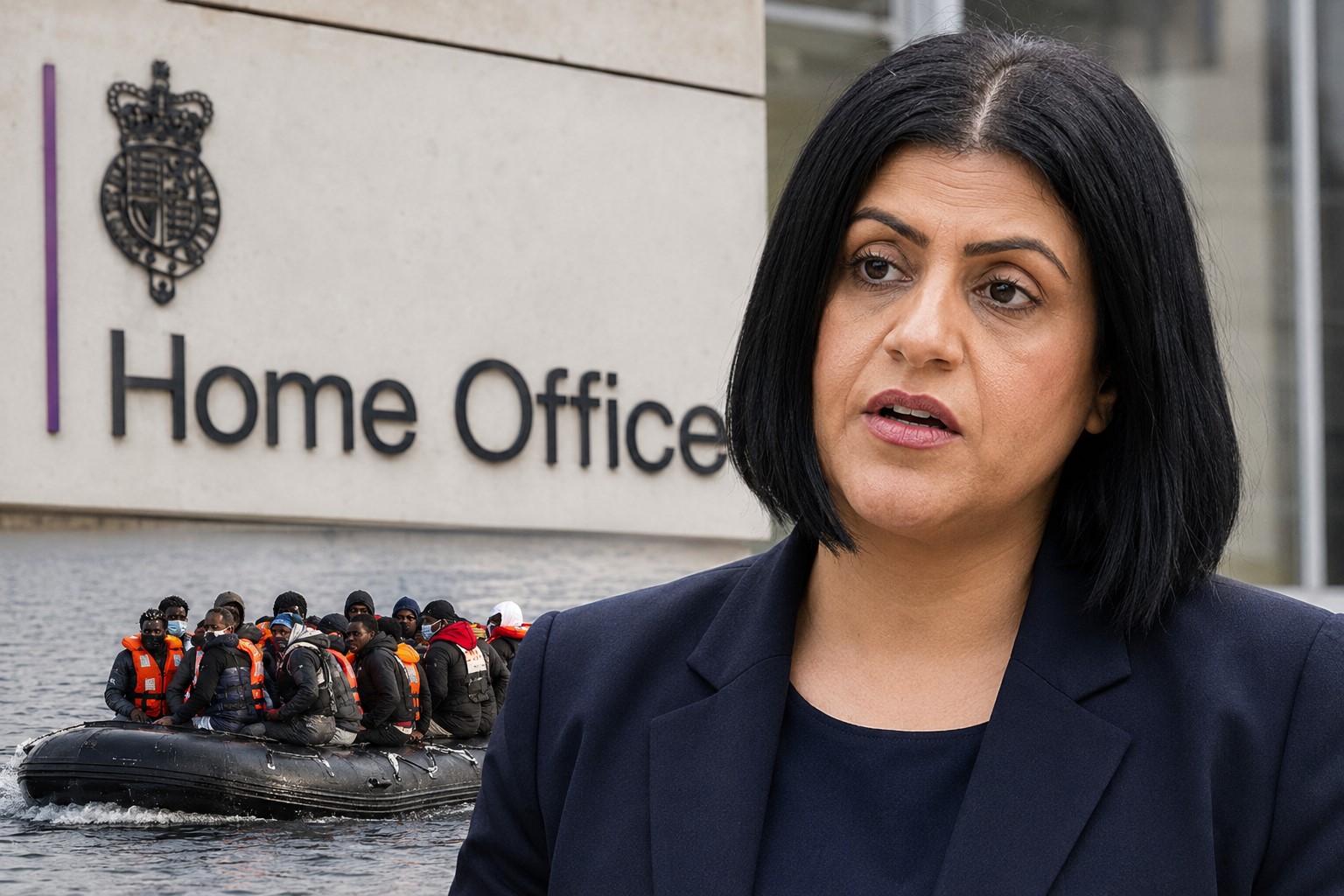
A UK High Court has ruled that the Home Secretary acted unlawfully by reducing protections for potential victims of human trafficking as part of measures designed to support the government's "one in, one out" asylum returns agreement with France.
The legal challenge was brought by five asylum seekers—four from Eritrea and one from Sudan—who arrived in the UK by small boat and were selected for possible return to France under the bilateral arrangement. Their case focused on revised government guidance that removed the ability for individuals denied trafficking protections to request a reconsideration of that decision.
In a detailed judgment, Mr Justice Sheldon concluded that the changes to the trafficking guidance were unlawful. The judge found that removing the reconsideration process had a meaningful impact on two of the claimants' cases, although it did not affect the remaining two in the same way. However, the court upheld other individual decisions made by the Home Secretary in relation to the five asylum seekers.
The court granted all five claimants permission to continue their legal claims, a decision that could have wider implications for the UK's asylum system. Many people arriving in the UK via small boats are believed to be potential victims of trafficking, particularly those who travelled through Libya before reaching Europe.
The "one in, one out" agreement allows the UK to return certain asylum seekers who crossed the English Channel from France in exchange for accepting other asylum seekers from France through legal routes. The government introduced changes to trafficking guidance to speed up removals under the scheme.
Since the agreement began last year, more than 1,000 migrants are believed to have been returned to France, while hundreds of others remain in UK detention centres awaiting removal.
Government lawyers argued that France's legal framework provides adequate protections for trafficking victims. However, evidence presented during the hearing suggested that non-French trafficking victims or those exploited outside France may not receive the same level of protection available under the UK's support system.
UKEcho News brings you accurate, independent reporting from across the UK and beyond.
Comments (0)
Sign in to join the discussion.
Be the first to comment.