Andreas Angelidakis Transforms Personal Loss Into a Powerful Venice Biennale Installation
Greek artist Andreas Angelidakis has unveiled an immersive and thought-provoking installation at the 2026 Venice Biennale, blending contemporary politics, LGBTQ+ culture, history, and personal experience into one of the event's most talked-about exhibitions.
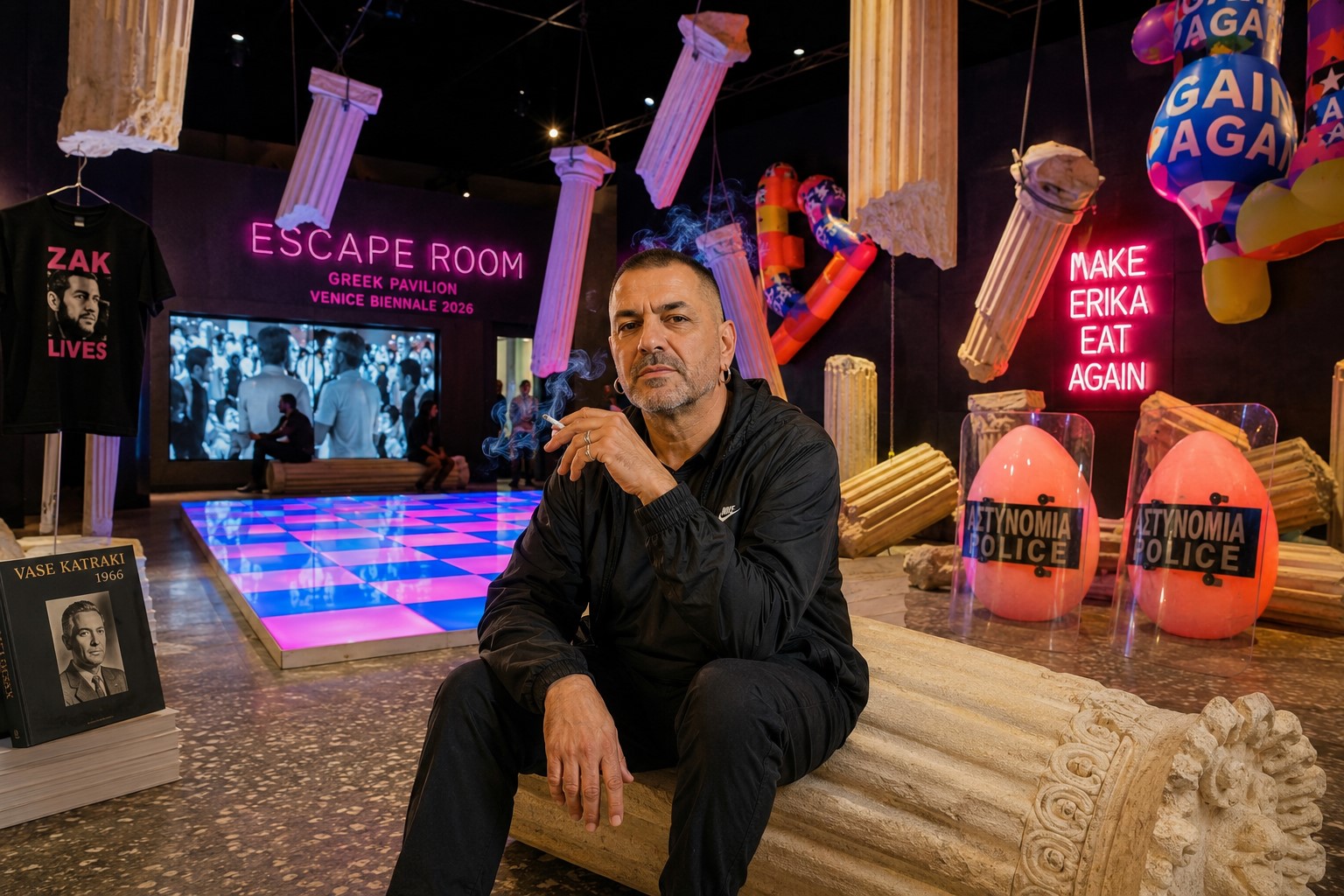
Titled Escape Room, the installation occupies the Greek Pavilion and challenges visitors to rethink ideas of nationalism, identity, and political power. Featuring a glowing dance floor, suspended classical columns, mirrored digital displays, and references ranging from ancient Greece to internet culture, the exhibition invites audiences into a symbolic space where history and modern society collide.
Angelidakis said the pavilion itself serves as the inspiration for the project, reflecting on its origins during the politically charged 1930s and questioning the role of national pavilions in today's global art world. Rather than celebrating national identity, the artist transforms the space into what he describes as an "escape room" from political divisions and historical narratives.
The installation incorporates references to fascism, migration, social media, LGBTQ+ activism, and contemporary political movements. It also pays tribute to Greek LGBTQ+ activist Zak Kostopoulos while exploring themes of democracy, memory, and resistance through interactive artworks and multimedia displays.
Beyond its political message, Escape Room is deeply rooted in Angelidakis' own life. The artist revealed that a series of devastating events permanently changed both his outlook and artistic direction. Within just a few months, he lost his father to cancer, struggled with financial collapse, and received an HIV diagnosis.
The emotional impact of those experiences led him to move away from architecture and fully embrace contemporary art. He later endured further personal tragedy following the death of his mother and the end of his long-term marriage, experiences that continue to influence his creative work.
Originally trained as an architect, Angelidakis studied in Athens before continuing his education in Los Angeles and New York, where he became an early adopter of digital design and internet-based artistic practices. His fascination with technology, online communities, and virtual environments has remained central to his work for decades.
The artist also credits popular culture as a major influence, particularly the music of the 1980s and the cultural impact of RuPaul's Drag Race, which he believes has transformed conversations around identity and gender for younger generations.
Although many of his installations appear playful and colorful, Angelidakis says they are often built around deeply personal themes including grief, trauma, mental health, and survival. By combining humor, music, dance, and immersive environments with darker emotional narratives, he hopes visitors can engage with difficult subjects in unexpected ways.
With Escape Room, Angelidakis delivers a visually striking and emotionally layered exhibition that reflects both his personal journey and broader questions about politics, history, identity, and the future of contemporary art.
UKEcho News brings you accurate, independent reporting from across the UK and beyond.
Comments (0)
Sign in to join the discussion.
Be the first to comment.