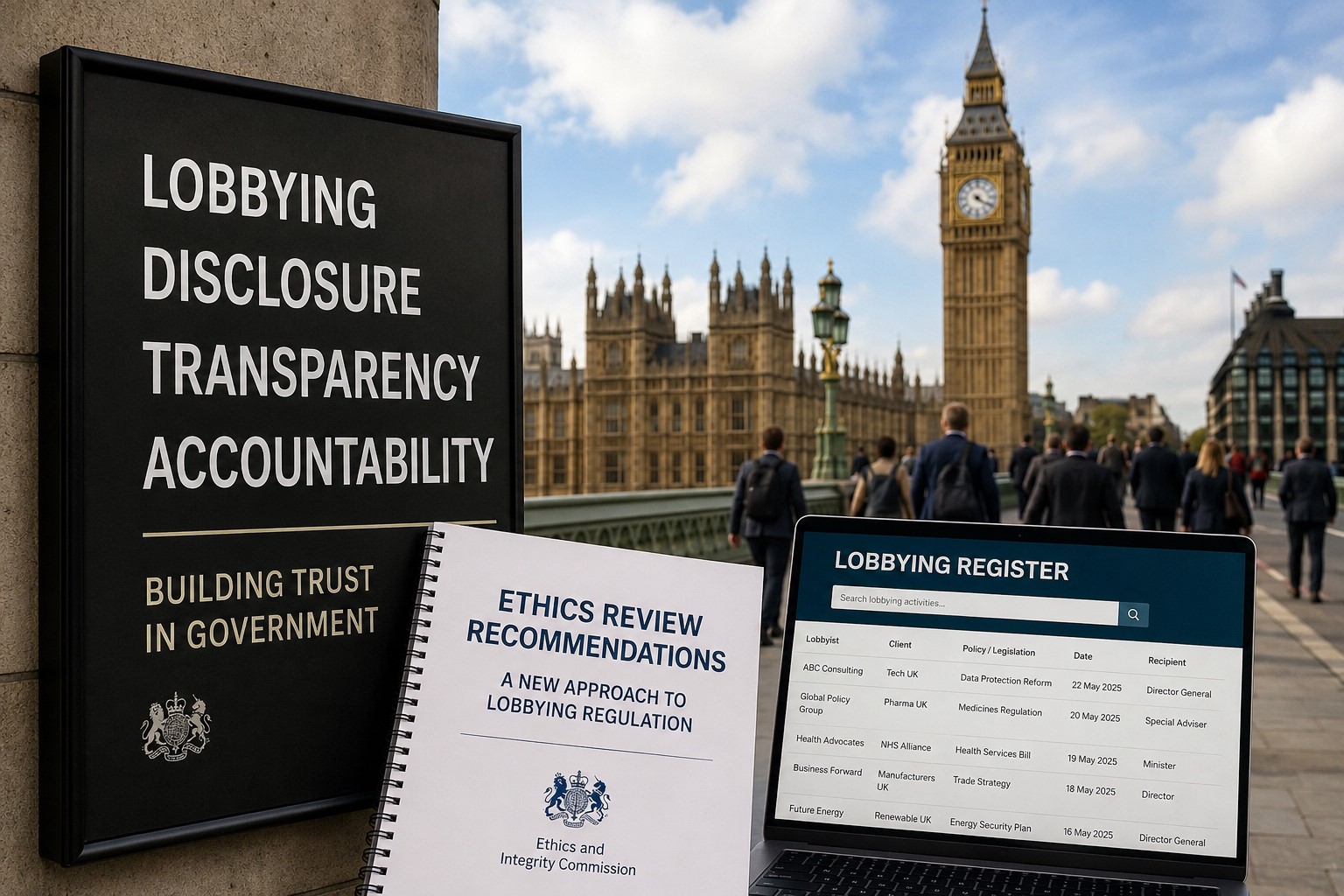
A sweeping review into government ethics has recommended that every instance of lobbying involving ministers, senior officials, and government advisers should be publicly disclosed in an effort to improve transparency and rebuild public confidence in the political system.
The review, led by Doug Chalmers, head of the UK's Ethics and Integrity Commission, proposes replacing the current lobbying framework with a comprehensive public register. Under the recommendations, any individual or organization attempting to influence government policy would be required to report who they represent, which policies or legislation they are targeting, and which public officials they have contacted.
The proposals would require significant legislative changes but are being presented as a necessary step toward strengthening accountability in government.
Review Triggered by Mandelson Controversy
The review was commissioned by Prime Minister Keir Starmer following controversy surrounding Peter Mandelson, who retained a financial interest in a lobbying firm while serving as the UK's ambassador to the United States. The incident renewed concerns about conflicts of interest and the effectiveness of existing lobbying rules.
Responsibility for deciding whether to implement the recommendations is expected to fall to Andy Burnham, widely viewed as a potential successor to Starmer.
Current Rules Cover Only a Fraction of Lobbying
The existing UK lobbying register applies primarily to consultant lobbyists and contains several exemptions, resulting in only an estimated 4% to 6% of lobbying activity being publicly recorded.
Previous lobbying controversies have highlighted these shortcomings. Former Prime Minister David Cameron faced criticism after lobbying ministers on behalf of financial services firm Greensill Capital, which later collapsed.
According to Chalmers, the current framework fails to meet the standards of openness outlined in the Nolan Principles, which require public office holders to act transparently, remain accountable, and be open to public scrutiny.
Key Recommendations
The report proposes a broad overhaul of lobbying regulations, including:
- Requiring every individual or organization engaged in lobbying to register and regularly disclose their lobbying activities.
- Expanding disclosure requirements to include communications with special advisers, directors general, senior civil servants, non-executive directors, and other high-ranking government advisers, not just ministers and permanent secretaries.
- Eliminating exemptions that currently allow certain lobbyists to avoid registration, including VAT-related exemptions and lobbying considered "incidental."
- Creating an AI-powered public platform that links lobbying disclosures with official ministerial meeting records, making information easier to search.
- Preventing ministers and government officials from discussing policy or legislation with organizations that have not registered their lobbying activities.
- Requiring officials to disclose lobbying conducted through informal channels such as WhatsApp messages, text messages, party conferences, or casual meetings.
- Recording detailed information for every lobbying engagement, including the lobbyist, client, intended beneficiary, method of communication, subject matter, targeted legislation or policy, funding sources, and date of contact.
- Increasing financial penalties for organizations or individuals who fail to register or violate lobbying regulations.
Industry Welcomes Greater Transparency
The proposals have received support from the Chartered Institute of Public Relations (CIPR), which has long advocated for more comprehensive lobbying disclosure rules.
CIPR Chief Executive Alastair McCapra said replacing the existing consultant-based register with an activity-based system would significantly improve public understanding of how lobbying influences government decision-making.
He argued that years of lobbying controversies have damaged trust in Westminster and that greater transparency would help distinguish legitimate public engagement from improper influence.
McCapra said a comprehensive register would provide citizens with a clearer picture of who is seeking to influence government policy while helping restore confidence in democratic institutions.
UKEcho News brings you accurate, independent reporting from across the UK and beyond.
Comments (0)
Sign in to join the discussion.
Be the first to comment.