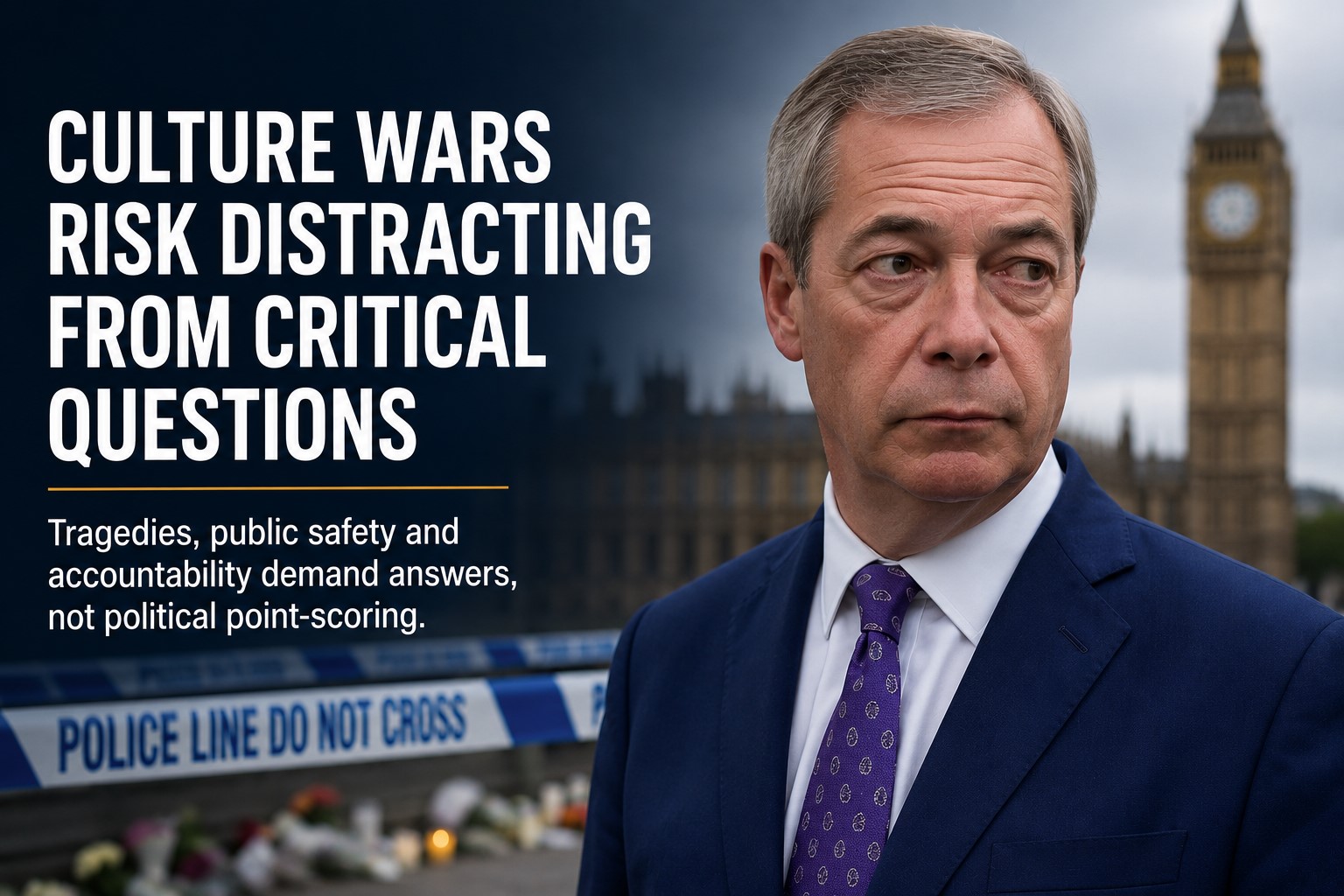
The political debate surrounding recent high-profile tragedies has intensified, with growing concerns that culture-war arguments are overshadowing deeper questions about public safety, mental health services, and institutional accountability.
The deaths of young people in separate incidents have prompted emotional public discussions and calls for answers from policymakers, police forces, and healthcare providers. However, some commentators argue that political narratives are increasingly dominating conversations that should remain focused on preventing future tragedies.
Critics warn that reducing complex failures to simple ideological arguments risks obscuring the real lessons that need to be learned.
Recent political exchanges have centred on claims that concerns about discrimination and equality policies may have influenced decisions within public institutions. Supporters of this view argue that fear of criticism can affect decision-making, while opponents say the evidence remains far more complex than political slogans suggest.
Families affected by previous tragedies have repeatedly called for careful investigations, transparency, and meaningful reforms rather than partisan point-scoring. Many campaigners argue that inquiries should focus on practical improvements to public services rather than becoming battlegrounds in broader cultural disputes.
The debate has highlighted wider concerns about mental health care, policing standards, risk assessment procedures, and the ability of public institutions to respond effectively to warning signs before serious incidents occur.
Political analysts say the controversy reflects growing divisions within British politics, where issues of identity, equality, public safety, and institutional trust increasingly intersect.
As official investigations continue, many observers believe the priority should remain on evidence-based reforms that improve public safety and accountability rather than allowing emotionally charged culture-war debates to dominate the conversation.
The challenge for policymakers will be ensuring that future lessons are driven by facts and findings rather than political narratives.
UKEcho News brings you accurate, independent reporting from across the UK and beyond.
Comments (0)
Sign in to join the discussion.
Be the first to comment.