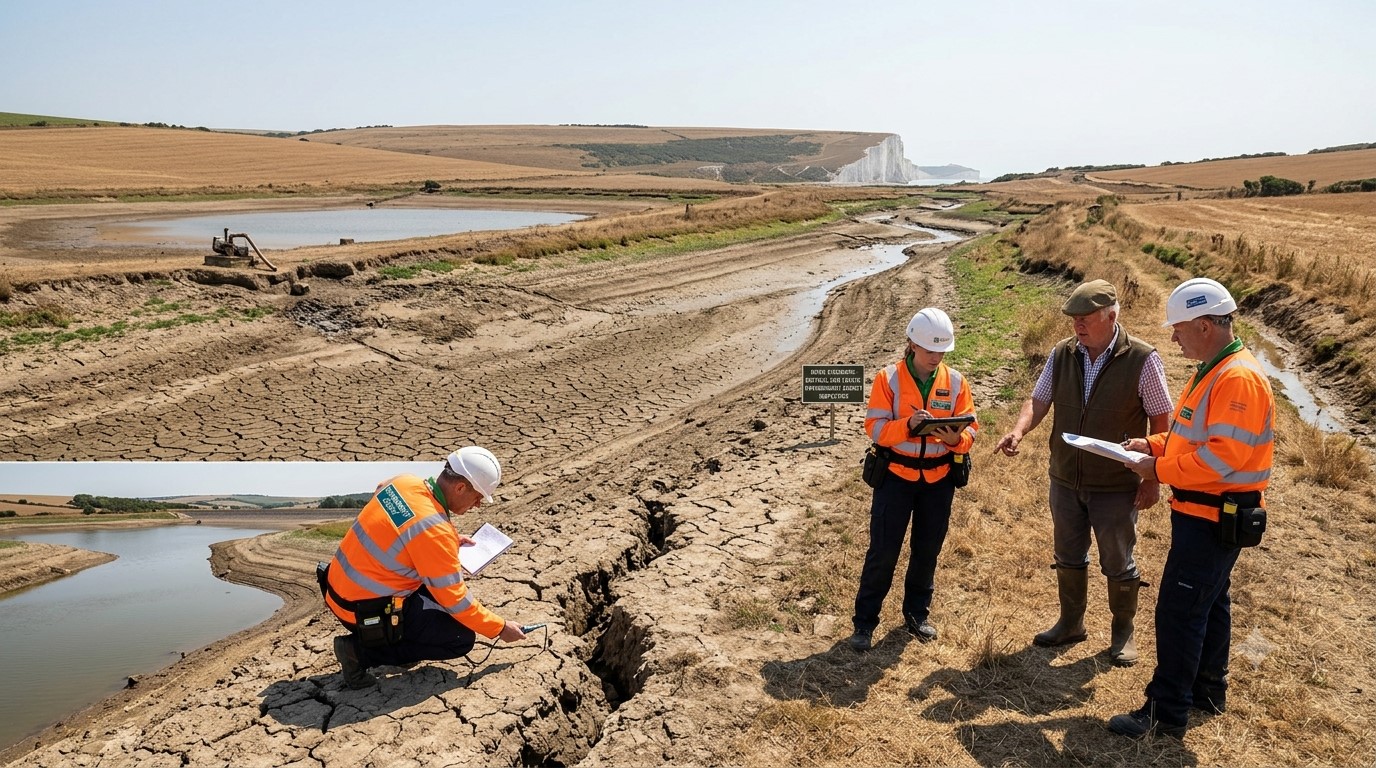
LONDON — England and Wales have officially recorded their driest July since records began, according to provisional Met Office data, marking a major milestone in what has already become one of Britain's most extreme summers. The announcement has intensified concerns over drought, water resources and wildfire risks across large parts of the country.
The exceptionally dry conditions have left rivers and reservoirs under increasing pressure, while several regions remain under drought declarations and hosepipe restrictions. Farmers continue to report difficult growing conditions as prolonged dry weather affects crops and livestock.
Environmental agencies are closely monitoring water supplies, with officials urging households and businesses to use water responsibly as forecasts suggest rainfall is likely to remain below seasonal averages in many southern areas. Emergency planners also continue to warn of an elevated wildfire risk following weeks of unusually hot and dry weather.
Scientists say the latest figures underline the growing impact of climate extremes on the UK, increasing pressure on agriculture, ecosystems and public infrastructure. They argue that long-term investment in water resilience and climate adaptation will become increasingly important as prolonged dry spells become more frequent.
The record-breaking July now ranks among the most significant weather events in modern British history, with authorities expected to continue monitoring drought conditions throughout August.
UKEcho News brings you accurate, independent reporting from across the UK and beyond.
Comments (0)
Sign in to join the discussion.
Be the first to comment.