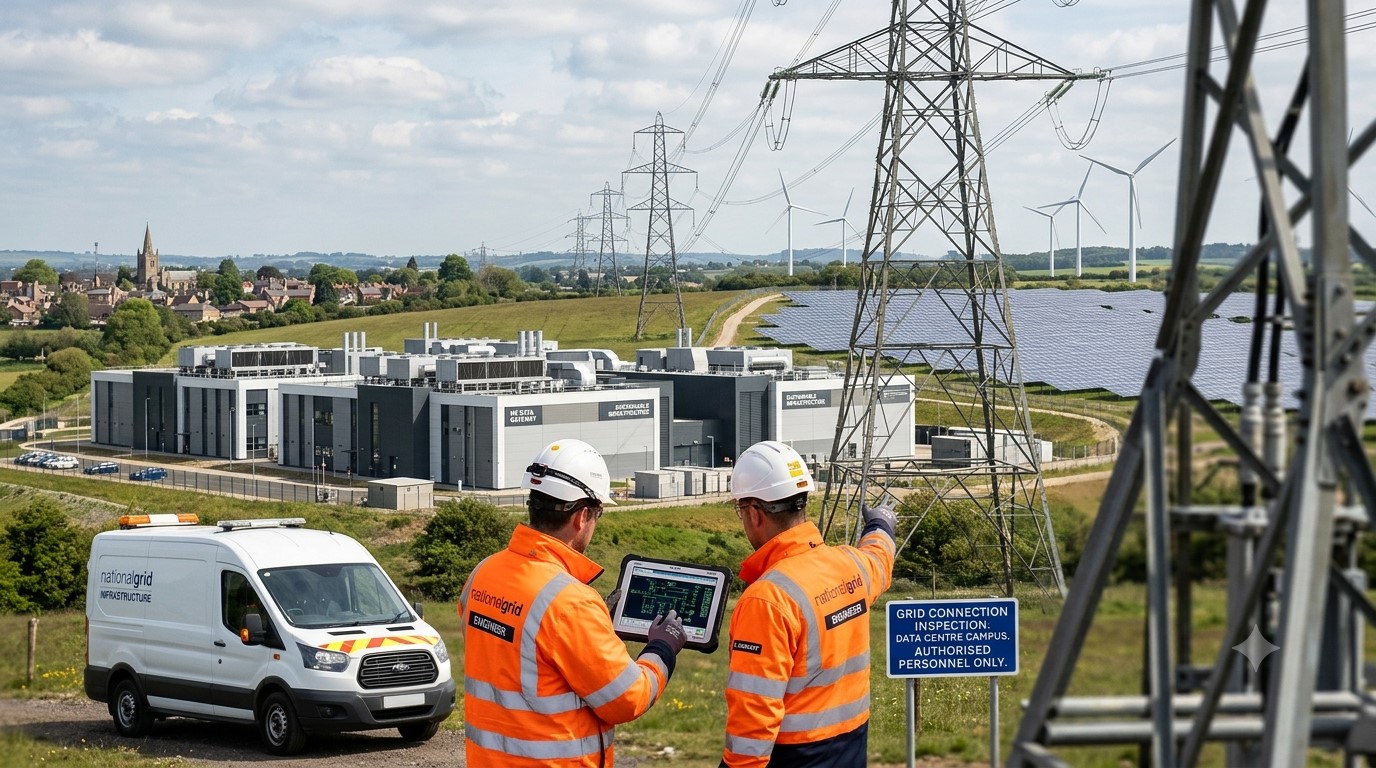
Britain has set ambitious goals to become one of the world's leading destinations for artificial intelligence and digital investment. Yet there is a growing risk that outdated electricity infrastructure—not a shortage of ideas or talent—could become the biggest obstacle to that ambition.
The rapid rise in applications for new data centres has exposed serious pressure on the UK's electricity network. In response, Ofgem has proposed new connection fees and stricter project milestones to discourage speculative applications and ensure that serious investors gain faster access to limited grid capacity. These measures are now under consultation.
The principle behind the reforms is sensible. Grid capacity should not be locked up by projects that never materialise while businesses ready to invest, create jobs and strengthen Britain's digital economy wait years for a connection.
However, connection reform alone is not enough. The UK also needs faster grid expansion, more strategic energy planning and quicker planning decisions for nationally important infrastructure. Without those changes, Britain risks losing investment to countries able to deliver power, land and approvals more efficiently.
The challenge extends well beyond technology companies. Modern electricity infrastructure will also support advanced manufacturing, clean energy projects, transport electrification and future economic growth across every region of the country.
Britain's AI ambitions will ultimately depend as much on transformers, substations and transmission lines as on software and innovation. If policymakers can combine faster infrastructure delivery with sensible regulation, the country will be better placed to compete in the global digital economy for decades to come.
UKEcho News brings you accurate, independent reporting from across the UK and beyond.
Comments (0)
Sign in to join the discussion.
Be the first to comment.