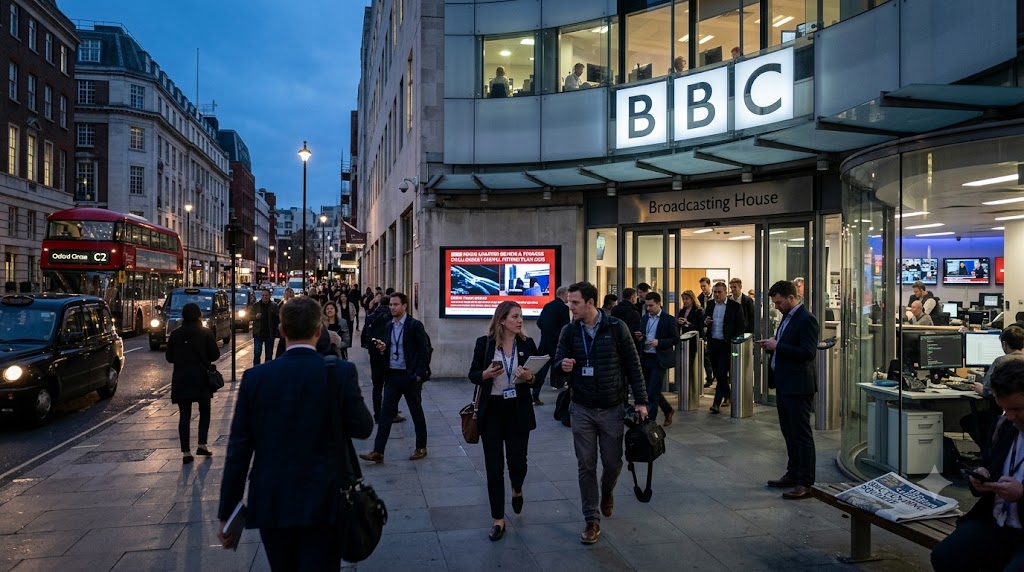
The BBC is facing a difficult financial period, with its latest accounts highlighting the scale of the challenge facing Britain's public-service broadcaster.
BBC public-service cash reserves fell 66% to £125 million in the latest financial year, down from £369 million the previous year and the lowest level reported in a decade. The corporation also recorded a £121 million deficit, compared with a forecast deficit of £33 million.
The figures come as the BBC works on a major cost-saving programme intended to deliver around £500 million in savings, including plans that could result in up to 2,000 job losses. The broadcaster says its financial pressures reflect falling licence-fee income, higher production costs, competition from streaming platforms and the changing way audiences consume media.
The bigger editorial question
The issue is about more than the BBC's balance sheet. How Britain funds and maintains public-service journalism is becoming an increasingly important national debate.
The BBC is also investing in digital transformation as audiences increasingly move towards online platforms such as YouTube and other streaming services. At the same time, discussions are continuing over the broadcaster's future funding arrangements as its current Charter approaches its 2027 expiry.
For audiences, the central question is how the BBC can manage its finances while continuing to provide news, education, entertainment and regional coverage across the UK.
The latest figures therefore provide an opportunity to examine a wider issue: what should Britain's public-service media look like in an increasingly digital and financially pressured broadcasting environment?
UKEcho News brings you accurate, independent reporting from across the UK and beyond.
Comments (0)
Sign in to join the discussion.
Be the first to comment.