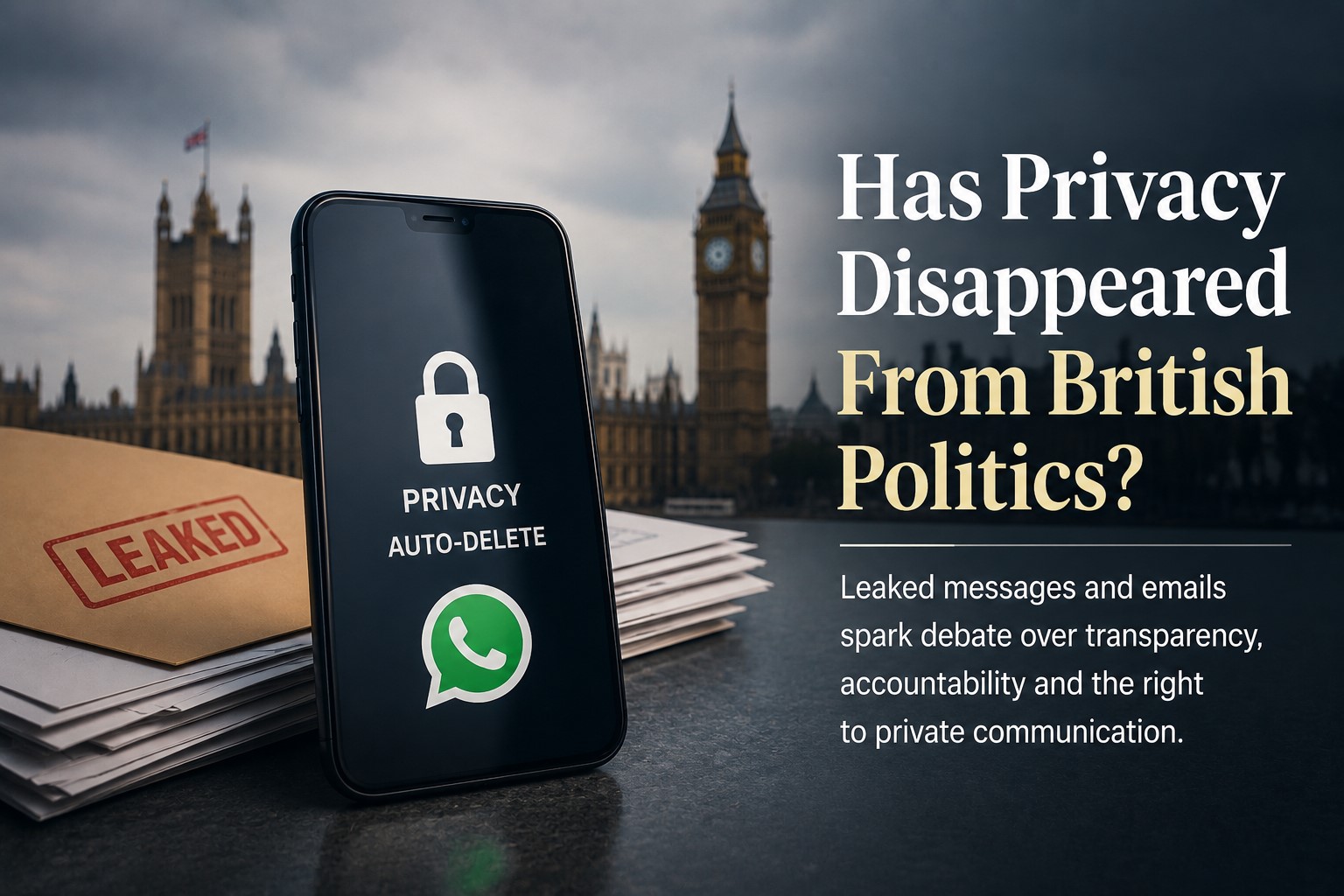
The growing publication of private messages, emails and internal communications is raising fresh questions about whether politicians and public officials can still speak candidly behind closed doors.
Recent controversies surrounding leaked government communications have reignited the debate over transparency and privacy in public life. Supporters of disclosure argue that elected officials should be accountable for their actions and decisions, while critics warn that constant exposure risks damaging honest discussions within government.
As digital communication increasingly replaces traditional meetings and correspondence, concerns are growing about the security of private conversations between ministers, advisers and diplomats. Some observers argue that fear of future leaks could discourage frank exchanges, ultimately affecting the quality of decision-making.
The debate extends beyond politics, touching on wider issues of cybersecurity, data protection and personal privacy in the digital age. Experts note that no communication platform can guarantee complete security, leaving governments and institutions vulnerable to leaks and unauthorised disclosures.
While transparency remains a cornerstone of democracy, questions persist about where the balance should lie between public accountability and the need for confidential discussions. As technology continues to reshape political communication, the challenge of protecting privacy while maintaining trust is likely to remain a major issue for British politics.
UKEcho News brings you accurate, independent reporting from across the UK and beyond.
Comments (0)
Sign in to join the discussion.
Be the first to comment.