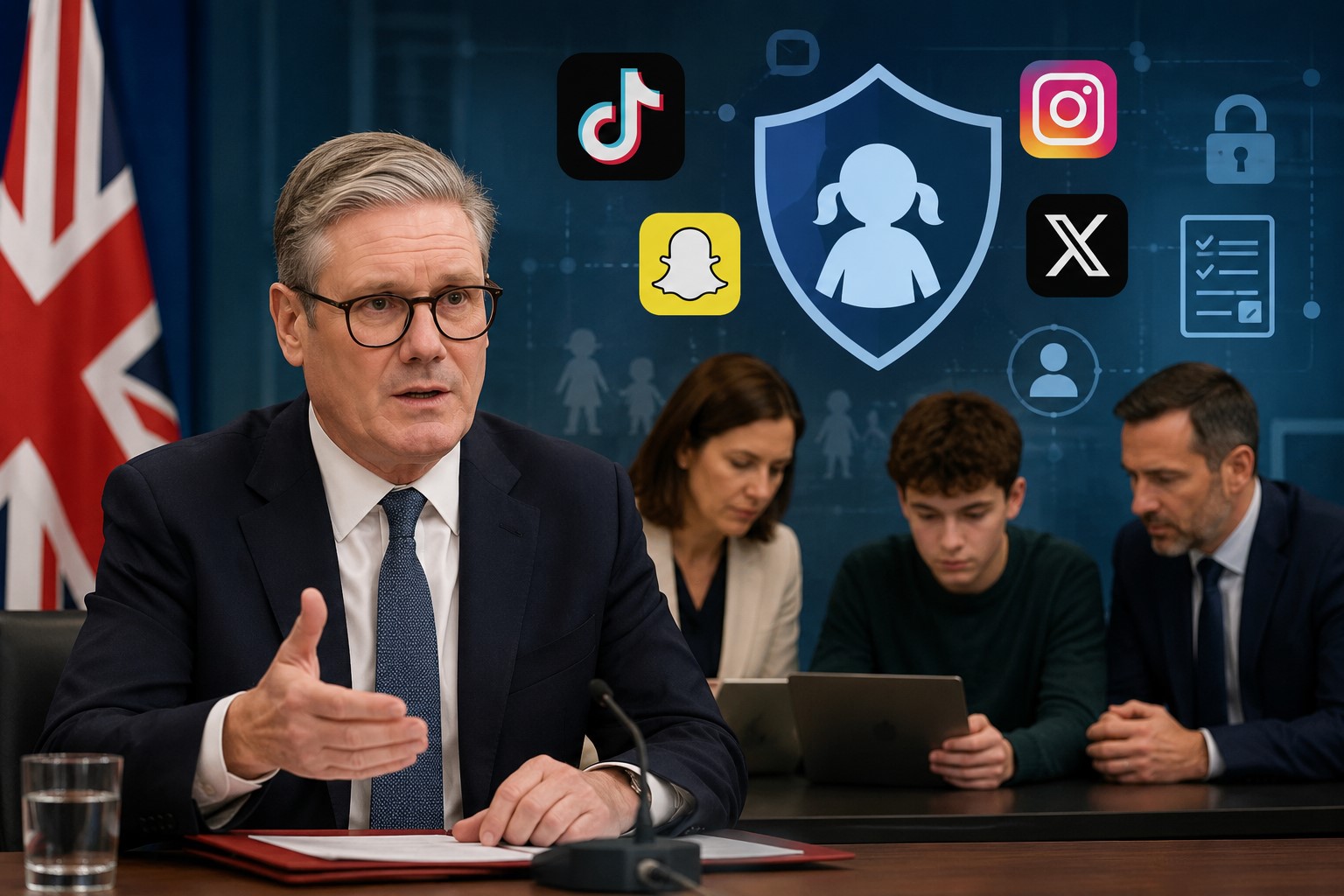
The UK government is preparing to launch a sweeping package of online safety measures that could dramatically change how young people access social media platforms.
Under the proposed reforms, children under the age of 16 could face restrictions on some of the country's most widely used social media services as ministers seek to address growing concerns about online safety, addictive content and the impact of digital platforms on mental wellbeing.
The plans represent one of the most significant interventions in the digital sector by a British government and follow months of consultation involving parents, educators, technology experts and child safety campaigners.
Government officials argue that stronger protections are needed to help shield children from harmful content, excessive screen time and unwanted contact with strangers online.
The proposals are expected to include restrictions on features considered particularly addictive, alongside tougher safeguards across social media, messaging and digital communication platforms. Additional measures could affect how younger users interact with livestreaming, private messaging and recommendation algorithms.
Supporters of the reforms say parents have increasingly voiced concerns about the influence of social media on young people's mental health, attention spans and overall wellbeing. Consultation responses reportedly showed strong support among parents for raising the minimum age for access to major platforms.
However, critics have questioned whether blanket restrictions can be effectively enforced and warned that determined users may seek alternative methods to bypass age controls. Others argue that responsibility should fall more heavily on technology companies to improve safety standards rather than limiting access outright.
The debate highlights the growing challenge facing governments around the world as they attempt to balance child protection, personal freedom and technological innovation.
The UK joins a broader international movement examining stricter online safeguards for younger users, with policymakers increasingly focused on the role digital platforms play in children's daily lives.
For Starmer, the announcement represents a major political test. The government will need to convince both families and technology firms that its approach can improve online safety while remaining practical and enforceable.
As the proposals move forward, they are expected to generate intense debate across Westminster, the technology industry and the wider public about the future of social media regulation in Britain.
UKEcho News brings you accurate, independent reporting from across the UK and beyond.
Comments (0)
Sign in to join the discussion.
Be the first to comment.