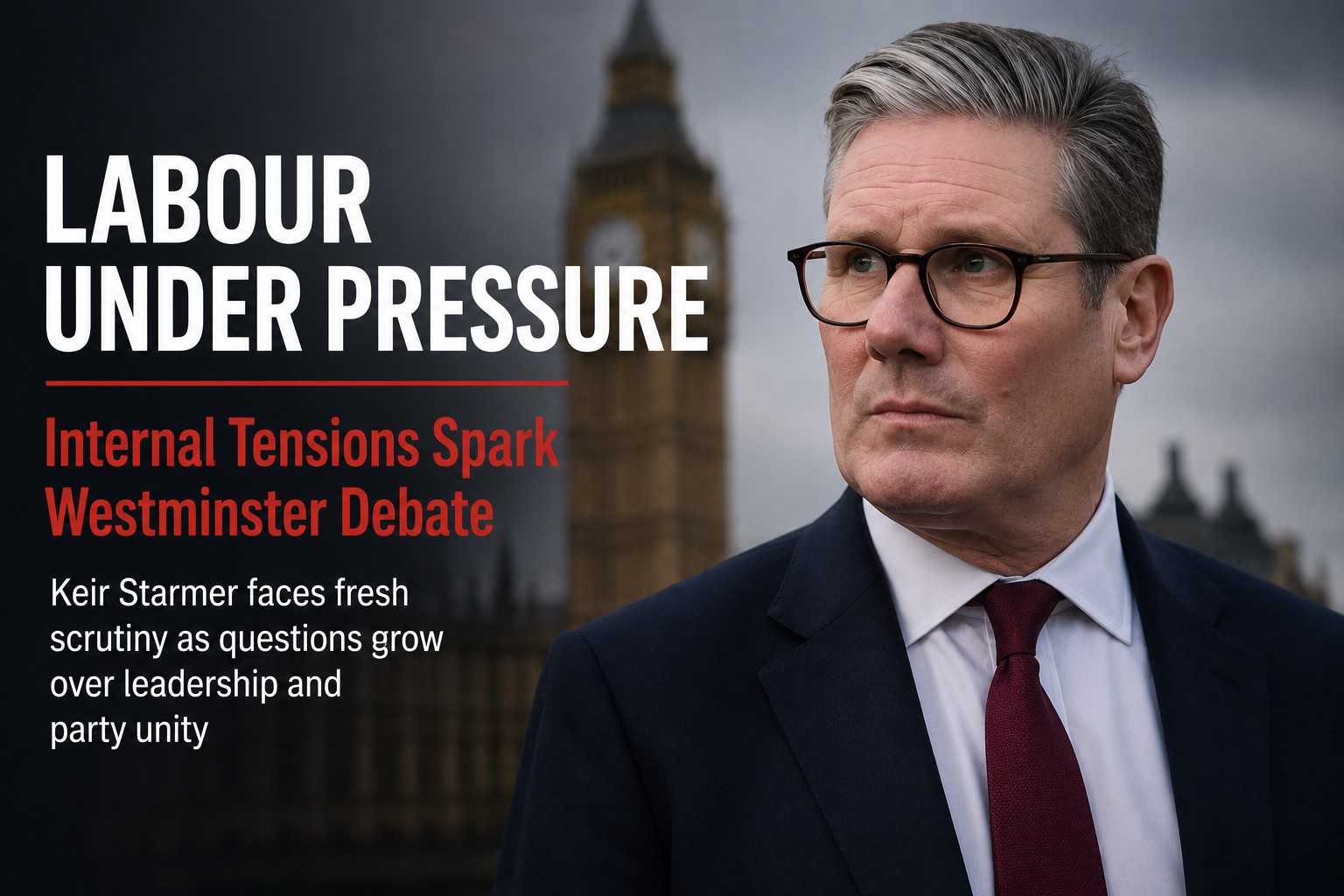
The Labour Party is facing renewed political scrutiny following reports of growing tensions surrounding senior figures and internal party decision-making.
The developments have sparked discussion among MPs and political observers, placing additional pressure on Prime Minister Keir Starmer as the government seeks to maintain unity while advancing its policy agenda.
Questions surrounding leadership strategy, political accountability, and party management have become central to the debate. Supporters argue that strong leadership is essential to delivering stability and long-term reform, while critics have called for greater transparency regarding key decisions and internal processes.
The controversy has generated significant attention across Westminster, with opposition parties and political commentators closely monitoring the situation. As discussions continue, Labour faces the challenge of balancing party discipline with the diverse views held across its parliamentary ranks.
Political analysts note that internal disputes can quickly become public issues when they involve senior party figures, particularly during periods of heightened political scrutiny. The outcome of the current debate may influence both public perception and future political strategy.
As Westminster reacts to the latest developments, attention remains focused on how Labour's leadership will respond and whether the party can maintain a united front amid growing pressure.
The situation highlights the ongoing challenges faced by modern political parties as they navigate governance, public expectations, and internal accountability in an increasingly competitive political environment.
UKEcho News brings you accurate, independent reporting from across the UK and beyond.
Comments (0)
Sign in to join the discussion.
Be the first to comment.