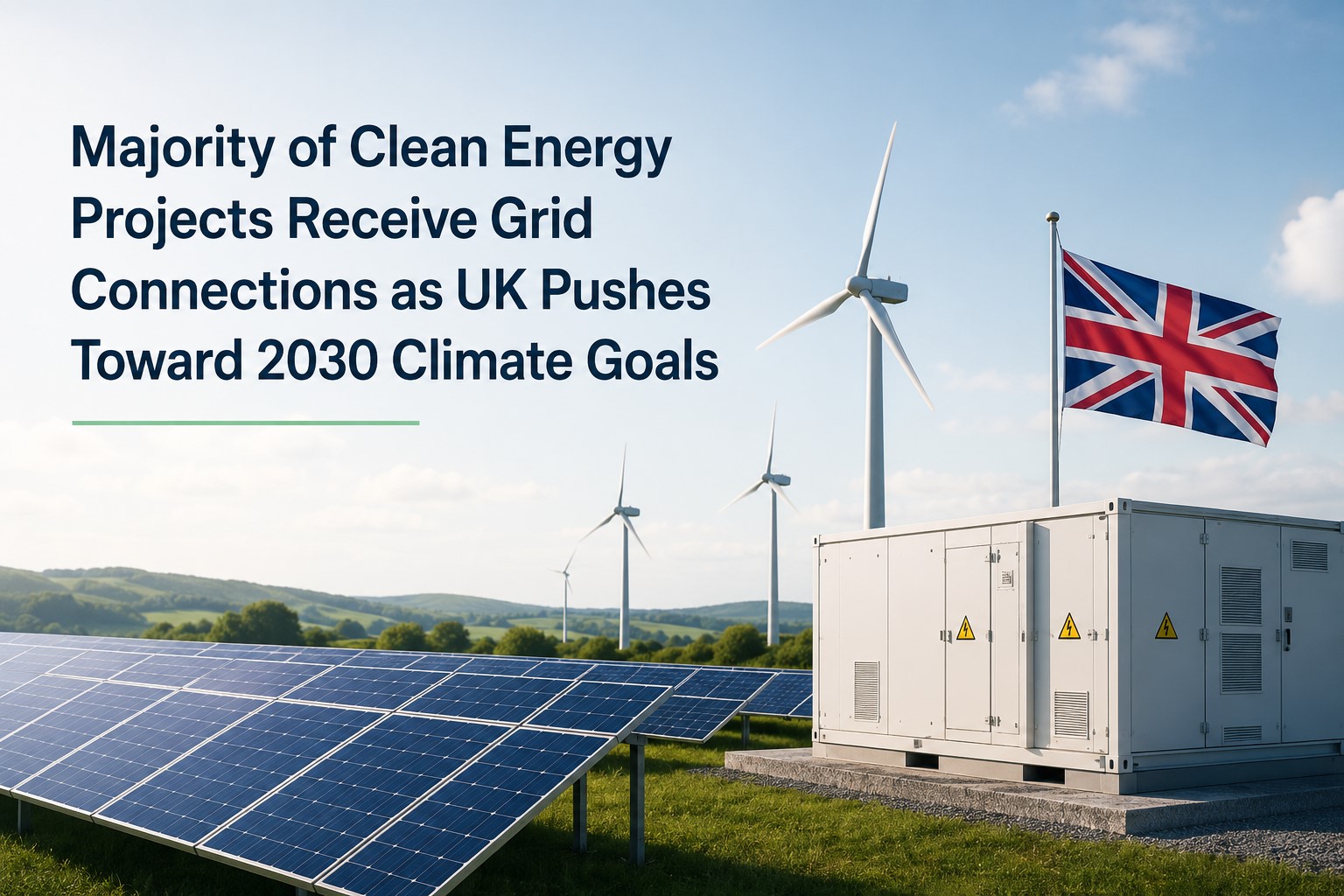
Majority of Clean Energy Projects Secure Grid Connections as UK Advances Toward 2030 Power Goals
More than half of the renewable energy projects required to achieve the UK government's clean power ambitions by 2030 have now been offered electricity grid connections, marking a significant milestone in the country's transition to a low-carbon energy system.
According to the National Energy System Operator (NESO), over 700 clean energy projects across Great Britain have received grid connection dates since the beginning of the year. The progress follows a major effort to reform the grid connection process and address long-standing delays that had threatened to push many projects into the next decade.
The approved projects account for nearly 60% of the estimated 1,200 renewable energy developments needed to help deliver the government's goal of creating a largely carbon-free electricity network by 2030.
The Labour government has placed clean energy expansion at the center of its energy strategy, pledging to significantly increase renewable generation capacity. Its plans include doubling onshore wind power, tripling solar energy production, and quadrupling offshore wind capacity over the coming years.
For years, however, developers faced significant challenges connecting projects to the national grid. A surge in speculative applications created a lengthy backlog under the previous "first come, first served" system, leaving many viable projects waiting years for connection approvals.
To tackle the issue, NESO launched a reform program in late 2023 aimed at clearing the grid connection queue. Hundreds of projects that were unlikely to proceed were removed from the system, allowing construction-ready developments to move forward more quickly.
The projects now offered grid connections include wind farms, solar parks, battery storage facilities, hydroelectric schemes, and gas-powered energy infrastructure. Together, they represent around 37 gigawatts of new generating capacity—more than one-third of the approximately 100 gigawatts expected to be required to meet the government's clean power target.
Under the revised framework, developers must meet stricter requirements before securing a connection date. Projects are expected to demonstrate planning approval, land access rights, and alignment with national clean energy objectives before being considered.
Energy Minister Michael Shanks described the development as a major step forward in modernizing Britain's energy infrastructure. He said improving grid access for renewable projects would help strengthen energy security and reduce exposure to volatile fossil fuel markets.
NESO officials also highlighted the importance of the reforms in providing greater certainty for investors and developers. By prioritizing projects that are ready to be built, the new system aims to accelerate renewable energy deployment while supporting economic growth and job creation.
UKEcho News brings you accurate, independent reporting from across the UK and beyond.
Comments (0)
Sign in to join the discussion.
Be the first to comment.