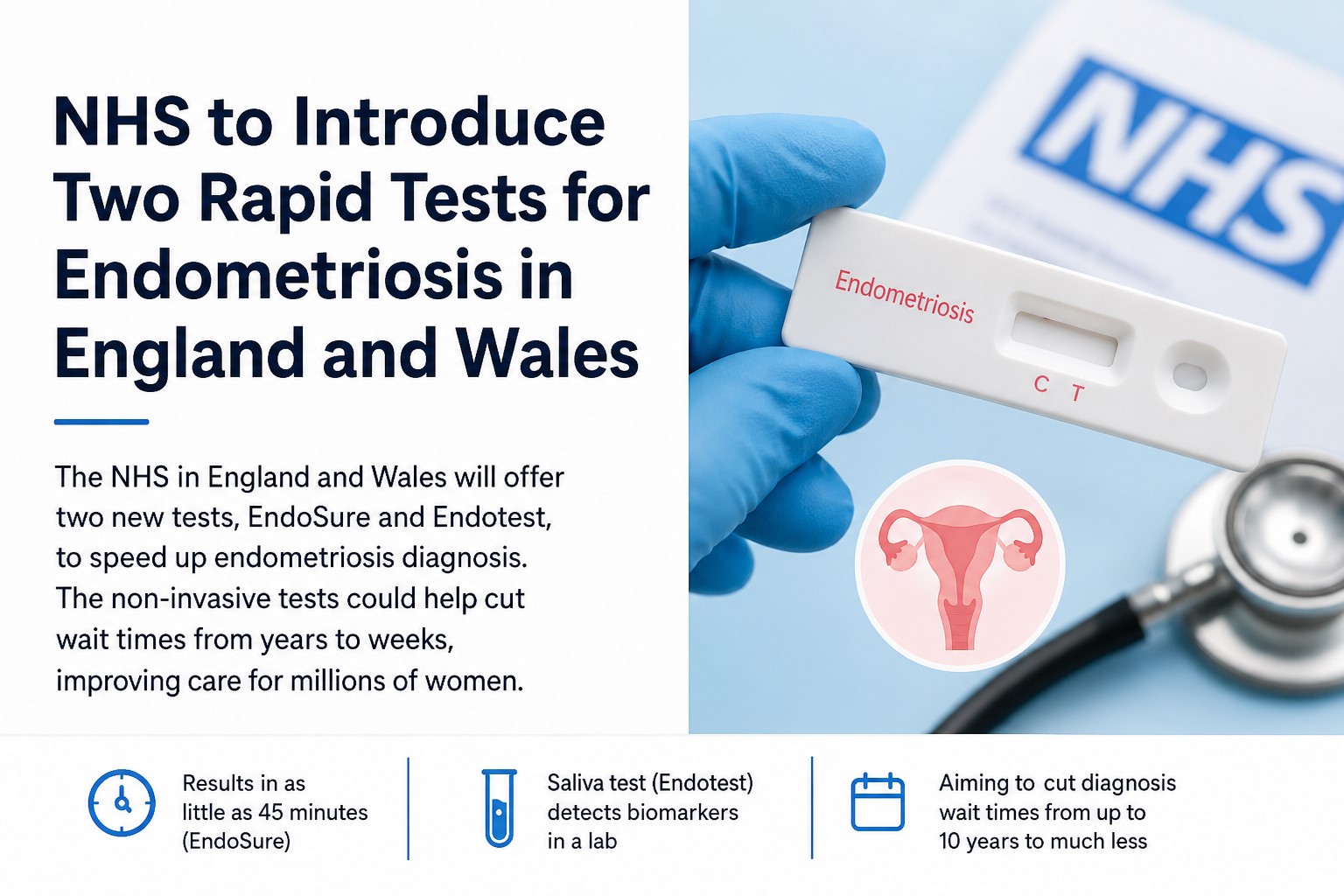
The NHS is set to introduce two new rapid tests for endometriosis across England and Wales, offering hope to millions of women who often face years of waiting for a diagnosis. Health experts have described the move as a major breakthrough that could significantly improve early detection and treatment.
Endometriosis affects around one in ten women of reproductive age. The condition occurs when tissue similar to the lining of the womb grows outside the uterus, commonly affecting the ovaries, fallopian tubes, and other pelvic organs. Symptoms can include severe menstrual pain, pain during sex, painful bowel movements, discomfort while urinating, and fertility issues.
At present, diagnosing endometriosis often involves ultrasound scans, MRI scans, or laparoscopic surgery. Despite these options, many women in England and Wales wait close to a decade before receiving a confirmed diagnosis, leading to prolonged pain, worsening symptoms, and delayed treatment.
The National Institute for Health and Care Excellence (NICE) has now recommended the use of two innovative diagnostic tests—EndoSure and Endotest—within the NHS for an initial three-year period while further evidence is collected.
Endotest uses a saliva sample to detect biological markers known as microRNAs that are linked to endometriosis. The sample is analyzed in a laboratory, with results sent to healthcare professionals to support diagnosis and treatment decisions.
EndoSure is a non-invasive test that measures electrical signals in the digestive system using sensor pads placed on the abdomen. After fasting and drinking water during the procedure, patients can receive results in as little as 45 minutes.
The tests are intended to complement existing diagnostic methods rather than replace them. They are designed for women who continue to show symptoms after normal clinical examinations or inconclusive imaging results, helping doctors identify the condition more quickly without immediately resorting to surgery.
Medical professionals and patient advocacy groups have welcomed the decision, saying earlier diagnosis can improve treatment outcomes, reduce unnecessary suffering, and ease pressure on NHS waiting lists. NICE will review additional clinical data over the next three years before deciding whether to permanently adopt the tests across the NHS.
UKEcho News brings you accurate, independent reporting from across the UK and beyond.
Comments (0)
Sign in to join the discussion.
Be the first to comment.