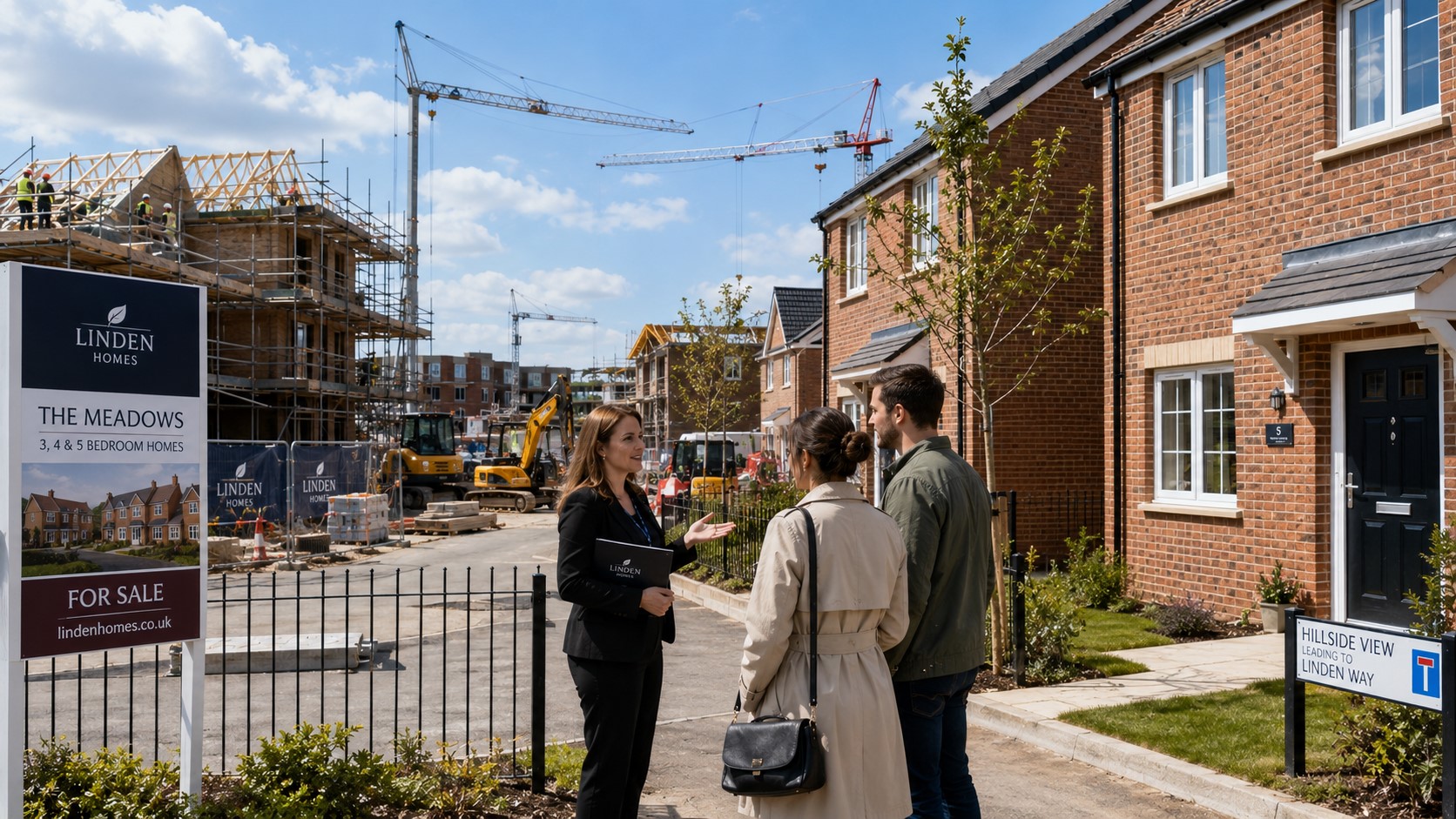
Britain's housing debate has reached a familiar crossroads. Every government acknowledges the shortage of affordable homes, yet too many families continue to face rising costs, long waiting lists and limited opportunities to buy their first property. The challenge is no longer identifying the problem—it is delivering lasting solutions.
Recent housing data suggests buyers remain cautious, with higher borrowing costs and economic uncertainty slowing activity across the property market. While slower price growth may provide some relief for buyers, it does not address the fundamental shortage of homes available where people need them most.
The UK's planning system requires greater efficiency, but planning reform alone will not solve the crisis. Developers, local authorities, housing associations and central government all have a role in increasing supply. More affordable housing, stronger infrastructure and investment in construction skills must move forward together.
Home ownership should remain an achievable ambition rather than an increasingly distant goal. At the same time, renters deserve secure, high-quality housing while waiting to buy or choosing to rent for the long term.
Britain also needs confidence that housing policy will remain consistent beyond a single parliamentary term. Frequent policy changes create uncertainty for investors, builders and homebuyers alike, slowing the very projects the country needs.
The housing crisis is ultimately a test of delivery rather than ambition. The UK has announced targets for years; what matters now is whether enough homes are actually built, supported by transport, schools and healthcare. Lasting success will come not from bigger promises, but from measurable progress that communities can see on the ground.
UKEcho News brings you accurate, independent reporting from across the UK and beyond.
Comments (0)
Sign in to join the discussion.
Be the first to comment.