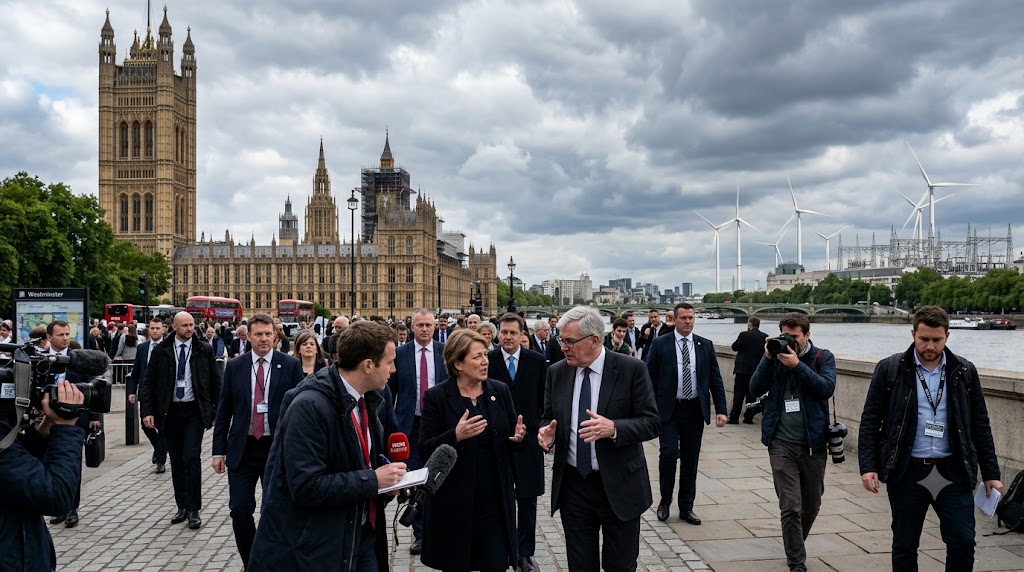
Britain's debate over climate policy is increasingly moving beyond what the country wants to achieve and towards how those goals should be communicated to the public.
A Commons committee has recently recommended that the government stop using the term “net zero” in some official communications, arguing that the phrase has become politically divisive and can distract from practical issues such as energy costs, jobs and energy security.
The recommendation comes as the UK continues to pursue its legally established long-term climate objectives. Government ministers have indicated that the net-zero goal remains in place, while arguing that the transition can also support energy security and economic resilience.
The communication question
The discussion raises an important question for British policymakers: should climate policy be presented primarily as an environmental programme, or through everyday issues such as household energy bills, employment and national security?
Supporters of changing the language argue that clearer, practical messaging could make climate policies easier for the public to understand. Critics of the proposal, meanwhile, may view changing the terminology as unnecessary when the underlying policy objective remains unchanged.
For UK businesses and households, the debate matters because decisions on renewable energy, electricity infrastructure, transport and industrial investment can have long-term economic consequences.
The argument over the words may therefore be only part of a larger question: how should Britain explain the costs, benefits and trade-offs of its transition to a lower-carbon economy?
UKEcho News brings you accurate, independent reporting from across the UK and beyond.
Comments (0)
Sign in to join the discussion.
Be the first to comment.