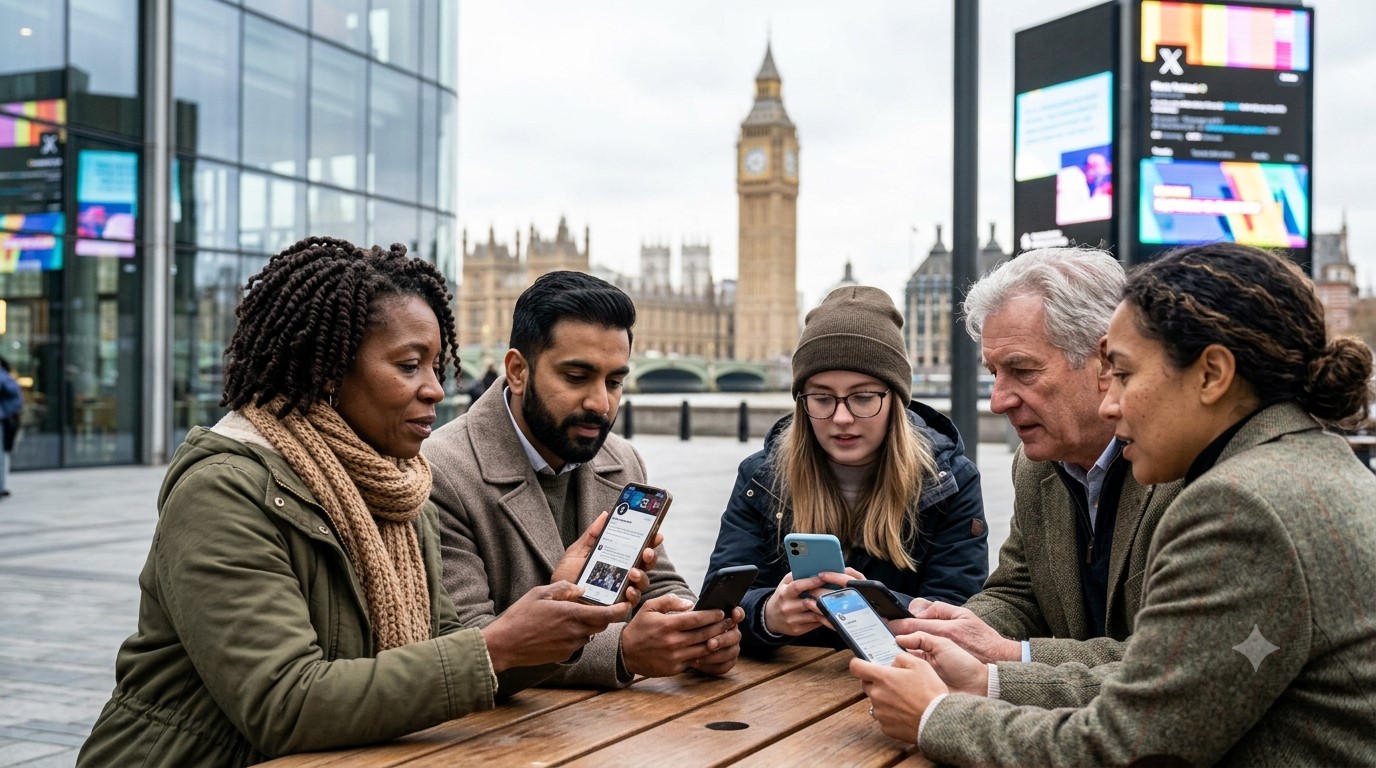
Britain’s political debate is facing a new challenge: the growing influence of social media on how politicians communicate and how voters consume political information.
Political arguments are increasingly compressed into short clips, headlines and viral posts designed to attract attention. Critics argue that this can reward confrontation and outrage rather than detailed discussion of complex issues.
The problem is not simply the technology itself. Social media has created new opportunities for politicians to communicate directly with voters, but the pressure to generate likes, shares and rapid reactions can encourage increasingly simplified political messages.
For the public, that creates a difficult choice. Important debates over the economy, healthcare, immigration and public services often require detailed explanations, yet online political conversations can quickly become focused on individual statements or short video clips.
Britain needs a political culture where disagreement remains possible without turning every argument into a digital confrontation. Politicians, journalists and social-media users all have a role in encouraging more informed discussion.
The future of UK politics may therefore depend not only on which policies win public support, but also on whether Britain can rebuild space for serious political debate in an increasingly fast-moving digital environment.
UKEcho News brings you accurate, independent reporting from across the UK and beyond.
Comments (0)
Sign in to join the discussion.
Be the first to comment.