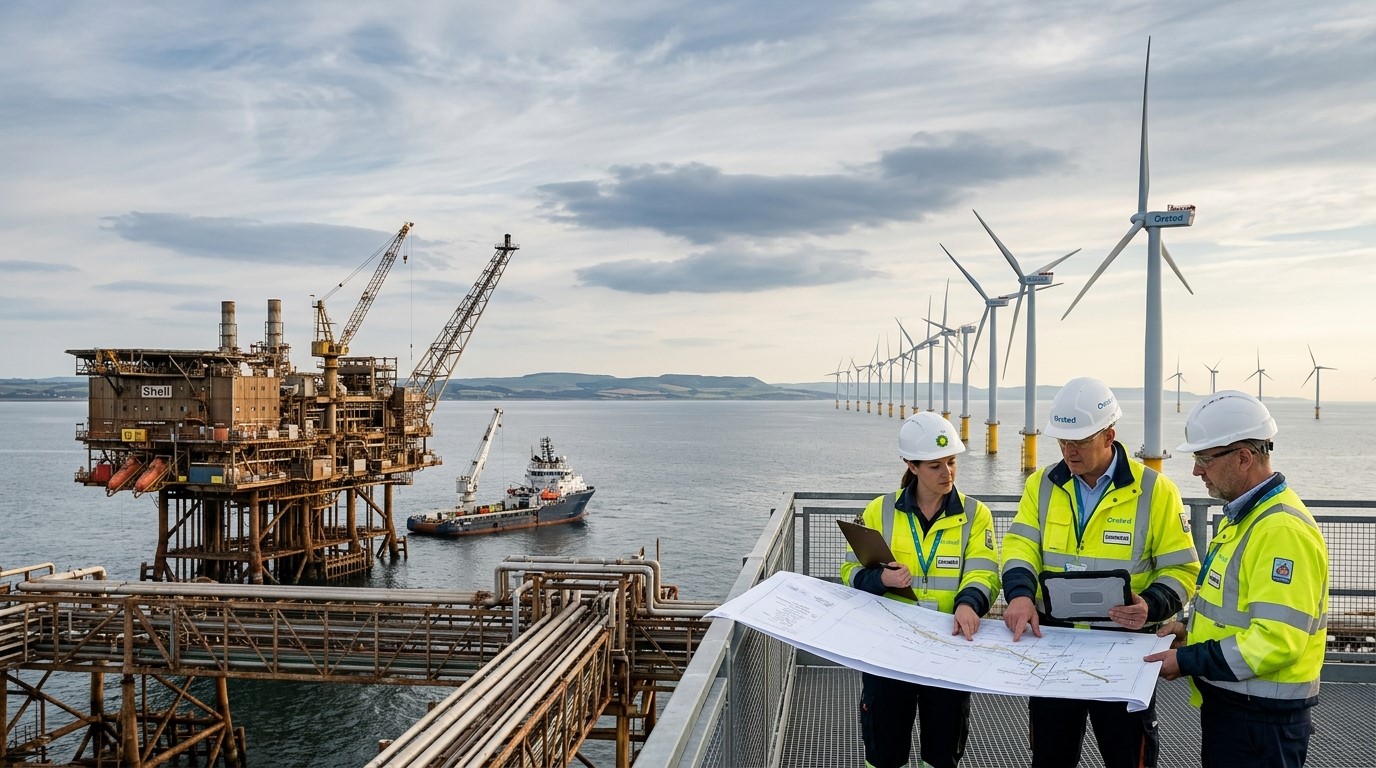
Britain's latest debate over North Sea oil and gas exposes a difficult question: can the country protect its energy security while remaining serious about its climate commitments?
The argument has intensified after London Mayor Sadiq Khan called on Prime Minister Andy Burnham to maintain Labour's commitment to climate action and avoid moving towards additional North Sea oil and gas development. The debate comes after an exceptionally hot and dry summer that has brought drought, wildfires and renewed attention to Britain's climate vulnerability.
There is a legitimate argument for energy security. Britain needs reliable and affordable energy, particularly when international conflicts can disrupt global fuel markets. Households and businesses cannot be expected to carry the cost of an energy system that is ambitious on climate goals but unreliable in practice.
But treating new fossil-fuel investment as the only answer would be equally short-sighted.
Britain should instead focus on building more domestic renewable generation, strengthening the electricity grid, improving storage capacity and making homes and businesses more energy efficient. These investments can reduce exposure to international fuel-price shocks while supporting jobs and long-term economic growth.
The political challenge is that the transition will not happen overnight. Oil and gas will remain part of Britain's energy system for some time, meaning policymakers must manage the decline responsibly rather than pretend the transition can happen instantly.
The smarter debate is therefore not “oil or renewables”. It is how quickly Britain can build a reliable energy system that needs less oil and gas without pushing consumers into higher costs or insecurity.
The government's decisions on future North Sea projects will test whether Britain can turn its climate ambitions into a practical economic strategy. If ministers want public support for the green transition, they must demonstrate that clean energy can deliver security, affordability and prosperity—not simply lower emissions.
Britain's climate challenge is no longer theoretical. The question now is whether policymakers can respond with an energy strategy designed for the next generation rather than the last one.
UKEcho News brings you accurate, independent reporting from across the UK and beyond.
Comments (0)
Sign in to join the discussion.
Be the first to comment.