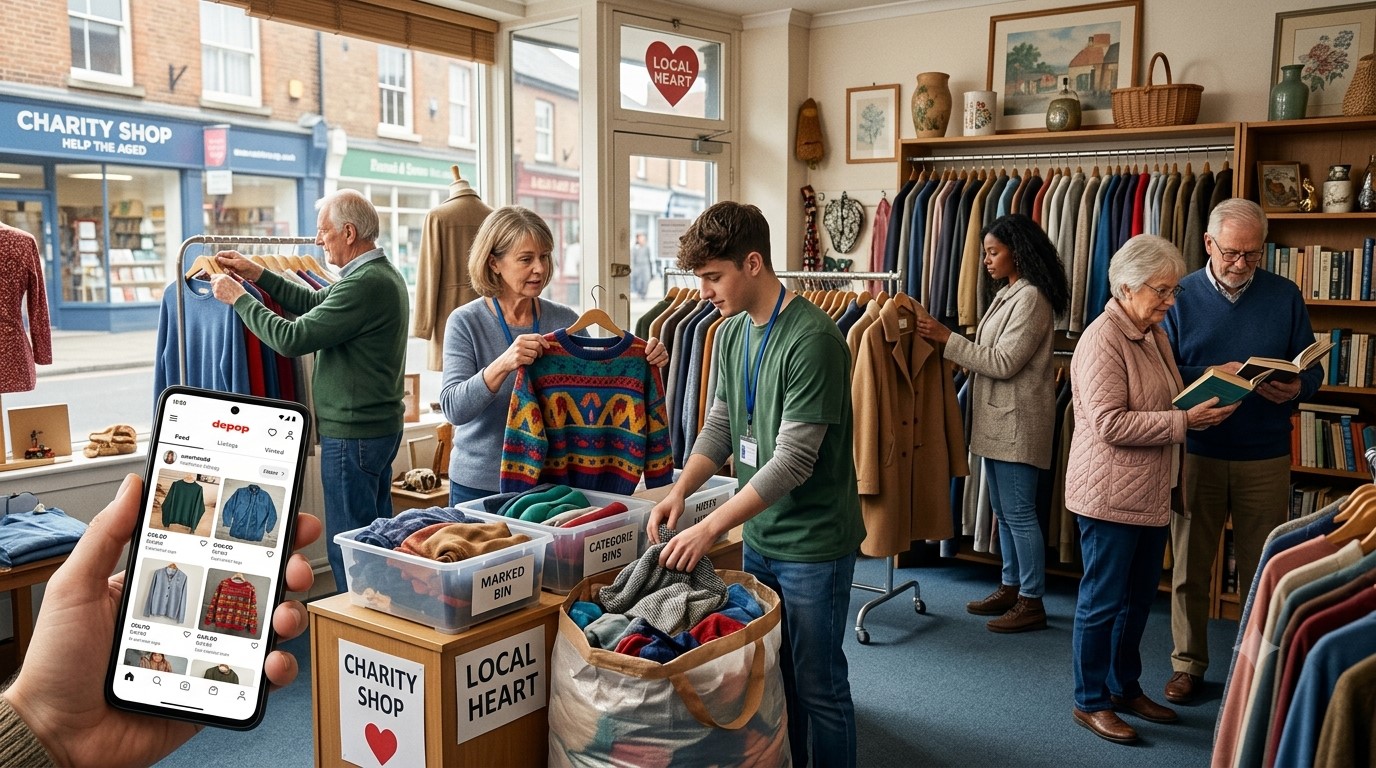
Britain's charity shops are facing a problem that goes far beyond retail.
Major charities are reviewing shop networks as financial pressures, changing donation patterns and competition from online resale platforms such as Vinted and eBay reshape the second-hand market.
For decades, charity shops have been more than places to buy inexpensive clothes and household goods. They have been part of Britain's community infrastructure.
They raise hundreds of millions of pounds each year, provide volunteering opportunities and give local high streets a distinctive social presence.
Yet the traditional model is under pressure.
Online resale platforms have made it easier for individuals to sell desirable second-hand goods directly. At the same time, fast fashion has changed the quality and value of donated clothing.
The answer should not simply be to accept that smaller charity shops are inevitable casualties.
Britain should treat charity retail as part of the social economy, not merely another struggling high-street business.
Charities can adapt by combining physical shops with stronger online operations, specialist resale channels and partnerships with younger creators and influencers.
The popularity of second-hand fashion among younger consumers also offers an opportunity rather than just a threat.
The challenge is to turn that interest into sustainable income for charitable causes.
If Britain's charity shops disappear without a strategy for replacement, communities could lose more than shopfronts — they could lose valuable local spaces, volunteering networks and affordable access to goods.
The future of charity retail should therefore be about adaptation, not abandonment.
UKEcho News brings you accurate, independent reporting from across the UK and beyond.
Comments (0)
Sign in to join the discussion.
Be the first to comment.