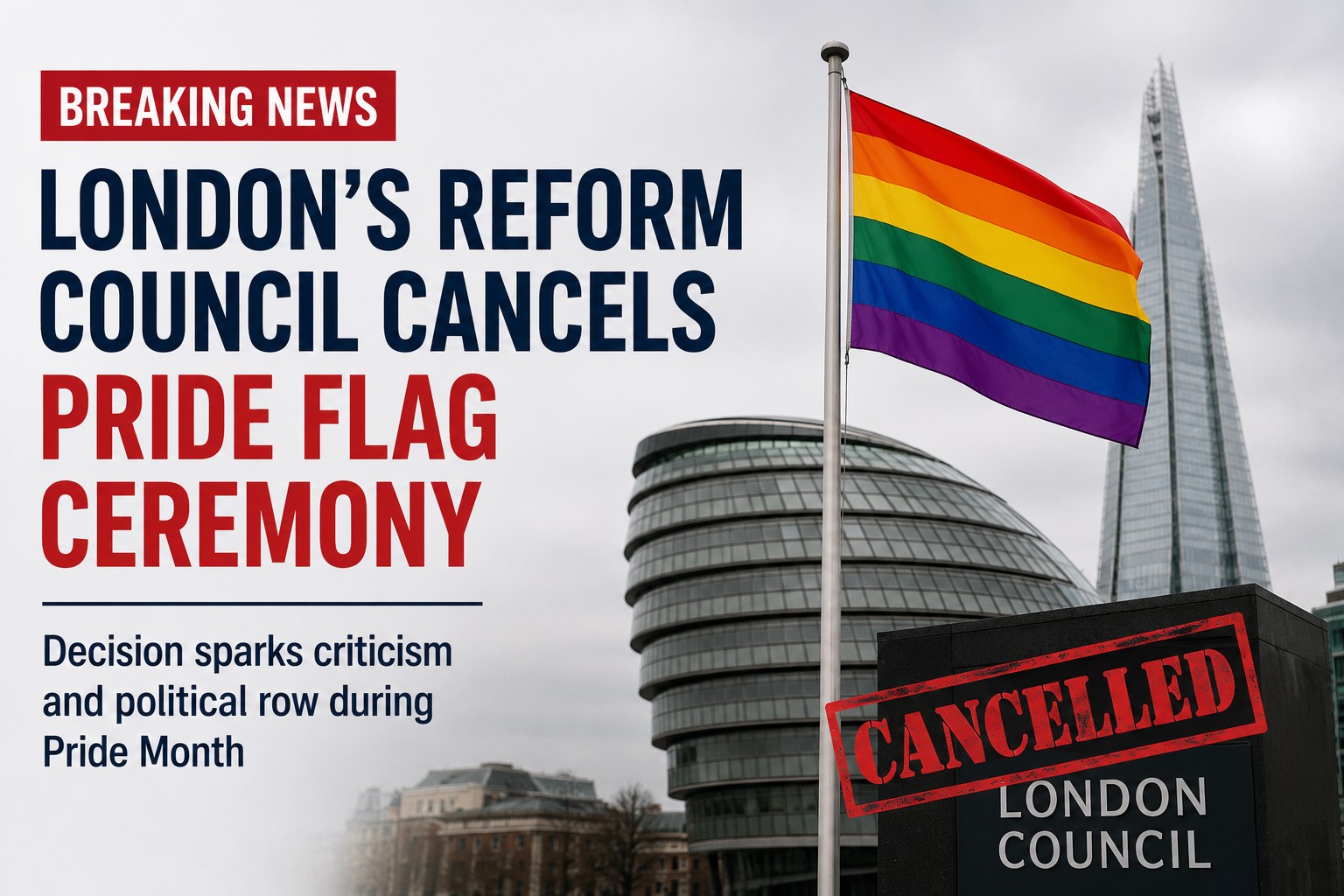
A decision by a Reform-led London council to cancel a planned Pride flag ceremony has triggered a fresh political dispute, drawing criticism from opposition politicians, trade unions, and community groups.
The move comes during Pride Month, a period when councils and public institutions across the UK traditionally hold events celebrating and supporting LGBTQ+ communities. Critics argue the cancellation sends the wrong message about inclusion and community representation, while supporters say local authorities should have discretion over civic events and flag policies.
The controversy has quickly become part of a wider national debate about culture, local government priorities, and the role of symbolic public events.
Community groups and local campaigners have expressed disappointment at the decision, with some organising alternative gatherings to show solidarity with LGBTQ+ residents. Political opponents have accused the council of undermining years of efforts to promote inclusion and community engagement.
Council representatives have defended their position, arguing that local authorities should focus on core services and adopt a consistent approach to the use of civic buildings and public symbols.
The dispute highlights growing tensions surrounding cultural issues in British politics, where debates over public symbols, local governance, and community identity continue to generate strong reactions from all sides.
As Pride Month events continue across the country, the decision is expected to remain a talking point among politicians, campaign groups, and residents alike.
The issue demonstrates how local council decisions can quickly become part of broader national conversations about identity, representation, and public policy.
UKEcho News brings you accurate, independent reporting from across the UK and beyond.
Comments (0)
Sign in to join the discussion.
Be the first to comment.