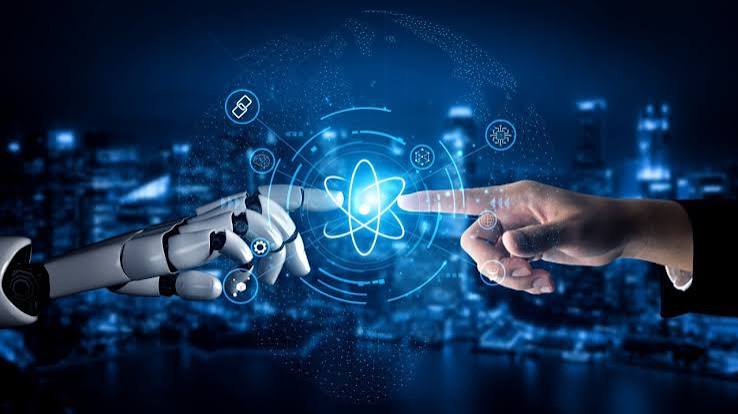
Artificial intelligence has rapidly transformed the way people work, communicate and access information. But another technological revolution is developing that could eventually reshape industries in ways that go far beyond the capabilities of today’s AI systems: quantum computing.
Unlike traditional computers, which process information using bits represented as 0s and 1s, quantum computers use quantum bits, or qubits. These can exist in multiple states at the same time, allowing quantum systems to approach certain complex calculations in fundamentally different ways.
The technology is still in its early stages, but its potential is enormous. Quantum computers could help solve problems that would take conventional computers thousands or even millions of years to process. Possible applications include discovering new medicines, developing advanced materials, improving financial modelling, optimising supply chains and tackling complex scientific problems.
Quantum computing could also transform artificial intelligence itself. More powerful quantum systems may eventually accelerate certain machine-learning processes, allowing researchers to analyse enormous datasets and solve highly complex optimisation problems more efficiently.
However, quantum computing is not simply a replacement for AI. The two technologies are likely to develop alongside each other. AI excels at learning from data, recognising patterns and generating content, while quantum computing could provide new ways to process complex calculations and simulations.
Significant challenges remain. Quantum computers are extremely sensitive to environmental disturbances, and maintaining stable qubits is one of the biggest obstacles facing researchers. Building reliable, large-scale quantum systems will require major advances in hardware, error correction and software.
The technology could also have a major impact on cybersecurity. Powerful quantum computers could eventually threaten some of the encryption methods currently used to protect digital information, prompting governments and technology companies to develop new forms of quantum-resistant security.
While predictions that quantum computing will immediately surpass AI are premature, its long-term potential is difficult to ignore. AI may represent the current technological revolution, but quantum computing could become the next major leap in computing power.
The future may not be about choosing between AI and quantum computing. Instead, the most powerful technologies of the coming decades could combine both — with AI providing intelligence and quantum systems tackling problems that remain beyond the reach of traditional machines.
UKEcho News brings you accurate, independent reporting from across the UK and beyond.
Comments (0)
Sign in to join the discussion.
Be the first to comment.