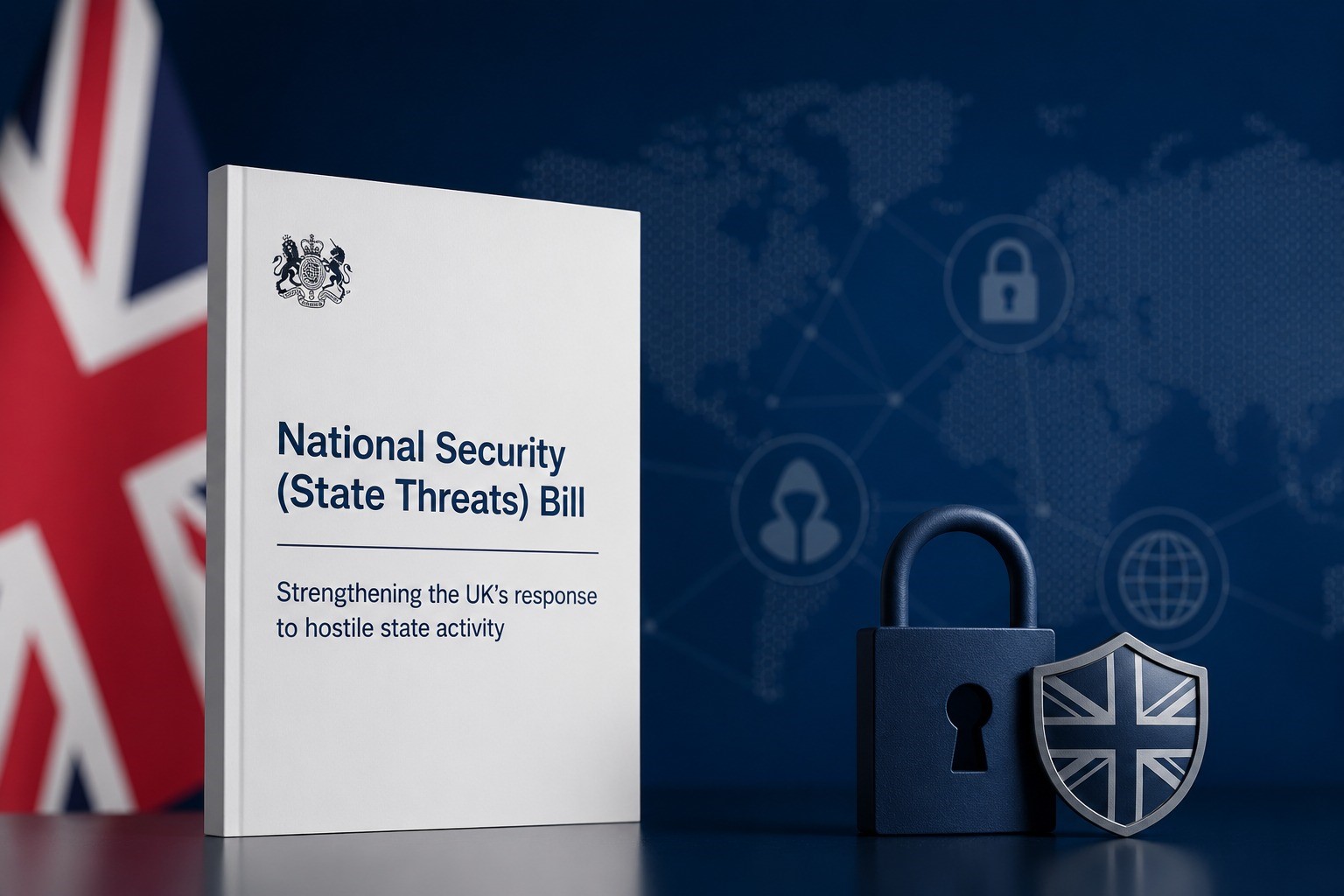
The UK Government has introduced new legislation designed to strengthen Britain's response to hostile foreign state activity, marking one of the most significant national security reforms in recent years.
Under the proposed National Security (State Threats) Bill, authorities would gain enhanced powers to act against organisations and proxy groups alleged to be operating on behalf of foreign governments. Ministers say the measures are intended to help protect communities, critical infrastructure and national interests from evolving security threats.
The legislation would allow the Home Secretary to designate organisations linked to hostile foreign state activity, bringing them under a tougher legal framework similar to existing counter-terrorism powers. Support, funding or assistance for designated groups could become criminal offences under the new proposals.
Government officials argue that hostile state-linked activity has become increasingly sophisticated, with some foreign actors using criminal networks, intermediaries and proxy organisations to conceal their involvement. The legislation aims to close gaps in existing laws and provide law enforcement agencies with stronger tools to investigate and disrupt such activities.
The announcement follows growing concerns from security agencies about state-backed threats, cyber operations, foreign interference and attempts to undermine public confidence in democratic institutions.
Ministers said the reforms are designed to ensure the UK remains prepared for a changing security landscape while protecting democratic values and civil liberties.
The legislation is expected to face detailed parliamentary scrutiny in the coming weeks, with lawmakers debating the balance between national security protections and safeguarding individual rights.
Security experts have described the proposals as a significant development in the UK's evolving approach to countering modern state threats, particularly as geopolitical tensions continue to shape the international environment.
UKEcho News brings you accurate, independent reporting from across the UK and beyond.
Comments (0)
Sign in to join the discussion.
Be the first to comment.