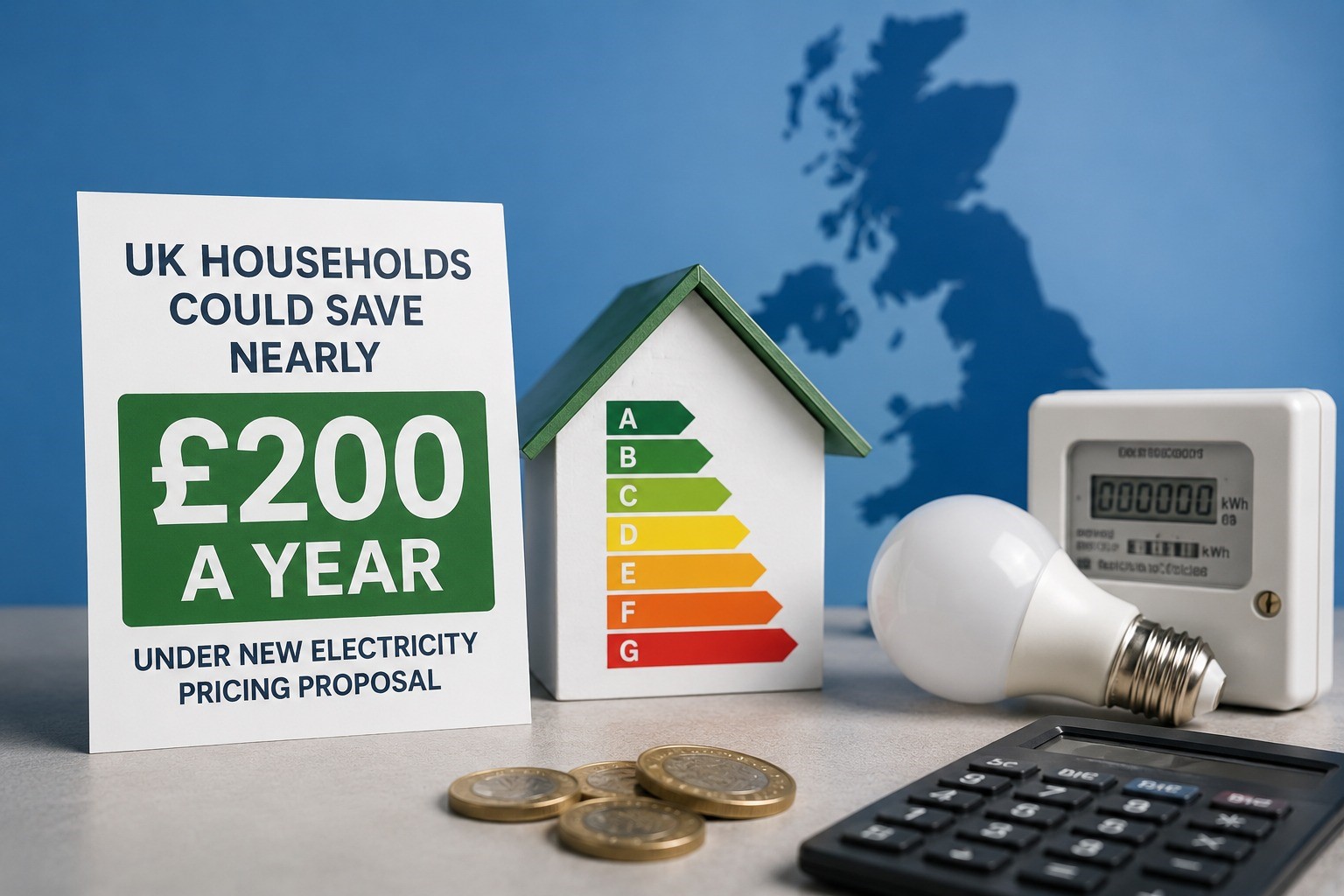
A new proposal aimed at reforming the UK's electricity market could cut household energy bills by almost £200 annually, according to a major new analysis released on Wednesday.
The report suggests that the government could significantly reduce consumer energy costs by changing how electricity is purchased and priced across Britain. Under the proposed model, the state would act as the primary buyer of electricity before selling it on to suppliers and consumers, reducing the influence of volatile gas prices on household bills.
Currently, gas prices often determine electricity prices even though gas accounts for only a portion of the UK's power generation mix. Researchers argue that this system can drive up costs for consumers when global gas markets experience instability.
According to the analysis, households in England, Scotland and Wales could save an average of around £185 to £200 per year if a new public procurement model were introduced. The report also estimates that billions of pounds could be saved nationally over the coming years, depending on future energy market conditions.
The proposal includes the creation of long-term public power purchase agreements and a strategic gas reserve designed to help stabilise energy supplies during periods when renewable energy output is lower. Supporters say the approach could deliver more predictable pricing while accelerating the UK's transition to cleaner energy sources.
The findings are expected to add momentum to the ongoing debate over energy market reform, consumer protection and the future of Britain's electricity system as policymakers seek ways to ease cost-of-living pressures on households.
UKEcho News brings you accurate, independent reporting from across the UK and beyond.
Comments (0)
Sign in to join the discussion.
Be the first to comment.