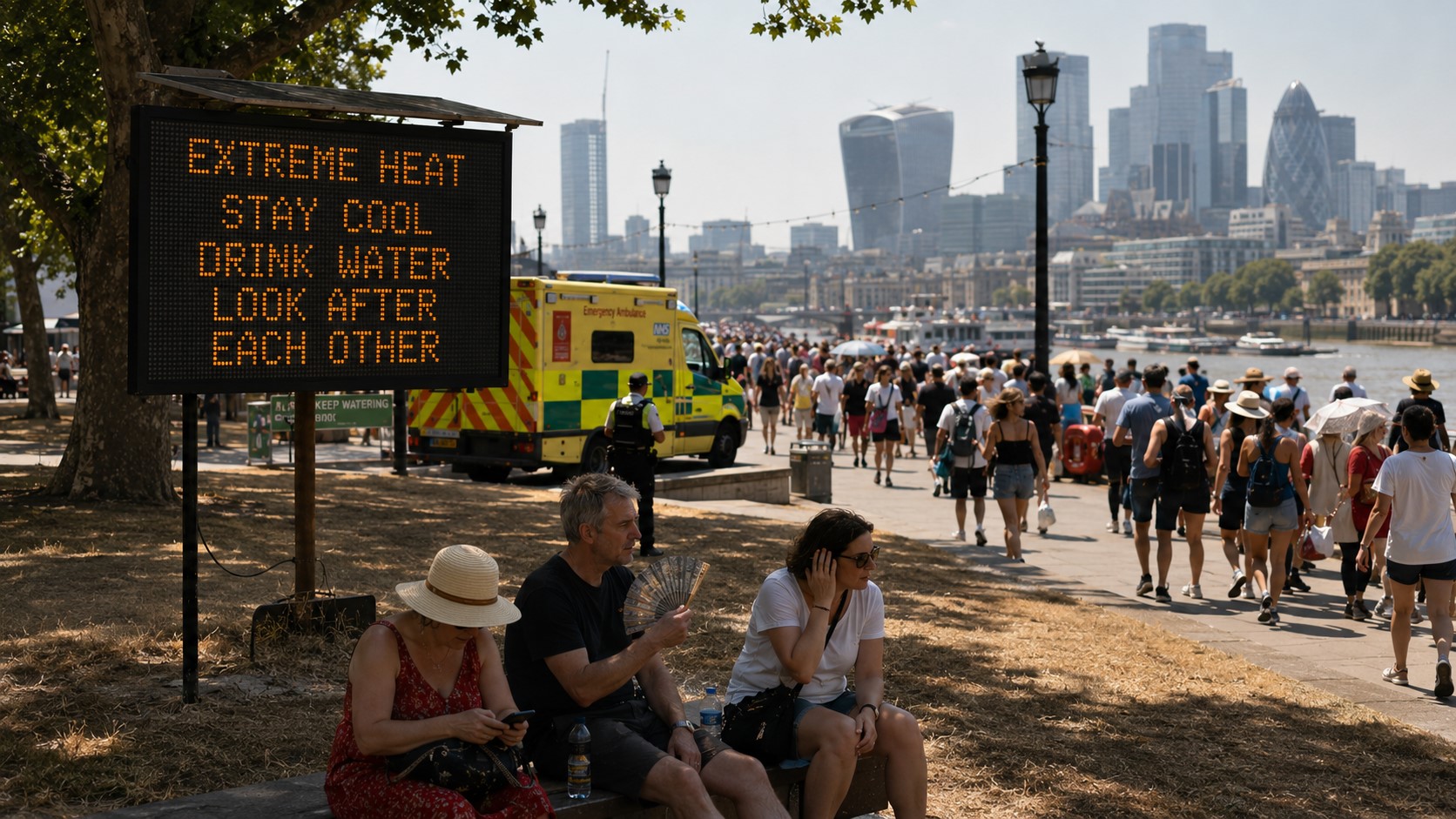
UK Heatwave Crisis Escalates as Drought and Wildfire Risks Intensify
LONDON — Britain is facing another major extreme-weather emergency, with the country's fifth heatwave of 2026 bringing severe heat, worsening drought conditions and growing wildfire risks.
The government has been forced to respond to the escalating situation as temperatures across parts of southern and eastern England are forecast to reach 37°C to 38°C.
More than 45 million people are living in drought-affected areas, while around 27 million people are facing water restrictions, according to figures reported by Reuters. England and Wales have also recorded hundreds of wildfires during the summer.
The scale of the latest heatwave is putting Britain's climate resilience under intense scrutiny.
Dry conditions are affecting farms, rivers and water supplies, while extreme heat is also placing additional pressure on transport networks and public services. The Met Office's extreme-heat warning has been extended as authorities prepare for further dangerous temperatures.
Prime Minister Andy Burnham is chairing an emergency government meeting focused on the effects of heatwaves, drought and wildfires. The government is also considering measures to reduce wildfire risks, including possible restrictions on disposable barbecues.
The crisis is increasingly being viewed as more than a short-term weather event.
Britain is confronting the practical consequences of a changing climate, from water shortages and agricultural disruption to pressure on hospitals, railways and emergency services.
Climate experts have warned that the current conditions could provide a preview of more frequent and severe weather extremes in the future.
The immediate priority remains protecting communities from the current heat. But the growing disruption is also increasing pressure on the government to strengthen long-term climate adaptation, water infrastructure and national emergency planning.
The latest heatwave is becoming a test of how prepared Britain is for a warmer and more volatile climate.
UKEcho News brings you accurate, independent reporting from across the UK and beyond.
Comments (0)
Sign in to join the discussion.
Be the first to comment.