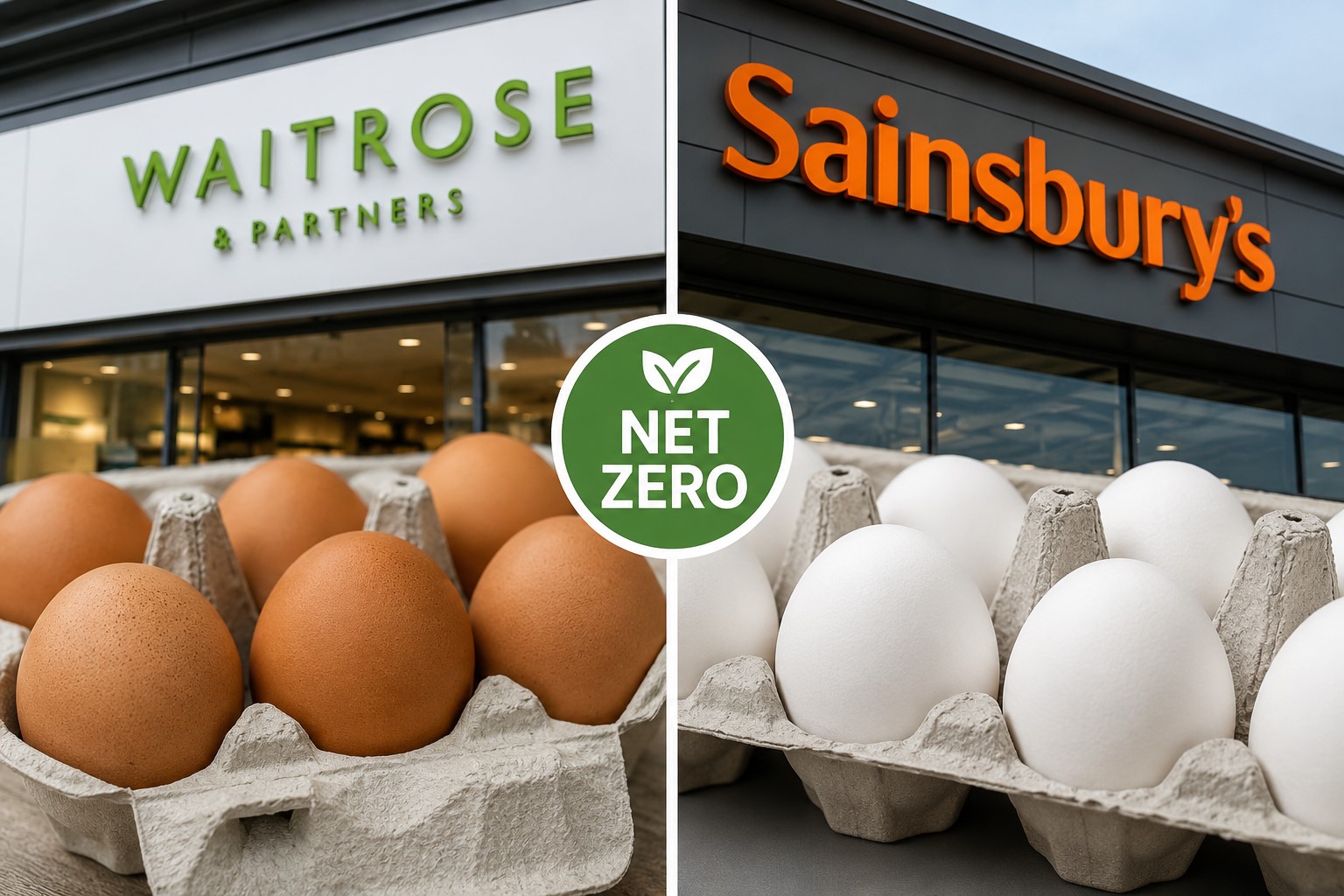
The debate over sustainability in supermarkets has taken a new turn as Waitrose confirmed it will continue selling brown eggs, while Sainsbury’s moves linked to net zero goals have sparked discussion among shoppers and industry experts.
Brown eggs have become part of a wider conversation around food production and environmental impact. Some sustainability advocates argue that white eggs can have a lower carbon footprint because hens producing white eggs generally consume less feed, potentially reducing emissions across the supply chain. This has encouraged some retailers to review sourcing practices as they work toward ambitious environmental targets.
However, Waitrose has chosen to maintain its range of brown eggs, signalling that consumer preference remains a major factor in decision-making. Brown eggs have long dominated supermarket shelves in the UK, with many shoppers associating them with higher quality or more natural farming methods despite nutritional differences between brown and white eggs being minimal.
Sainsbury’s approach has reignited questions about how far supermarkets should go in changing product ranges to meet climate commitments. Critics argue that retailers risk confusing consumers or limiting choice, while supporters say businesses must make difficult decisions if they are serious about cutting emissions and reaching net zero goals.
UKEcho News brings you accurate, independent reporting from across the UK and beyond.
Comments (0)
Sign in to join the discussion.
Be the first to comment.