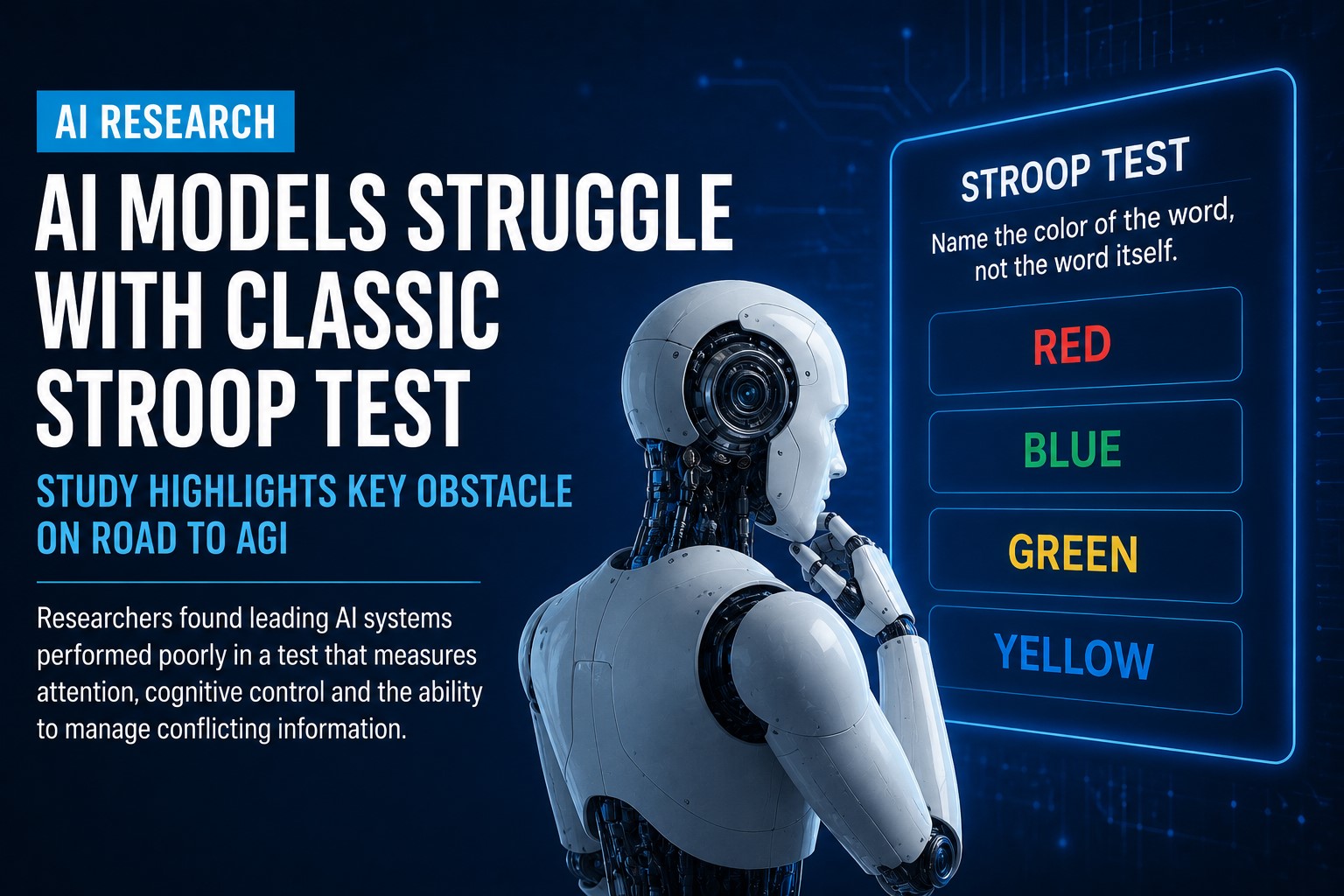
A new academic study has raised fresh questions about the path toward Artificial General Intelligence (AGI) after finding that leading AI models performed poorly in a well-known psychological experiment designed to measure attention and cognitive control.
Researchers tested advanced AI systems using the classic Stroop Test, a psychological assessment that examines how effectively an individual can manage conflicting information. The test typically requires participants to identify the colour of a word rather than reading the word itself, creating a conflict between automatic reading and colour recognition.
The findings suggest that while modern AI systems excel at language generation and reasoning tasks, they may still lack some of the executive control mechanisms that humans use to manage competing information.
The study examined major AI models and found that they struggled significantly when dealing with tasks requiring attention management and cognitive interference. Researchers argue that these abilities are closely linked to higher-level intelligence and could represent an important hurdle on the road to achieving AGI.
Supporters of AI development note that the models tested were not the latest versions available today and caution against drawing broad conclusions from a single study. However, experts agree that understanding how AI handles attention, memory, and executive control remains a crucial area of research.
The findings have reignited debate over whether current large language models are moving toward genuine human-like intelligence or whether major architectural breakthroughs will still be required.
As investment in artificial intelligence continues to accelerate worldwide, studies like this highlight both the impressive capabilities and the remaining limitations of today's most advanced AI systems.
The research adds to growing discussions about how future AI models can become more adaptable, reliable, and capable of handling complex cognitive tasks beyond language processing.
UKEcho News brings you accurate, independent reporting from across the UK and beyond.
Comments (0)
Sign in to join the discussion.
Be the first to comment.