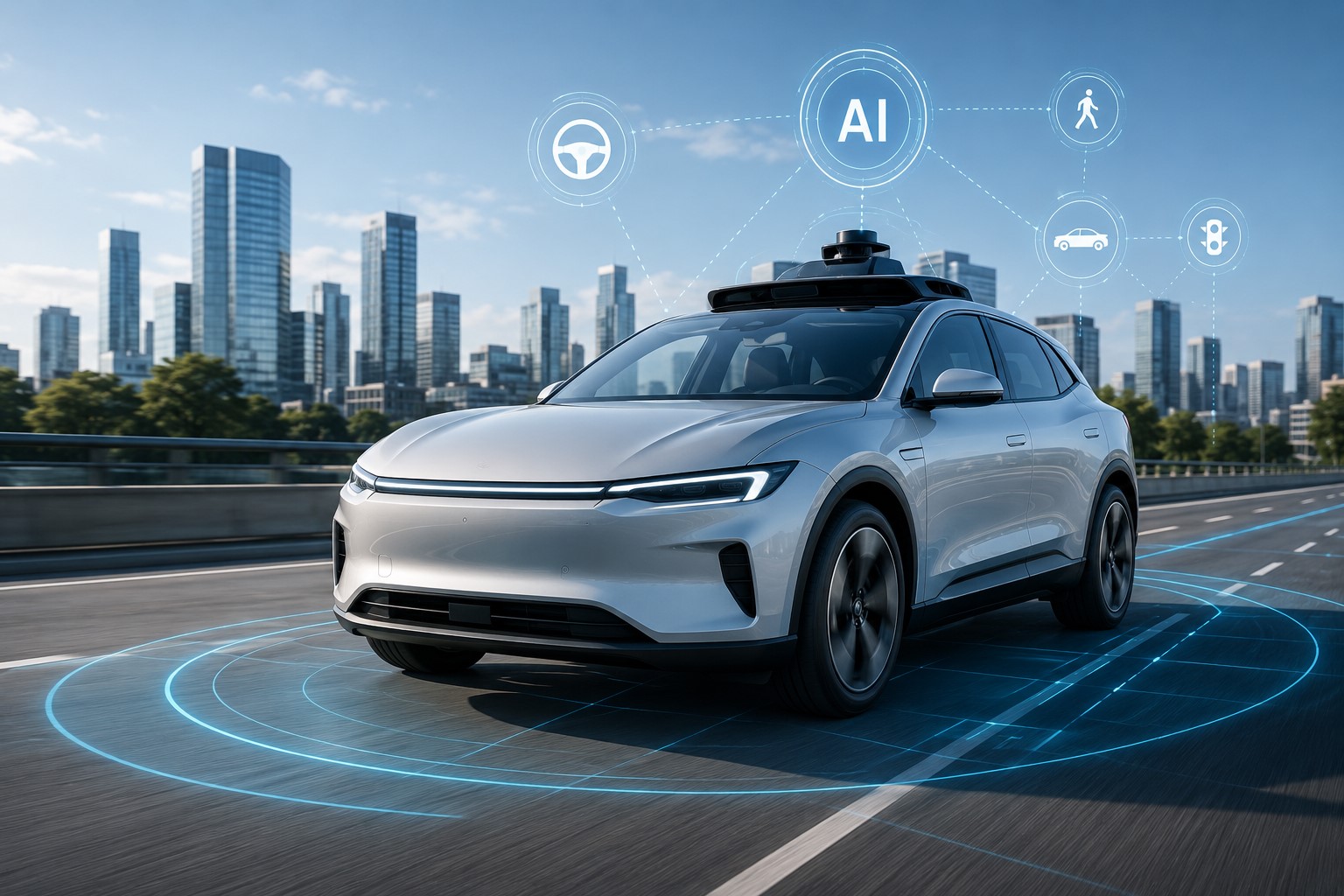
The race toward fully autonomous vehicles is accelerating, with industry leaders suggesting that advanced self-driving technology could reach mainstream adoption sooner than many consumers expect.
Recent comments from senior executives in the electric vehicle sector have reignited debate about the future of autonomous transport, particularly around Level 4 autonomy, where vehicles can operate independently in most driving conditions without human intervention.
Supporters of autonomous driving technology argue that major advances in artificial intelligence, sensor systems, and vehicle software are bringing the industry closer to a breakthrough. However, questions remain about safety, reliability, regulation, and public trust.
The discussion comes as competition intensifies among leading automotive and technology companies seeking to dominate the next generation of transportation. Companies are investing billions of pounds into autonomous systems designed to improve safety, reduce traffic congestion, and transform mobility services.
Despite rapid progress, experts note that widespread adoption will depend on convincing regulators, consumers, and industry stakeholders that self-driving systems can operate safely under real-world conditions. Public confidence remains one of the biggest hurdles facing the sector.
Advocates believe autonomous vehicles could dramatically reshape urban transport, logistics, and personal mobility over the coming decade. Critics, meanwhile, argue that technical challenges and regulatory barriers could delay deployment.
As artificial intelligence becomes increasingly integrated into the automotive industry, the debate over autonomous driving is expected to remain one of the most important technology stories of the decade.
UKEcho News brings you accurate, independent reporting from across the UK and beyond.
Comments (0)
Sign in to join the discussion.
Be the first to comment.