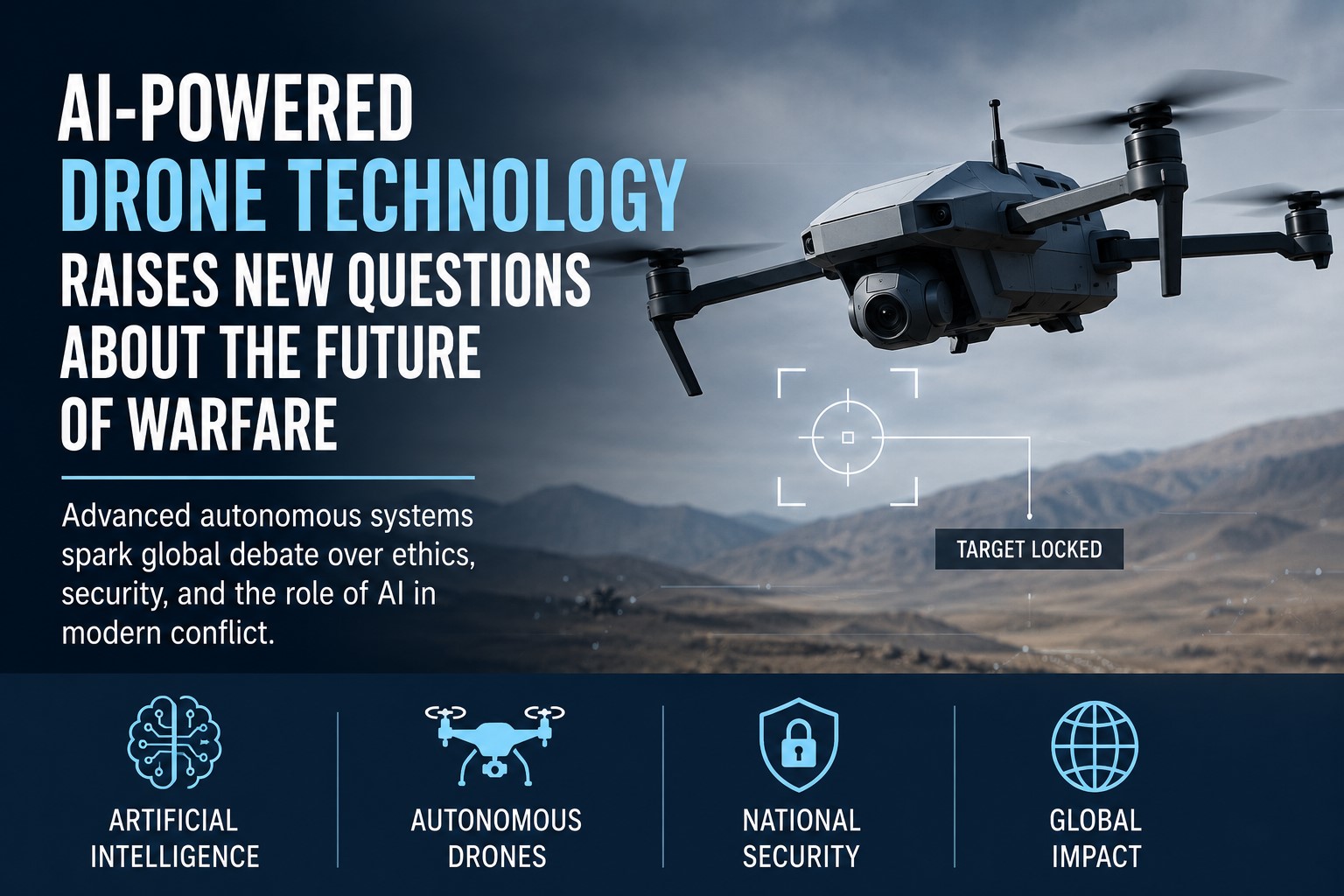
Advances in artificial intelligence are rapidly transforming modern military technology, with growing attention focused on the development of autonomous drone systems capable of identifying and engaging targets with minimal human intervention.
The latest developments have sparked international debate over the role of AI in future conflicts, as governments and defence organizations explore increasingly sophisticated battlefield technologies. Experts say artificial intelligence is becoming a critical component of next-generation military systems, improving speed, surveillance capabilities, and operational efficiency.
The emergence of AI-driven drone technology is raising concerns about accountability, ethics, and the future of human decision-making in warfare. Supporters argue that advanced autonomous systems could enhance military effectiveness and reduce risks to personnel, while critics warn about the dangers of delegating life-and-death decisions to algorithms.
Military analysts believe autonomous drones could significantly reshape defence strategies in the coming years, particularly as global powers invest heavily in artificial intelligence and unmanned systems. The technology is increasingly viewed as a key element of future security and defence planning.
The debate extends beyond military applications, with policymakers and technology experts calling for international discussions on regulation, oversight, and responsible AI development. Many argue that clear rules will be essential as autonomous systems become more capable and widely deployed.
As nations race to develop advanced AI technologies, the balance between innovation, security, and ethical responsibility is expected to remain one of the most important challenges facing the global technology sector.
The issue highlights how artificial intelligence is not only transforming industries and economies but also reshaping the future of international security and modern warfare.
UKEcho News brings you accurate, independent reporting from across the UK and beyond.
Comments (0)
Sign in to join the discussion.
Be the first to comment.