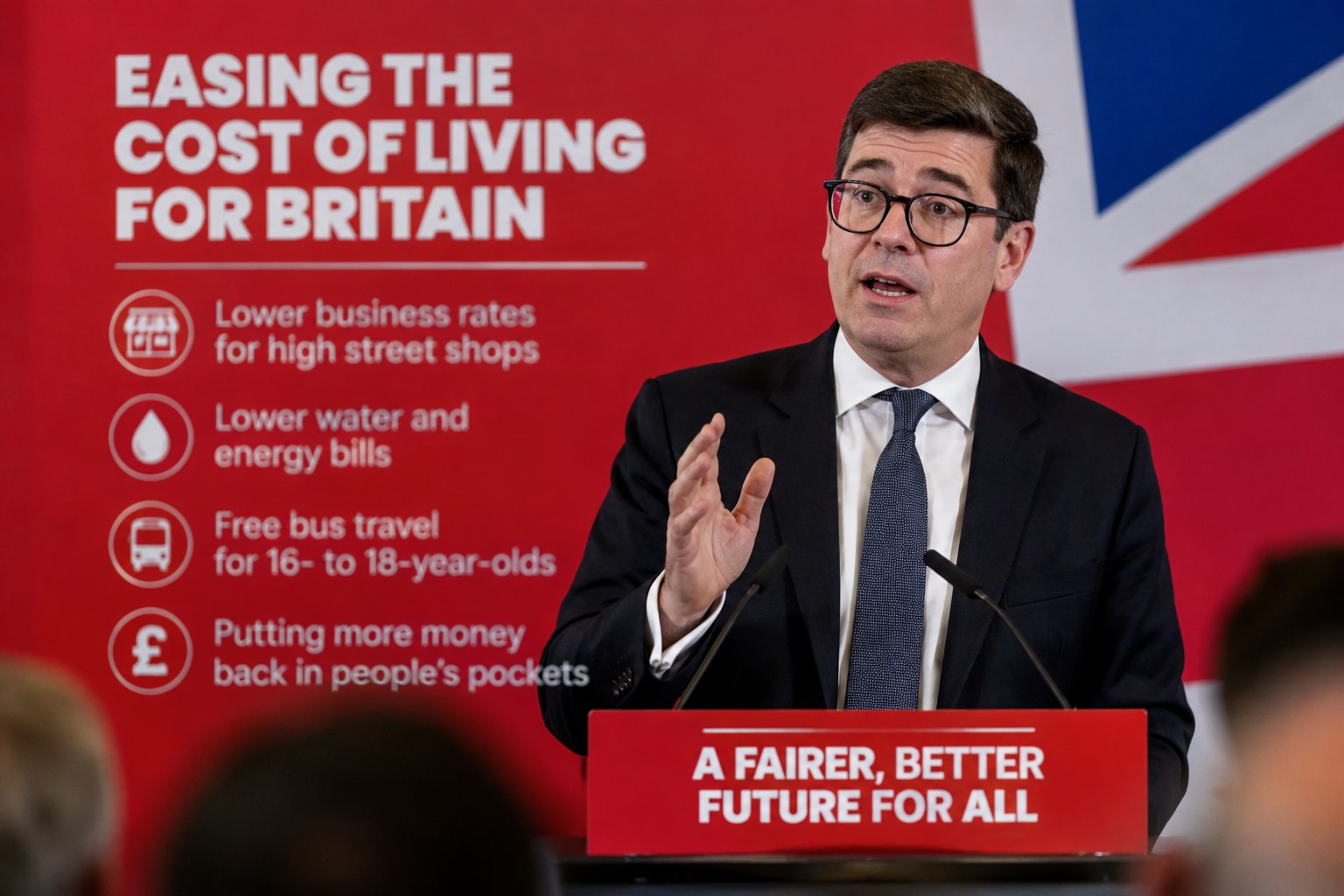
Andy Burnham has pledged to introduce an immediate package of measures aimed at easing the cost-of-living crisis if he becomes the United Kingdom's next prime minister, outlining proposals to reduce household expenses and support businesses.
Speaking in his first interview since returning to Parliament as the MP for Makerfield, Burnham said his government would prioritize lowering everyday costs by reducing business rates for selected high street businesses, introducing greater public control over water and energy services, and making bus travel free for 16- to 18-year-olds.
Burnham argued that both households and businesses are paying too much for essential services, particularly energy. He said a future government under his leadership would develop a long-term plan to bring water, energy, and transport under greater public control with the aim of lowering bills and transport fares.
He also indicated there could be changes to business taxation. Burnham suggested increasing business rates on large warehouses and major out-of-town developments while reducing rates for smaller high street businesses, including pubs, to help local economies.
The proposed cost-of-living package is also expected to include additional measures currently being discussed by his allies, including a temporary freeze on private sector rents, reducing bus fare caps, and shifting green levies away from household energy bills by funding them through taxation.
Burnham said the objective is to give families and businesses more financial breathing space by putting more money back into people's pockets during a period of continued economic pressure.
Opinion polls suggest that proposals focused on reducing living costs could resonate with voters. Supporters argue that stronger government intervention in key sectors would help address rising household expenses and improve affordability.
However, economists and Treasury officials have questioned how some of the proposals would be financed. Suggestions such as increasing capital gains tax have been debated, while experts note that bringing utilities under public ownership would require significant long-term investment and may not immediately reduce consumer bills.
As the political campaign continues, Burnham's economic agenda is expected to remain a key part of his pitch to voters, with affordability and public services at the center of the debate.
UKEcho News brings you accurate, independent reporting from across the UK and beyond.
Comments (0)
Sign in to join the discussion.
Be the first to comment.