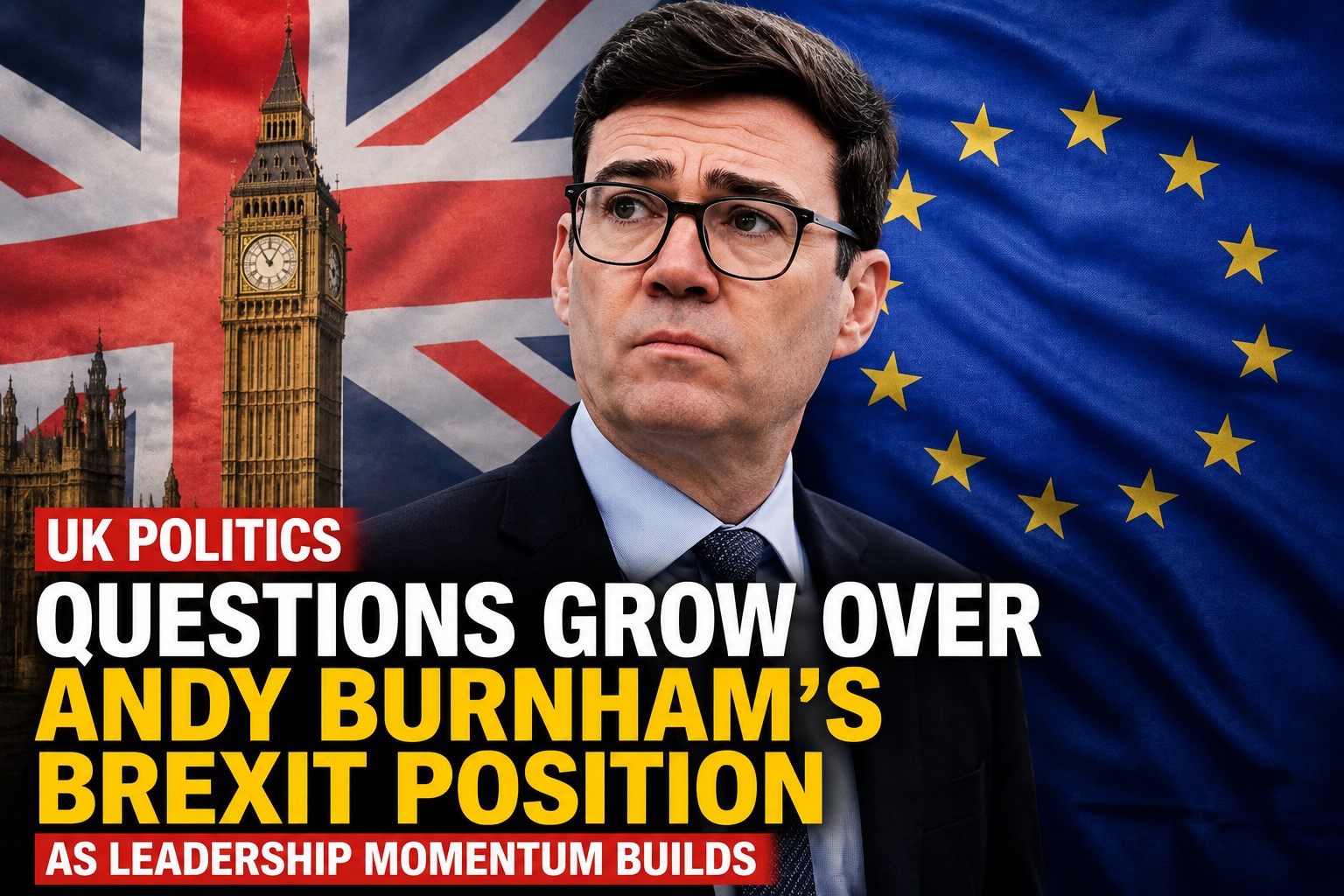
As Andy Burnham emerges as a leading figure in British politics, renewed debate is focusing on what his leadership could mean for the future of the United Kingdom’s relationship with the European Union.
Burnham has previously supported closer cooperation with Europe and has spoken positively about stronger alignment with Brussels. Those positions are drawing increased scrutiny as questions emerge over whether a future government under his leadership would seek a different approach to post-Brexit policy.
Attention has also turned to the political balance between Burnham’s national outlook and the views of voters in areas that strongly backed leaving the European Union. During recent campaigning, critics noted that he avoided detailed public discussion on the issue, choosing instead to focus on broader domestic priorities.
Some political opponents argue that future changes to trade rules, regulatory standards, and cooperation agreements could gradually deepen UK-EU ties without reopening the question of formal membership. Supporters, however, say improving practical relationships with European partners does not necessarily signal a reversal of Brexit.
The debate comes as Britain reflects on a decade since the 2016 referendum a defining moment that continues to shape political divisions and electoral strategy.
Political analysts suggest that any move toward closer European cooperation could become a key campaign issue, particularly in former industrial and Leave-supporting regions where competition for voters remains intense.
For now, Burnham has avoided committing to major changes, leaving room for interpretation as attention shifts toward his broader political agenda and future ambitions.
UKEcho News brings you accurate, independent reporting from across the UK and beyond.
Comments (0)
Sign in to join the discussion.
Be the first to comment.