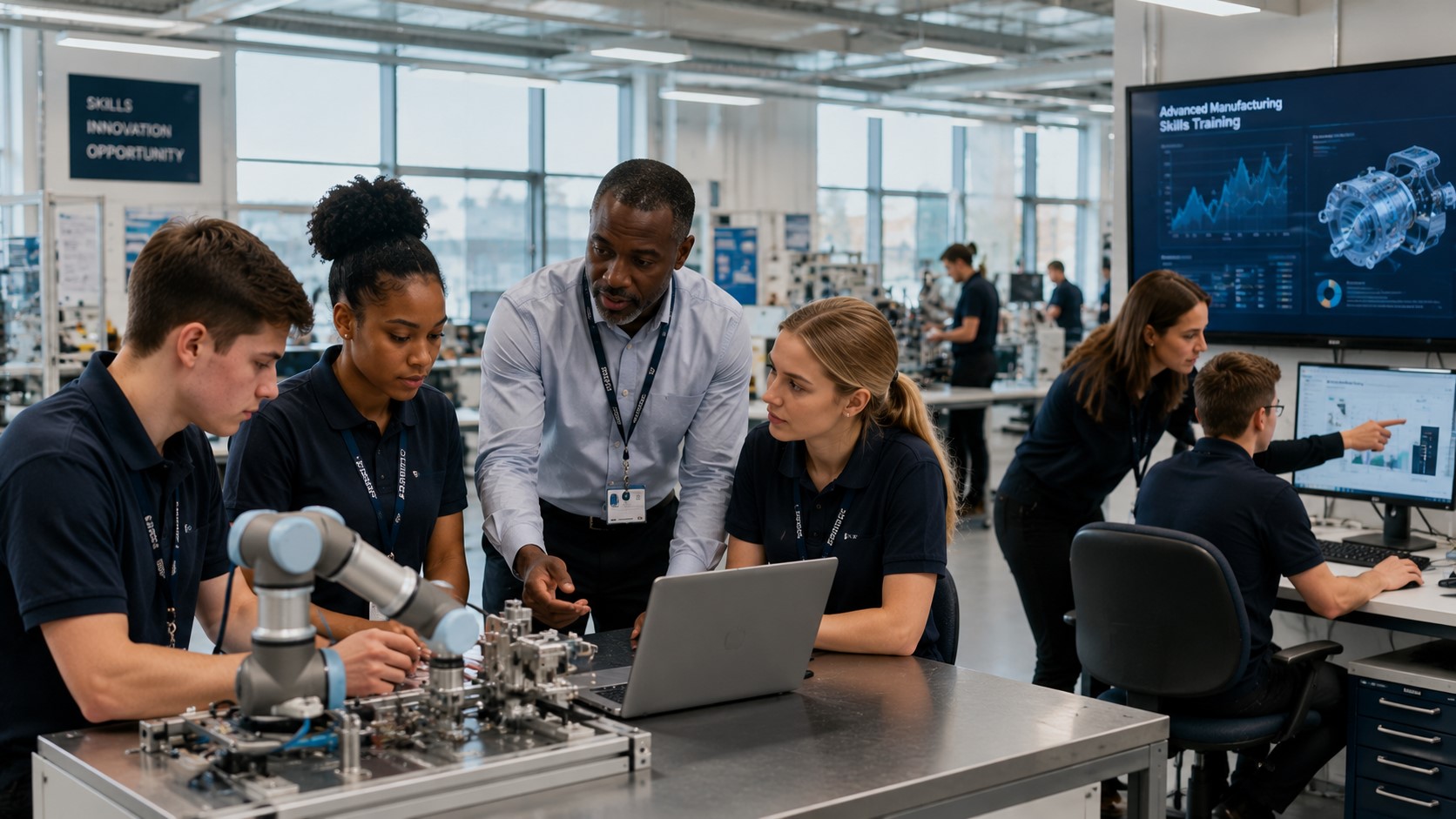
Britain's economy faces many challenges, but one issue stands out as both urgent and solvable: the growing skills gap.
Employers across multiple industries continue to report difficulties finding workers with the qualifications and expertise required for modern jobs. From technology and engineering to healthcare and advanced manufacturing, skills shortages are limiting growth and productivity.
A stronger economy requires a stronger workforce. Investment in education, apprenticeships and professional training should not be viewed as optional spending but as a critical national priority.
The rapid pace of technological change means workers must continuously adapt. Skills that were in demand a decade ago may not be sufficient for the jobs of tomorrow. Lifelong learning and workforce flexibility will become increasingly important.
Businesses, educational institutions and policymakers all have a role to play. Collaboration between these groups can help ensure training programmes reflect real-world labour market needs.
Britain's future competitiveness will depend not only on innovation and investment but also on whether the country can equip its workforce with the skills needed to succeed in a changing economy.
Closing the skills gap will not solve every economic challenge, but it may be one of the most effective ways to improve productivity, support growth and raise living standards in the years ahead.
UKEcho News brings you accurate, independent reporting from across the UK and beyond.
Comments (0)
Sign in to join the discussion.
Be the first to comment.