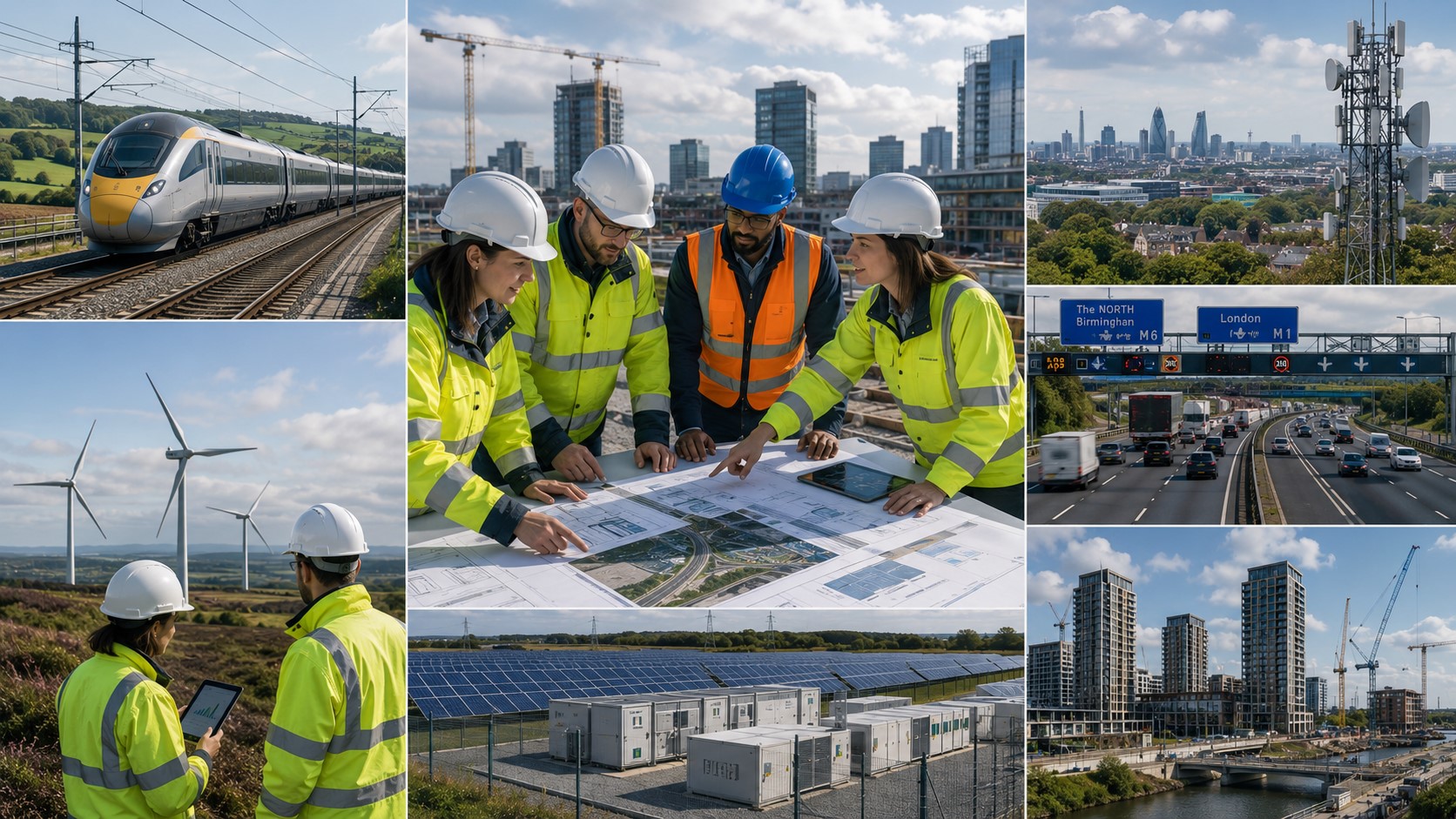
Britain's economic future will depend not only on innovation and investment but also on the quality of its infrastructure.
From transport networks and energy systems to housing developments and digital connectivity, infrastructure forms the foundation upon which economic growth is built. Yet many of these systems face growing pressure from rising demand, ageing assets and changing technological requirements.
Infrastructure is not simply a construction issue—it is an economic strategy. Efficient transport links help businesses grow. Reliable energy supplies support industry. Strong digital networks enable innovation and productivity.
For too long, major infrastructure projects have often been slowed by delays, uncertainty and short-term political considerations. While careful planning is essential, prolonged indecision can carry significant economic costs.
The challenge is particularly important as Britain seeks to improve productivity and strengthen regional economies. Communities outside major urban centres need modern infrastructure to attract investment, create jobs and improve living standards.
Long-term planning should remain at the heart of future policy decisions. Infrastructure investments often take years to deliver, but their benefits can last for decades.
If Britain wants stronger growth, greater competitiveness and improved economic resilience, infrastructure must be viewed not as an expense but as a strategic national investment. The sooner that reality shapes policy, the stronger the country's future prospects will be.
UKEcho News brings you accurate, independent reporting from across the UK and beyond.
Comments (0)
Sign in to join the discussion.
Be the first to comment.