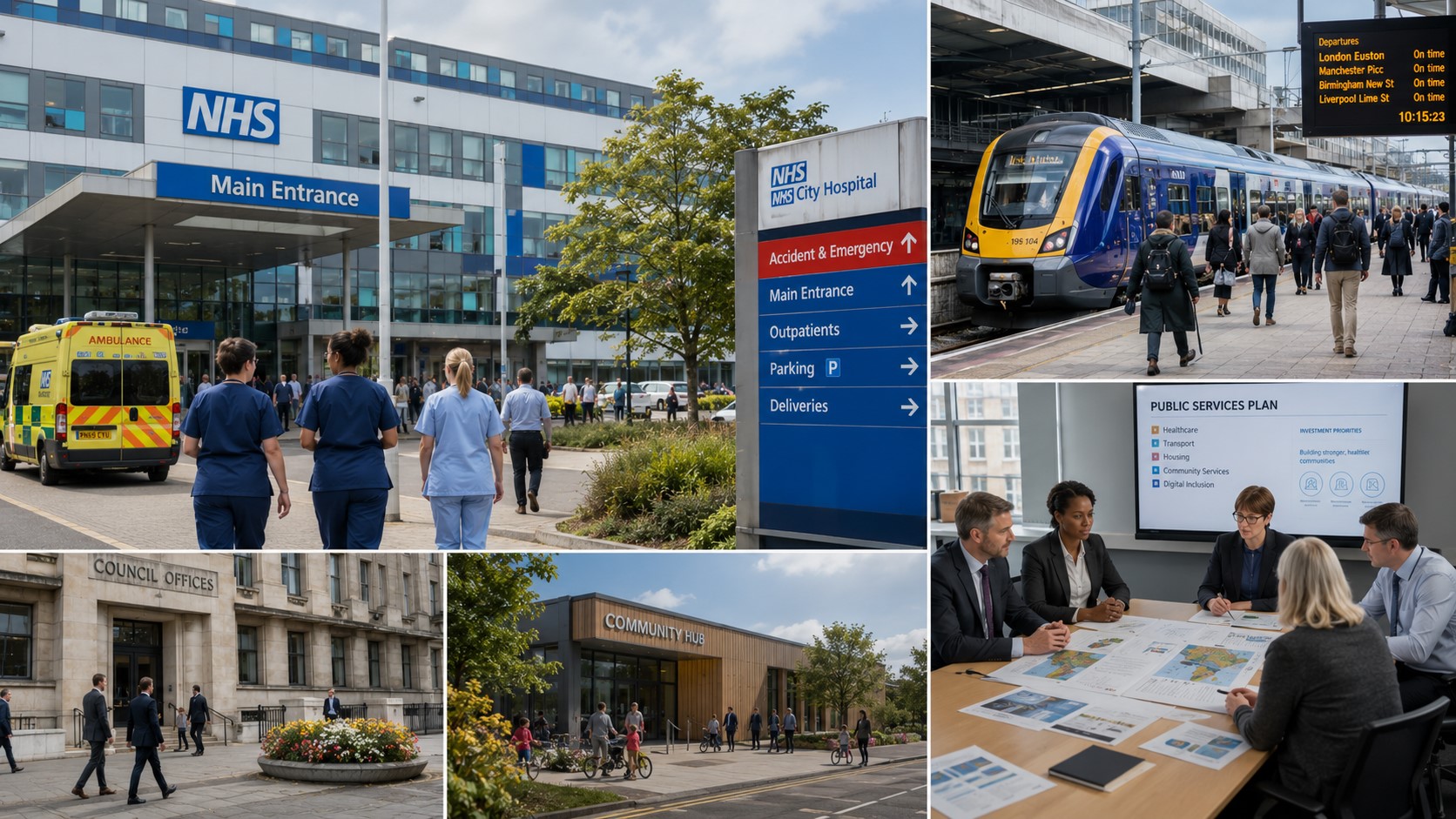
Britain's public services are under increasing pressure. Whether it is healthcare, housing, transport or local government, demand continues to rise while resources remain stretched.
The challenge is not simply about funding — it is about sustainability. Public services must adapt to changing demographics, technological developments and evolving public expectations.
The NHS continues to face high demand, local authorities are managing growing responsibilities and infrastructure networks require ongoing investment. These challenges are interconnected and cannot be addressed in isolation.
Short-term policy responses may provide temporary relief, but they rarely solve underlying structural issues. Long-term planning, targeted investment and greater efficiency will be essential if services are to meet future needs.
There is also a broader economic argument. Effective public services support productivity, social mobility and business confidence. When essential services perform well, communities and economies are better positioned to thrive.
Britain has repeatedly demonstrated its ability to reform and modernise public institutions. The question now is whether policymakers are prepared to pursue the sustained changes necessary to secure the future of services that millions rely upon every day.
The pressure on public services is unlikely to ease anytime soon. The sooner long-term solutions are prioritised, the better prepared the country will be for the challenges ahead.
UKEcho News brings you accurate, independent reporting from across the UK and beyond.
Comments (0)
Sign in to join the discussion.
Be the first to comment.