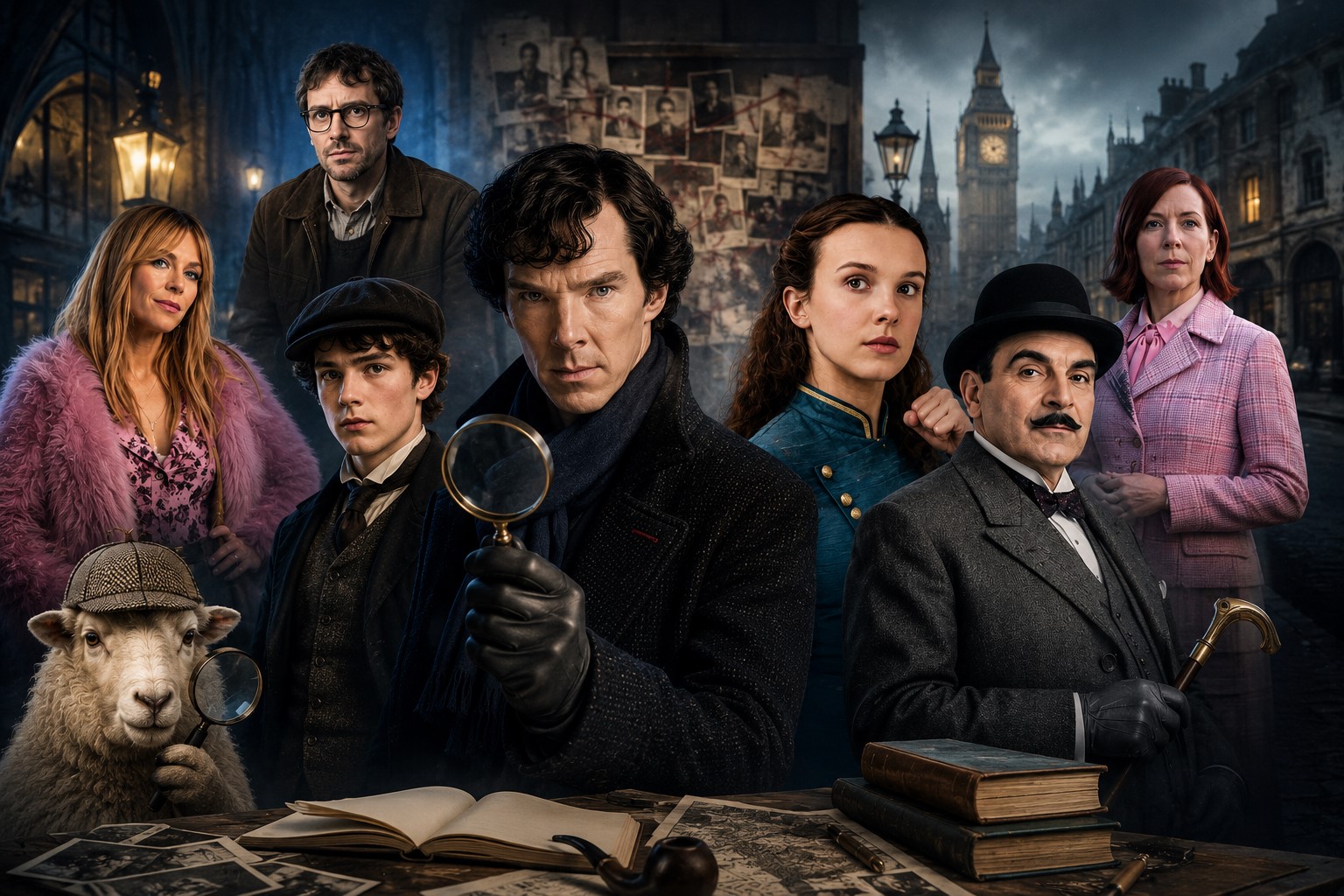
From Young Sherlock to New Poirot: Why Amateur Detectives Are Dominating Television
Television's fascination with amateur detectives is stronger than ever, with a growing number of crime dramas featuring brilliant outsiders rather than traditional police officers. From Young Sherlock and Enola Holmes to High Potential, Elsbeth, and Ludwig, viewers are increasingly drawn to characters who solve complex crimes using intelligence, observation, and unconventional thinking instead of police training. Even family entertainment has embraced the trend, with films like The Sheep Detectives proving that almost anyone—or anything—can become a compelling sleuth.
The concept of the "consulting detective" has deep literary roots. Edgar Allan Poe introduced C. Auguste Dupin in the 1840s before Arthur Conan Doyle popularized the idea through Sherlock Holmes, a private investigator who frequently outsmarted Scotland Yard. That blueprint continues to influence modern television, where writers regularly place gifted civilians alongside law enforcement to crack cases that professional investigators struggle to solve.
Today's detective stories are also evolving to reflect changing audiences. Recent productions feature more female leads and diverse characters, with series such as High Potential and Elsbeth showcasing intelligent women whose empathy and emotional intelligence become valuable investigative tools. Meanwhile, the BBC's announcement of a younger version of Agatha Christie's Hercule Poirot and the continued success of Young Sherlock demonstrate how classic detective characters are being reinvented for a new generation of viewers.
Although these fictional consultants often appear to work closely with police departments, former detectives say the reality is very different. In real investigations, outside experts such as forensic scientists, psychologists, and behavioral specialists are occasionally consulted for specific areas of expertise rather than leading investigations themselves. They rarely enjoy the close partnerships with police that television dramas portray.
Despite the lack of realism, the popularity of amateur detective stories continues to grow because they offer audiences both engaging mysteries and reassuring conclusions. The central appeal lies in watching an extraordinary individual restore order from chaos, solve seemingly impossible puzzles, and ensure justice is served. In an era of uncertainty and public skepticism toward institutions, these clever outsider detectives continue to provide some of television's most entertaining and enduring crime stories.
UKEcho News brings you accurate, independent reporting from across the UK and beyond.
Comments (0)
Sign in to join the discussion.
Be the first to comment.